A practical factory audit checklist for bag sourcing turns a supplier meeting into a structured inspection instead of a sales pitch. Buyers who walk in with a written checklist catch capability gaps, weak quality systems, and compliance risks long before a purchase order is signed. The goal is to verify what a supplier can actually deliver, not what a brochure claims.
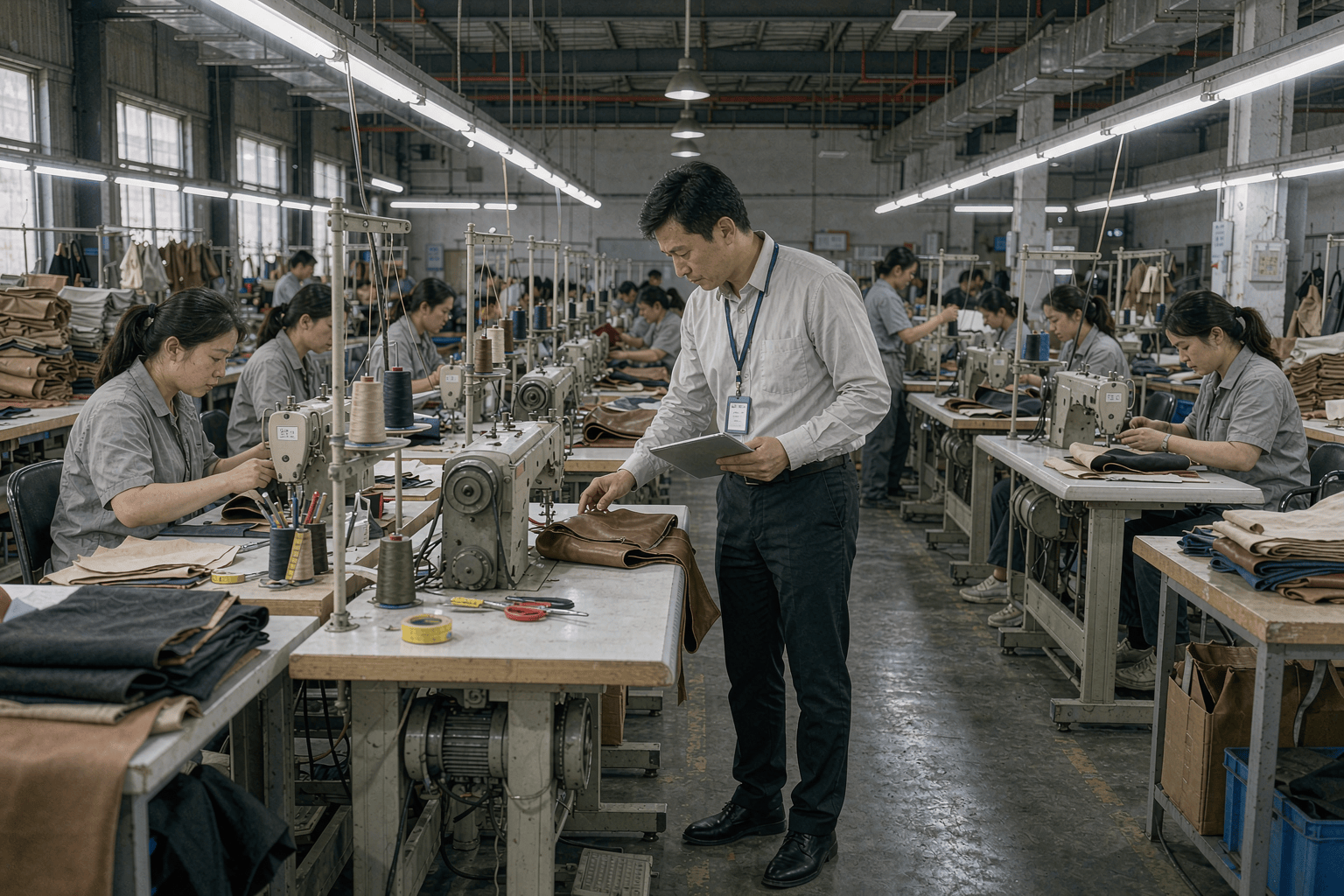
Production Capability and Machinery
The first stop is the production floor. Look for the equipment that matches the bag types under discussion.
- Cutting: automated die-cutting presses, band-knife and rotary cutters for fabric, plus CNC or laser cutting for rigid panels.
- Sewing: lockstitch and walking-foot machines for heavy canvas, bartack machines for stress points, and programmable stations for consistent topstitching.
- Printing and finishing: screen-print carousels, heat-press units, digital printers, and embroidery heads.
- Assembly layout: clear line balancing, WIP limits, and a defined flow from cutting to packing.
Ask for monthly and annual output figures per product category, then cross-check against the order volume a buyer plans to place. A supplier running mostly backpacks may struggle with structured luggage, even if both appear in a catalog.
Quality System
A factory’s quality system matters more than a single clean sample. Inspect the following:
- Incoming material inspection: documented checks for fabric weight (GSM), colorfastness, and hardware plating.
- In-process controls: first-article approval, inline audits at cutting and sewing, and defect-rate tracking.
- Final inspection: AQL sampling (commonly ANSI/ASQ Z1.4, Level II, AQL 2.5 for major defects) and a dedicated QC room away from the line.
- Calibrated equipment: tension testers, weight scales, and color-matching light boxes with records.
Request the latest internal defect report and ask how corrective actions are logged. A mature system uses a nonconformance report that traces a defect back to a root cause.
Those records are exactly what an auditor asks to see on site — ISO 9001 and SMETA assessments both start from the defect log and the calibration files, and the full checkpoint list sits in soft luggage supplier verification.
Certifications and Documentation
Request copies, not screenshots, and verify validity dates.
- Social audits such as amfori BSCI or Sedex SMETA.
- Material certifications: OEKO-TEX Standard 100 for fabric safety, GRS for recycled content.
- Management systems: ISO 9001 for quality, ISO 14001 for environmental.
- Product-specific test reports from an accredited third-party lab.
Expired or generic certificates are a red flag, as is reluctance to share the issuing body’s name.
Social and Compliance
Walk the dormitory, canteen, and assembly halls if access is granted. Note working hours posted versus actual, age-verification records, and fire exits that are unobstructed. Forced-labor indicators, such as withheld ID documents, should end the conversation immediately.
Financial Health and References
Ask for two or three references from buyers in a similar market and product type. A stable supplier can discuss tenure of key accounts without hesitation. Signs of financial stress include frequent subcontracting, unpaid utility notices, or a high staff-turnover rate visible on the floor.
Sample Room
A working sample room shows whether a factory can develop from a tech pack. Check for pattern blocks, prototype stitching, and a librarian who can retrieve past samples by style number. Strong development support shortens lead times on custom work.
That capability matters most on the lines where the spec is unforgiving — designer handbag production is judged on hardware alignment and stitch consistency, and neither holds up at a factory without a real sample room.
On-Site Versus Remote Audit
An on-site visit remains the gold standard because it reveals layout, morale, and housekeeping. A remote audit — video walkthrough plus document review — works for a first screen when travel is impractical. Treat remote results as provisional and schedule a physical visit before a large commitment.
Red Flags to Watch For
- Refusal to show the full floor or specific departments.
- No written quality records, only verbal assurances.
- Prices far below market with no explanation of scale advantage.
- Inability to name the lab used for compliance testing.
Quick Checklist
- Floor capability matches the target bag category and order volume.
- Documented QC at incoming, in-process, and final stages.
- Valid social and material certifications verified by issuer.
- Two reference buyers confirmed; no forced-labor indicators.
For related operations detail, review the factory and manufacturing archive, and for custom production scope see OEM custom bags.
The AQL levels referenced above are explained in more detail in bag quality control, which covers the inspection checkpoints an audit should verify.
FAQ
How long does a factory audit take? A half day covers a focused review of one product line and its records. A full day is more realistic for a first visit that also includes the sample room, the warehouse, and a document review. Rushed audits tend to skip the records, which is where the useful evidence sits.
Should the audit be announced in advance? A fully announced visit lets the supplier prepare documents, which makes the review efficient but less revealing. A semi-announced window — naming the week rather than the day — is a common compromise. A fully unannounced visit risks being refused at the gate.
Can the factory’s own checklist be used instead? No. Use the buyer’s written checklist, because a supplier-supplied form steers attention toward what the factory does well, and a shared list is also what makes two suppliers directly comparable.
What if the factory refuses an on-site visit? Treat it as a serious signal. A remote audit can serve as a first screen, but a supplier that will not allow a physical visit should not be given a large or repeat order.
Once you have the cert list, the next step is choosing the right plant — our custom luggage manufacturer guide walks the shortlist and MOQ steps for a B2B program.
Buyers comparing suppliers can review our full bag catalog for OEM/ODM specs, materials, and MOQ.