A sourcing-side laptop bag buying guide starts with a tech pack, not a product page. Lock internal cavity dimensions, foam density, zipper gauge and test standards first, then screen factories against those specs. Most programs settle at 300 to 1,000 units per colorway with 35 to 60 day bulk production.
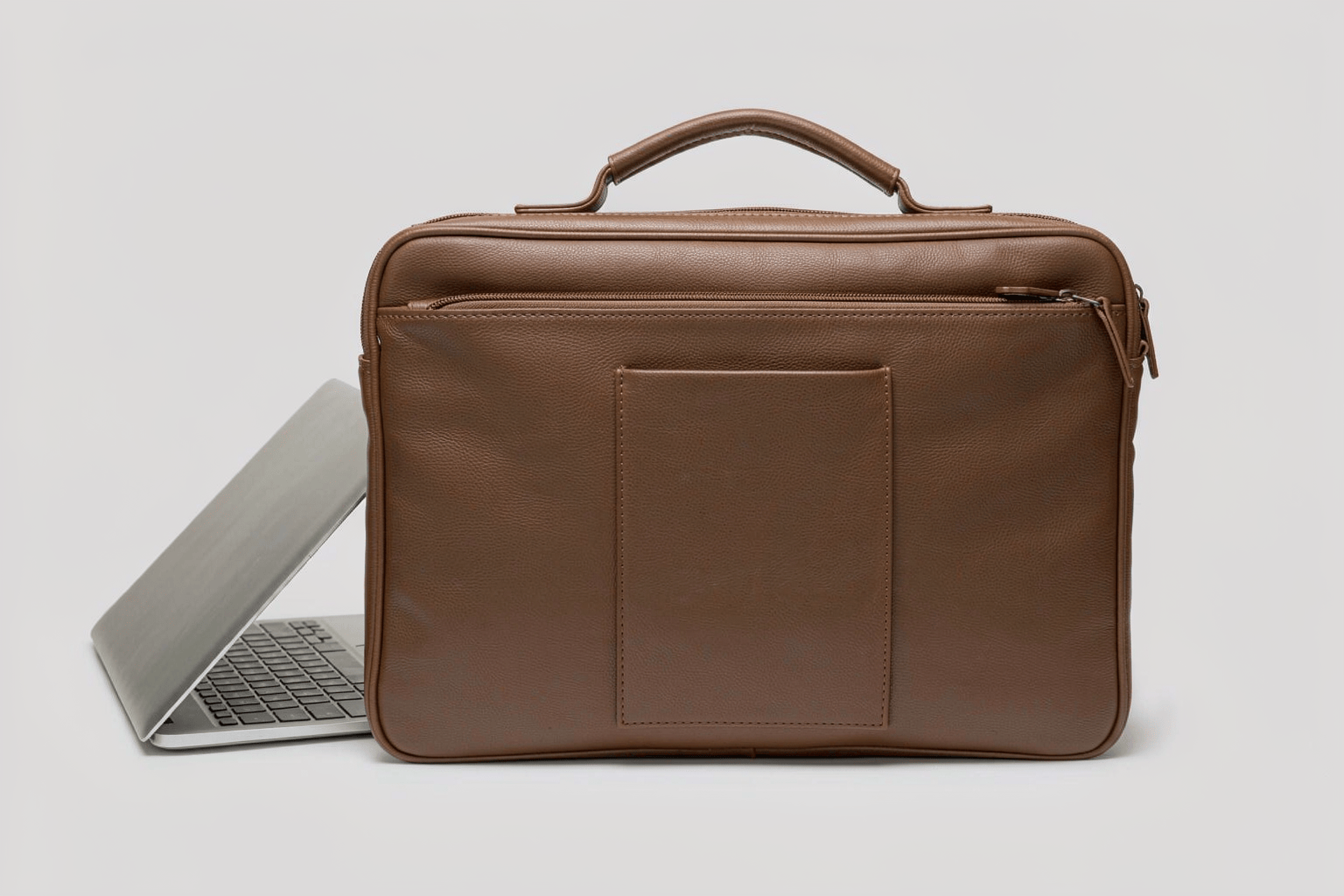
Which Documents Does a Factory Need Before It Can Quote?
A quote is only as accurate as the package it is built from. When a buyer sends a photo and asks for a price, the factory guesses on materials and the number moves later. Send the following and the quotation becomes a document you can hold the supplier to.
- Flat sketch with finished outside dimensions and internal cavity dimensions in millimetres.
- Bill of materials: shell denier, coating type, lining weight, foam density, board thickness.
- Colorway list with Pantone TPX references for shell, lining, webbing and thread.
- Hardware call-outs: zipper gauge and slider type, buckle width, D-ring wire diameter, hook finish.
- Construction notes: stitches per inch, bartack positions, binding versus turned-and-topstitched seams.
- Label and packaging spec: main label, care label, carton marking, polybag and pieces per carton.
- Test list and target AQL, plus the ship window and target quantity per colorway.
Two lines matter more than the rest: cavity dimensions and foam density. Leave them open and every supplier prices a different product, so the quotations cannot be compared at all.
How Do You Screen a Bag Factory in One Call?
Capability questions separate a real production line from a trading desk that subcontracts. Ask for numbers, then ask how they were measured.
Start with monthly output stated in units per line, not in vague capacity. A single sewing line running 30 to 45 operators typically turns out 12,000 to 25,000 padded carry units a month, depending on panel count. Ask how many lines are free in your ship window, because a full plant will quietly push your dates.
Then check what happens in-house. Pattern room and grading in-house means sample changes take days rather than weeks. Die-cut or CNC foam cutting in-house keeps cavity tolerance tight. Printing, embroidery and webbing cutting are often outsourced, which is normal, but confirm who controls those lead times. Finally ask for the last third-party audit report, the ISO 9001 certificate scope, and two references for programs using coated 1680D fabric, since coated shells sew differently from plain woven ones.
What Actually Drives the FOB Cost?
Buyers often push on unit price without knowing which bucket they are squeezing. The split below reflects a mid-structure commuter carry unit with a suspended device cavity.
| Cost bucket | Share of FOB | What moves it |
|---|---|---|
| Shell and lining fabric | 22-30% | Denier, PU or TPU coating weight, recycled content |
| Foam, board, mesh | 8-14% | EVA density, foam thickness, HDPE back panel |
| Zippers and hardware | 12-18% | #5 versus #8 coil, water-resistant chain, buckle grade |
| Cutting and sewing labour | 18-26% | Panel count, bartack count, binding metres |
| Trims, labels, packaging | 3-6% | Woven labels, hangtags, polybag, carton grade |
| Overhead, testing, margin | 10-16% | Lab test scope, inspection level, order size |
Removing one internal divider saves two to four sewing minutes and a few cents of binding. Dropping foam density from 55 to 35 kg per cubic metre saves more, but it also removes the protection the product is sold on. Cut panel count and packaging complexity before you cut the protective core.
How Many Sample Rounds Should You Plan For?
Sampling is where schedule risk lives. Plan three approved rounds and treat a fourth as normal on a new pattern.
| Stage | Purpose | Lead time | Cost note |
|---|---|---|---|
| Proto sample | Prove pattern, cavity fit, proportions | 10-15 days | Pattern fee, substitute materials allowed |
| Fit sample | Confirm nominated fabric, foam, hardware | 7-12 days | Actual materials, colour may be lab dip |
| Pre-production sample | Sealed reference for the line and inspection | 7-10 days | Sealed by both sides, kept at plant and office |
| Shipment sample | Verify line output matches the seal | Pulled from bulk | No extra tooling cost |
Fit a real device into the proto sample before you comment on aesthetics. Cavity problems found at pre-production stage cost two weeks; the same problem found in bulk costs a reworked order.
Which Internal Dimensions Belong in the Spec?
Screen size is a marketing label, not a build dimension. Convert it into a cavity size and a tolerance, then hold the factory to that.
Working cavity targets sit near 330 x 230 mm for a 13.3 inch device, 345 x 245 mm for 14 inch, 375 x 260 mm for 15.6 inch and 400 x 280 mm for 17 inch machines. Add 8 to 12 mm clearance on each side so the slider never rides against the device edge, and specify a suspension gap of 15 to 25 mm between the cavity floor and the base panel. Put tolerance in writing as well: plus or minus 3 mm on the cavity and plus or minus 5 mm on finished outside dimensions is realistic for cut-and-sew production.
Grading also needs a rule. When one pattern covers 14 and 15.6 inch versions, state whether depth grows or stays fixed, because a shared depth keeps the carton plan simple while a graded depth improves fit.
Which Tests and Certificates Should Sit in the Purchase Order?
Anything not written into the order is not being tested. A workable baseline for a device-carrying product looks like this.
- Inspection at AQL 2.5 for major and 4.0 for minor defects, with 20% inline and 80% final coverage.
- Six-face drop from 1.0 to 1.2 m with a weighted dummy in the cavity, no cavity separation.
- 5,000 zipper open-close cycles on the main compartment with no chain separation.
- Strap anchor pull at 20 to 25 kg held for 30 seconds, bartacks intact.
- Colour fastness to ISO 105-B02 light and 105-E01 water, grade 4 or better.
- Coating adhesion to ISO 2411 and foam compression set below 15%.
- REACH SVHC screening, California Prop 65 for phthalates and lead, OEKO-TEX Standard 100 where the buyer’s programme requires it.
Ask which of these the factory can run in-house and which go to a third-party lab. Lab turnaround of 7 to 10 days needs to sit inside the production calendar, not after it.
What MOQ, Lead Time and Carton Plan Should You Budget?
Custom patterns carry a floor. Fabric mills run 500 to 1,000 metres per colour, so a dedicated shell colour usually needs 500 units or more, while 300 units per colorway is workable on stock fabric. Split colorways only when each one clears that floor, since three thin colours cost more than one deep one.
On timing, allow 20 to 35 days for sampling, 35 to 60 days for bulk after material arrival, and 25 to 40 days ocean transit to Europe or North America. Then check the carton: 10 to 20 units per export carton, carton volume under 0.09 cubic metres, and a polybag with a vent hole. Volumetric weight, not actual weight, decides freight cost, so trimming 20 mm of unnecessary depth can move landed cost more than a price argument over trims.
Sizing and fit are covered in Laptop bag buying guide corporate.
If you need the baseline definitions first, What is a laptop bag covers them.
Frequently Asked Questions
What should a tech pack include before a factory quotes?
Flat sketch with internal cavity dimensions, full bill of materials, Pantone references, hardware call-outs, stitch density, label and carton spec, plus the test list and target AQL. Without cavity size and foam density, quotations from different suppliers cannot be compared.
What MOQ do bag factories usually require?
Typically 300 to 1,000 units per colorway. Stock fabric allows the lower end; a custom-dyed shell usually needs 500 units or more because mills run 500 to 1,000 metres per colour. Hardware in a custom finish can raise the floor further.
How long does sampling take for a new pattern?
Plan 10 to 15 days for the proto, 7 to 12 days for the fit sample and 7 to 10 days for the pre-production seal, so 20 to 35 days in total. A fourth round is common when the cavity or strap geometry changes.
Which denier should we specify for a commuter product?
600D coated polyester suits price-driven programmes, 900D to 1200D balances weight and abrasion, and 1680D ballistic-style fabric suits heavy daily use. Pair the denier with a PU or TPU coating of 0.10 to 0.30 mm and state the coating in the bill of materials.
What inspection level applies to a device-carrying bag?
AQL 2.5 for major and 4.0 for minor defects is the common standard, with inline checks during the first 20% of output and a final inspection at 80% packed. Add the drop, zipper cycle and strap pull tests to the same inspection scope.
How do carton dimensions affect landed cost?
Ocean and air freight both price on volumetric weight, so carton size drives cost more than product weight. Keeping export cartons under roughly 0.09 cubic metres and packing 10 to 20 units per carton reduces wasted space and lowers cost per unit delivered.
Related Reading
For the specification side of the same decision, see how to choose a laptop bag from a materials and construction view.
Get a Custom Bag Quote
Send your sketch, target cavity size, colorway count and ship window, and you will get a costed bill of materials, sampling calendar and MOQ options for each fabric grade. Request a quote to start the specification review.
Buyers comparing suppliers can review our backpacks and laptop bags for OEM/ODM specs, materials, and MOQ.