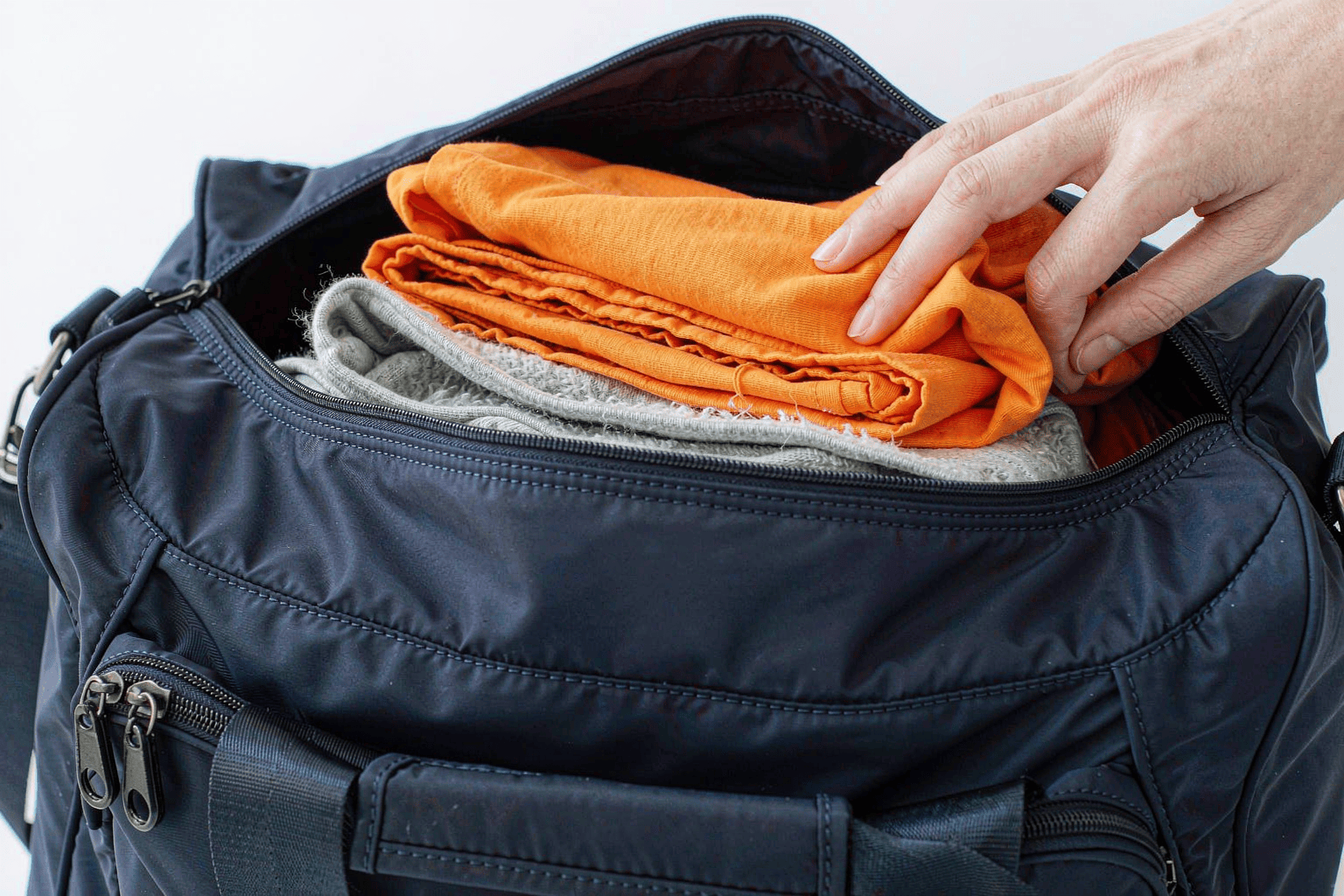
Packing a travel bag well is built in at the spec stage, not left to the traveler. For a sourcing program, “how to pack” means designing a wide opening, external reach pockets, and a compartment plan that works with packing cubes, plus carry-on dimensions and carton planning that keep freight sane. A bag that packs logically sells itself and ships efficiently.
Packability Starts at the Spec Stage
The biggest packing frustration is a bag that fights its owner: a narrow top zip, no exterior access, and one giant cavity. A factory can remove all three by design. Treat the opening style, pocket map, and internal structure as committed spec lines, because they decide whether the end user reaches the hotel and actually finds things. A well-planned interior also reduces damage claims from over-stuffing and burst seams.
Opening and Access Design
Opening style drives daily usability more than decoration:
- Clamshell U-zip: opens flat like a suitcase; fastest to pack and repack at a checkpoint.
- Wide top zip: lower cost, good for duffels and weekenders.
- Exterior quick pockets: passport, boarding pass, and a book reachable without opening the main compartment.
- Luggage pass-through sleeve: slides over a trolley handle for two-bag transit.
For carry-on programs, prioritize a wide opening and a pass-through sleeve; they are the features frequent flyers notice first.
Compartment Plan for a Packable Travel Bag
The table maps each zone to a build spec a factory can quote.
| Zone | Build spec | Packability role |
|---|---|---|
| Main compartment | Wide U-zip, 600D–1200D liner | Holds packing cubes, opens flat |
| Shoe or laundry pocket | 0.15–0.3 mm TPU film | Isolates dirty items |
| External front | Zip pocket, 700D–1000D webbing | Last-minute grab items |
| Laptop or document sleeve | Padded, false-bottom panel | Protects electronics in transit |
| Top quick-access | Small zip, against the back | Passport and charger |
Materials That Support Packing
Denier (D) measures yarn thickness; higher numbers mean a denser weave. For travel programs, 600D polyester is the entry workhorse, 900D–1200D balances weight and scrape resistance, and 1680D ballistic nylon is the durable top end. Pair the shell with a PU or TPU coating of 0.15–0.3 mm for water resistance without stiffness. A lighter empty bag leaves more of the weight allowance for actual contents, which matters when carriers weigh carry-ons.
Related: for carry-on dimension planning and shell choices, our guide to choosing a travel bag covers the spec decisions in more depth.
Carry-On Dimension and Weight Planning
Most airlines allow a carry-on up to 56 x 36 x 23 cm (about 22 x 14 x 9 in). Spec the bag to fit overhead bins and confirm the exact limit with the target carrier, since dimensions and weight caps vary. A 30–40 L travel bag fits overhead bins on most carriers; a 50 L+ build usually must be checked. Keep the empty weight low so the filled bag stays under the limit with clothes and cubes inside.
Freight and Carton Planning for Export
Carton size and weight drive freight cost more than the product itself. For soft travel bags, a flat-pack carton holds more units per cube than a structured pack, lowering per-unit ocean cost; confirm carton dimensions with your forwarder before tooling so palletization stays efficient. A typical carton might hold 8–15 units depending on bag volume, and cube utilization of 60–70% is a realistic planning target for mixed container loads.
Plan reorders with the first run. Bulk lead time of 35–55 days plus ocean transit of 25–40 days puts a restock two to three months out, so a reorder placed after stockout misses the season. Keep the approved sample, test reports, and spec sheet on file so repeat orders match without a new development round.
Compliance and QC
For the EU, confirm REACH conformance for dyes and coatings; OEKO-TEX Standard 100 or GRS documentation supports retailer audits. For US retail, Prop 65 limits apply to certain phthalates and lead. A factory operating to ISO 9001 documents incoming checks and final audits.
Write QC into the purchase order: AQL 2.5 for major defects and AQL 4.0 for minor, with inline checks at 20% and 80% production plus a final audit. Add a zip-cycle test of 5,000+ openings and a water-spray test on the coated shell. Hardware pull strength at strap anchors should target 20 kg+.
Production Basics: MOQ, Lead Time, Packaging
A typical cut-and-sew travel bag program runs a MOQ of 300–1,000 units per colorway. Development samples take 7–12 days; bulk lead time is about 35–55 days after approval. Confirm carton dimensions with your forwarder before tooling, because the packed carton—not the empty bag—sets your freight math.
Customization and Branding Options
For branded and promotional orders, decide the logo method early because it affects both cost and lead time. Embroidery suits structured panels and reads premium; screen print is cost-efficient at volume; woven labels and metal badges add a durable mark. Confirm Pantone matching and a pre-production branding sample before the full run, because mis-registered embroidery is hard to correct after bulk.
For travel builds, place the logo away from high-abrasion floor contact and the wheel channel, where it would wear first, and verify the colorfast rating of both the shell print and the webbing for humid transit. Keep the approved branding sample on file so repeat orders stay consistent without re-sampling each season.
Get a Custom Bag Quote
With the opening style, compartment plan, and QC defined, the next step is a manufacturability review. Send your tech pack for a costed quote and a realistic lead-time window: Request a quote →
Go deeper in Travel bag packing list.
Our current shortlist sits in Best carry on travel bag.
Frequently Asked Questions
What opening style packs most easily?
A clamshell U-zip that opens flat like a suitcase is the fastest to pack and repack, especially at a security checkpoint. A wide top zip is lower cost and works well for duffels and weekenders.
Which denier fabric suits a travel bag line?
For most branded retail programs, 900D–1200D polyester offers the right balance of weight, scrape resistance, and cost. Use 1680D ballistic nylon for wheeled or checked formats, and 600D for light promotional use.
What carry-on dimensions should I spec?
Most airlines allow up to 56 x 36 x 23 cm. Spec the bag to fit overhead bins and confirm the exact limit with the target carrier, since dimensions and weight caps vary by airline.
How should I plan cartons for export?
A flat-pack carton holds more units per cube than a structured pack, lowering per-unit ocean freight. Confirm carton dimensions with your forwarder before tooling so palletization stays efficient; 60–70% cube utilization is a realistic target.
What compliance marks do I need for EU and US retail?
For the EU, REACH conformance for dyes and coatings is baseline, with OEKO-TEX Standard 100 supporting audits. For US retail, Prop 65 limits apply to specific phthalates and lead. GRS helps if you specify recycled content.
What MOQ is typical for a custom travel bag?
Most cut-and-sew programs start at 300–1,000 units per colorway. Below that, tooling and setup costs push the unit price up and can extend lead time.
Buyers comparing suppliers can review our travel and duffle bags for OEM/ODM specs, materials, and MOQ.