Choosing a laptop bag for a private-label or corporate program means specifying protection first, then style. Lock the suspended-compartment dimensions to your target device, set foam density and hardware grade, and confirm compliance for your market. A precise spec sheet avoids the screen-damage returns that come from a compartment built a few millimetres too loose.
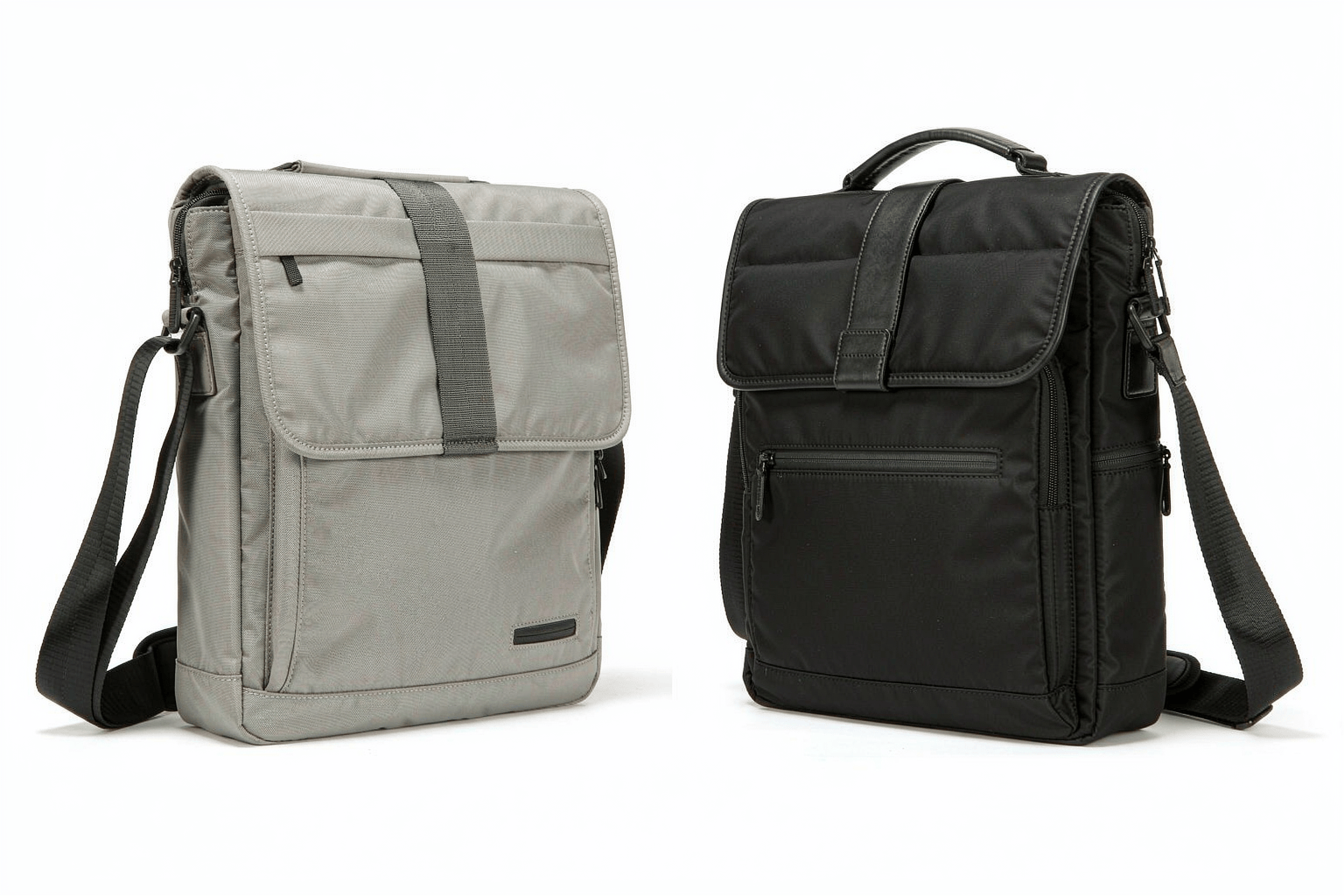
Protect the Device Before the Look
The non-negotiable job of any laptop carrier is keeping the computer from taking a hit. For a B2B program, that translates into three measurable specs: a suspended compartment, a false bottom, and closed-cell foam of 8–10 mm on the walls. Everything else—color, pockets, logo method—is secondary and should never compromise the protective core.
- Suspended compartment: the device hangs away from the base so a drop does not transfer straight to the chassis.
- False bottom: a raised floor adds crush space at the most common impact point.
- Closed-cell foam: holds shape after months of compression; open sponge flattens and stops absorbing.
Match the Compartment to the Device
Screen size is a marketing number, not a fit number. Measure the device’s real footprint—width, depth, thickness—and spec the compartment 0.2–0.5 inches larger in each direction. The table below maps common devices to compartment targets.
| Device footprint | Compartment target | Best carry form |
|---|---|---|
| 11.9 x 8.4 in | 12.5 x 9 in | Slim sleeve, small messenger |
| 12.3 x 8.7 in | 13 x 9.5 in | Compact briefcase, backpack |
| 14 x 9.8 in | 14.5 x 10.5 in | Full briefcase, backpack |
| 15.6 x 10.6 in | 16.5 x 11.5 in | Rolling case, large backpack |
A compartment tighter than the device fights insertion; looser than 0.5 inches lets the machine slide during a stumble, which is when most screen damage occurs.
Carry Form Follows the User
Each carry style changes how load lands on the body and how fast the user reaches the computer. For corporate and promotional programs, choose the form from the recipient’s day:
Air travel adds a hard constraint for recipients who fly: the carrier usually counts as the personal item, so keep it near 40 x 30 x 15 cm to slide under the seat, and prefer a lay-flat compartment that screens without unpacking. This matters when the program ships to frequent-flyer clients who judge the gift by how it performs at the gate.
- Backpack: loads past 4 kg or walks over 15 minutes; both shoulders share weight.
- Briefcase: formal meetings; one shoulder or hand, fast one-handed access.
- Messenger: cycling; cross-body with a stabiliser strap.
- Rolling case: 17-inch devices and airport-heavy schedules; ground, not shoulders.
Materials and Hardware That Last
Carriers fail at stress points. Specify ballistic nylon or high-denier polyester (600D–1680D) for the shell, self-repairing coil zips, and bar-tack reinforcement at every strap anchor with double stitch rows. A ventilated back panel, a sternum strap above 5 kg loads, and a luggage pass-through sleeve are now expected on commuter formats.
Specify webbing grade for handles and straps; 700D–1000D webbing holds shape better than thin tape under daily load, and a verified colorfast rating matters for programs shipped through hot, humid transit.
- Fabric: 900D–1200D polyester covers most programs; 1680D for heavy daily use.
- Zips: branded self-repairing coils are the single best durability signal.
- Stitching: 8–10 SPI at load-bearing seams.
- Base: reinforced or moulded panel to stay upright and take scuffs.
Compliance for Cross-Border Programs
Laptop carriers sold into the EU need REACH conformance for dyes and coatings, with OEKO-TEX Standard 100 supporting audits. US retail triggers Prop 65 limits on specific phthalates and lead. If the product includes a USB pass-through or wiring, confirm electrical-safety documentation for the target market before mass production.
Quality Control for a Repeatable Line
Write QC into the purchase order. A standard plan uses AQL 2.5 for major defects and AQL 4.0 for minor, with inline checks at 20% and 80% production and a final audit. Add a zip-cycle test of 5,000+ openings and a compartment-fit check against the spec’d device.
- Verify foam thickness at three points on the compartment wall.
- Check stitch density at strap anchors and the base.
- Confirm zip pull strength and smooth operation.
- Run a water-spray test on the coated shell.
- Hold a final AQL inspection before carton sealing.
Customization and Branding Options
For corporate and promotional orders, decide the logo method early because it affects both cost and lead time. Embroidery suits structured panels and reads premium; screen print is cost-efficient at volume; woven labels and metal badges add a durable mark. Confirm Pantone matching and a pre-production branding sample before the full run.
Production Basics: MOQ, Lead Time, Packaging
A typical laptop carrier program runs a MOQ of 300–1,000 units per colorway. Development samples take 7–12 days; bulk lead time is about 35–55 days after approval. Because the product is compact, carton density is high, which keeps freight per unit low—but confirm carton dimensions with your forwarder so palletisation stays efficient.
Plan reorders alongside the first run. Bulk lead time of 35–55 days plus ocean transit of 25–40 days puts a restock roughly two to three months out, so a reorder placed after stockout arrives a season late. Keep the approved sample, test reports, and spec sheet on file so repeat orders match the first without a new development round.
How to Brief a Factory
Send a one-page spec: target device footprint, compartment dimensions, foam density, shell denier, hardware grade, branding method, compliance marks, QC plan, MOQ, and target landed cost. A technical drawing beats a lifestyle photo for removing ambiguity in the first sample.
Turn the Spec Into a Quote
With protection, materials, and QC defined, the next step is a manufacturability review. Send your tech pack for a costed quote and a realistic lead-time window: Request a quote →
The step-by-step version lives in How to Choose the Right Bag Material for Your Line.
The wider context sits in How to Manage Production Across Multiple Factories.
Frequently Asked Questions
What foam thickness protects a laptop best?
Closed-cell foam of 8–10 mm on the compartment walls, combined with a suspended compartment and a false bottom, gives the best protection. Open sponge flattens under compression and stops absorbing impact.
Which compliance marks apply to EU and US laptop bags?
For the EU, REACH conformance for dyes and coatings is baseline, with OEKO-TEX Standard 100 supporting audits. For US retail, Prop 65 limits apply to certain phthalates and lead. Add electrical-safety docs if the product includes USB wiring.
What MOQ is typical for a custom laptop bag?
Most programs start at 300–1,000 units per colorway. Lower volumes raise unit cost because setup and tooling are spread across fewer pieces.
How long does sampling and bulk production take?
A development sample usually takes 7–12 days. After approval, bulk production runs about 35–55 days, depending on order size, branding method, and compliance testing.
Which branding method suits corporate orders?
Embroidery reads premium on structured panels; screen print is efficient at volume; woven labels and metal badges are durable. Confirm Pantone matching and a pre-production branding sample first.
What QC plan prevents defects at scale?
Use AQL 2.5 for major defects and AQL 4.0 for minor, with inline checks at 20% and 80% production plus a final audit. Add a 5,000+ zip-cycle test and a compartment-fit check against the target device.
Buyers comparing suppliers can review our backpacks and laptop bags for OEM/ODM specs, materials, and MOQ.