Shock cord is the elastic component that lets a bag compress, cinch, and snap back without a hard buckle. On a custom order you do not need a materials degree to brief it correctly — you need four numbers locked down: diameter, core material, elongation, and how the ends are finished. Get those right and the cord behaves the same on the thousandth unit as on the first.
Most buyers meet this material as the bungee on a compression strap, the keeper on a roll-top, or the drawstring of a stuff sack. It looks simple, but the spec sheet is where bag programs quietly go wrong.
What the cord is made of
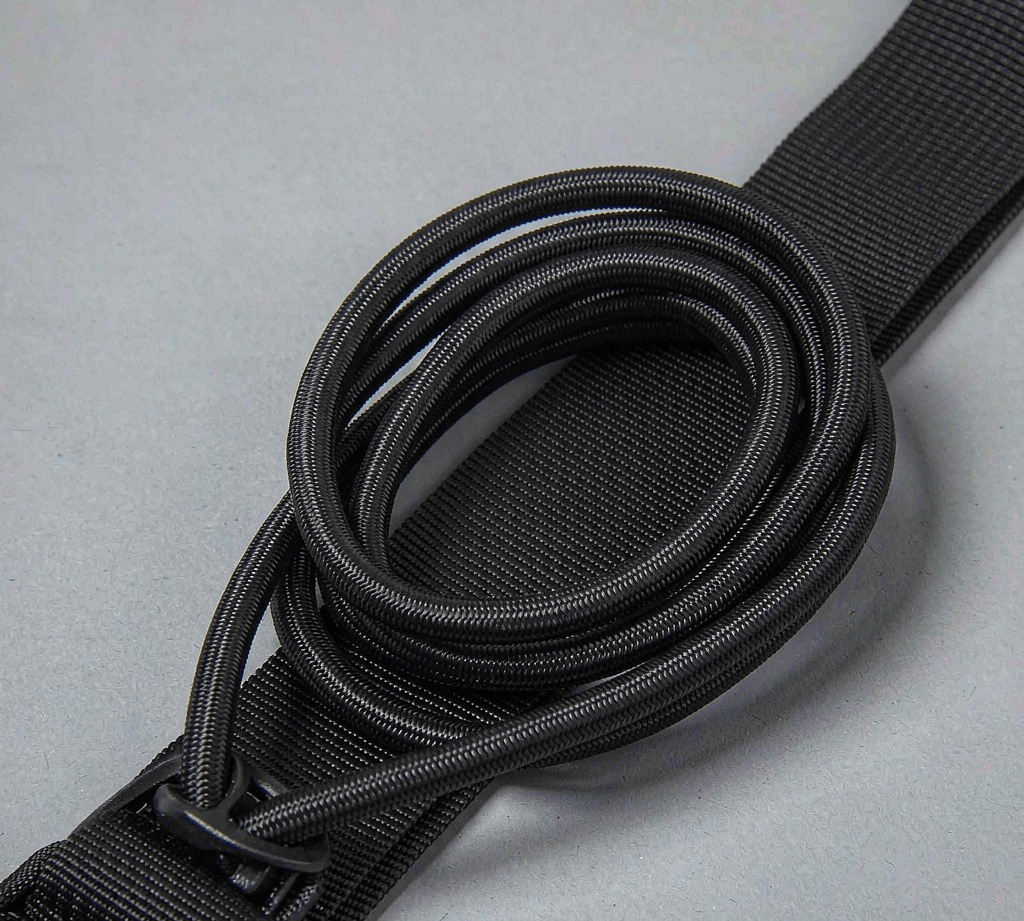
A shock cord is a spring hidden inside a sleeve. A core of elastic strands — usually natural latex or a synthetic TPU blend — sits inside a woven outer sheath, most often polypropylene or nylon. The sheath does almost none of the stretching; it protects the core from abrasion, UV, and fraying. When you specify the material you are really specifying two parts, not one.
Diameter is the first number to fix
For bags the useful range is narrow. A 4 mm cord suits lightweight drawstrings and toggles. A 6 mm cord is the common middle ground for compression and lashing. An 8 mm cord handles heavy keepers where a lot of tension is expected. Diameters above 10 mm exist but rarely belong on a wearable bag. The diameter drives both the feel and the tensile strength, so pick it from the job, not from whatever the sample bin holds.
Latex core vs synthetic core
Latex gives the highest stretch and the best snap-back, which is why it dominates classic bungee. Its weakness is the environment: latex degrades faster under sustained UV and some chemicals. A TPU or synthetic-blend core stretches less but shrugs off sun, salt, and oils far better, which matters for bags that live outdoors. If your program ships to marine or alpine use, the core choice is a durability decision, not a cost line.
Stretch and recovery, not just stretch
Suppliers quote elongation as a percentage of the relaxed length — around 100% is typical, meaning the cord doubles under load. The number that actually protects your program is recovery: how completely the cord returns to length after being held stretched. A cord that creeps permanently leaves a bag that sags. Write the spec as working stretch — the extension you expect in use — and require recovery above a threshold, rather than quoting break elongation alone.
The sheath: braid, UV, and abrasion
The outer cover is what the user touches and what the field destroys. A tighter braid — 16-plait is common on quality cord — resists snagging and holds its shape. For outdoor programs ask specifically for UV-stable and abrasion-resistant sheath fibers; a cheap cover goes chalky and sheds within a season. This is the same logic buyers apply to webbing and strap specs elsewhere on the bag.
How the ends are finished
The cord fails at its ends, not its middle. Common terminations are a metal crimp, a hog ring, heat-shrink, or a secured knot, and each needs the right tool to seat without cutting the core. Where the cord meets webbing, a bar-tack through a folded channel is the durable route — the same stitch-and-bar-tack thinking used at stress points. Pair the cord with a rated cord lock or triglide and confirm the hardware grips the exact diameter you chose.
Where it sits on the bag
Typical placements are compression straps that shrink a load, roll-top keepers that hold a folded closure, lightweight drawstrings, and lashing loops for helmets or pads. Each placement sets a different working tension, so the diameter can legitimately vary across one bag. A drawcord and cord-lock guide covers the closure end, while strap hardware connectors cover the metal ends that anchor the cord.
Writing it into the tech pack
Give the factory a four-line block: diameter in mm, core material (latex or TPU blend), elongation and recovery in percent, and end termination method. Add the sheath fiber and any UV or chemical requirement on one line. A precise block removes the “whatever you normally use” guessing that produces inconsistent batches.
FAQ
What diameter shock cord should I specify for a bag?
For most bags, 4 mm suits drawstrings and 6 mm covers compression and lashing; choose 8 mm only where high tension is expected. Match the diameter to the placement, not to a default.
How much stretch does bungee cord have?
Typical elongation is about 100%, so the cord roughly doubles under load. The more important figure is recovery — how fully it returns — so specify working stretch and a recovery threshold.
Is latex or TPU core better for outdoor bags?
Latex stretches most and recovers best but ages faster in sun and chemicals. A TPU or synthetic core stretches less but lasts far longer outdoors, which is usually the safer call for alpine or marine use.
How should the cord ends be terminated?
Use a crimp, hog ring, heat-shrink, or a bar-tacked channel through webbing. The end is the failure point, so seat it with the right tool and pair it with a cord lock rated for the chosen diameter.
Conclusion
A correct cord spec is four numbers and one termination method, written before bulk production starts. Nail diameter, core, recovery, and ends and the elastic parts of your bag will behave identically across the run. For a wider view of elastic and compression features, see our sports bag features guide.