Specifying hardware and zippers for custom bags means defining zipper construction, slider and buckle material, plating, and test thresholds in your tech pack before sampling. Get these wrong and returns climb even when the fabric is perfect—zippers and buckles fail first in 60–70% of field complaints. Match each spec to product use, order volume, and market compliance.
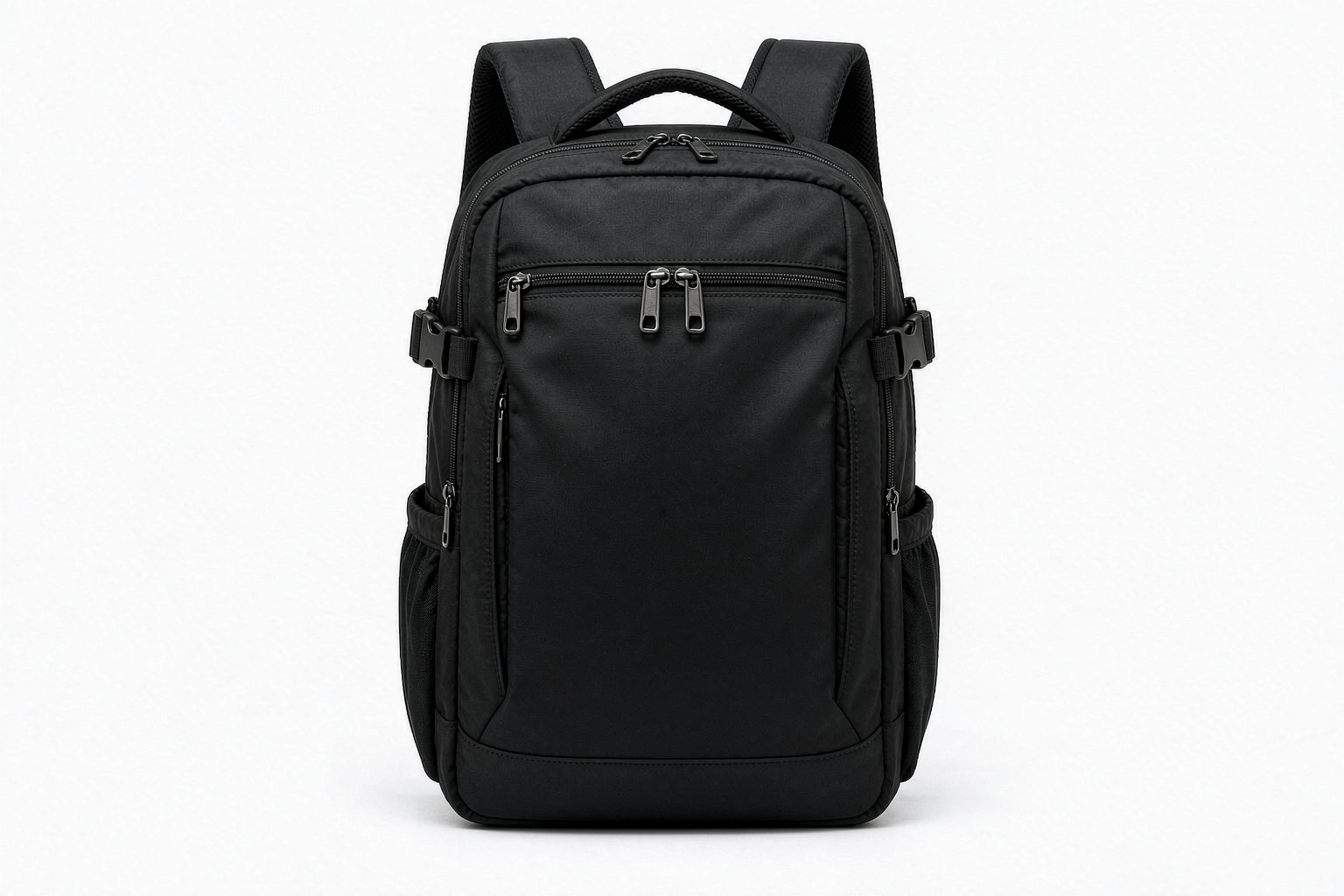
Why hardware, not fabric, controls your return rate
Most buyers brief fabric weight and neglect hardware. In warranty data from contract bag lines, zipper and buckle failures account for the majority of functional returns: sliders separate, coil teeth split at the box, and plating pits within a single season. Fabric rarely fails first. That makes the hardware section of your bag tech pack the highest-leverage document you own. A 30-minute spec review prevents the 8–12% return rates that erase margin on a 500–2,000 unit run.
What zipper variables your tech pack must pin down
Define each of these so the factory cannot substitute a cheaper equivalent:
- Zipper family — coil (#3, #5, #8 by tape width in mm), metal (brass or aluminium element), reverse coil (tape inside, cleaner face), or moulded tooth (vislon-style, for outdoor loads).
- Tape width and colour — specify mm and a Pantone or lab-dip; verify against ISO 105-B02 lightfastness and ISO 105-X12 crocking at grade 4.
- Slider type — auto-lock (stays put under load), non-lock (smooth pull), reversible, or double-pull for top-open bags.
- Puller — die-cast logo, stamped, or webbing; state length and attachment method.
- Element material — Delrin/POM coil, brass, or aluminium; each changes weight and cost per metre by 15–40%.
Build this into your bag tech pack before the first sample so the factory quotes one number, not a guess. A complete custom zipper specification looks like this by use case:
| Zipper family | Best for | Typical tape | Load note |
|---|---|---|---|
| Coil #3–#5 | Soft totes, pouches, linings | 3–5 mm | Light daily use |
| Metal brass | Premium leather, structured | 4–6 mm | Higher pull force |
| Reverse coil | Sport, clean face | 5 mm | Abrasion side out |
| Moulded tooth | Travel, ski, bike | 6–10 mm | 20–30 kg pull |
Which zipper strength tests actually matter
Do not accept “strong zipper” as a spec. Require named tests with thresholds as part of your zipper strength testing plan:
- ASTM D2061 — zipper strength: slider pull-off, tooth hold, and top-stop retention. A #5 coil should hold 25–35 kg before tooth separation.
- Martindale abrasion (ISO 12947-2) — 5,000–15,000 cycles before tape wear shows on outdoor grades.
- Slider engagement — 500–1,000 open/close cycles without slip on auto-lock sliders.
- Salt-spray (ASTM B117) — 24 h for garment, 96 h+ for outdoor metal elements.
Ask the factory for the test-house report, not a self-declaration. A credible supplier quotes the standard and the passing number in the same sentence.
How to specify buckles, sliders, and D-rings
Hardware lives or dies on material and plating:
- POM (acetal) — light, springy, −40 to 100 °C; standard for non-load straps.
- Zinc alloy (Zamak 3/5) — die-cast logo buckles; needs plating for corrosion resistance.
- Stainless 304 / aluminium — outdoor and premium; higher cost, no plating needed.
- Steel wire — D-rings and triglides under real load.
Spec the load rating in kg, not “strong”: a 25 mm side-release buckle rated 45 kg is a different part from one rated 20 kg. Plating thickness should be stated in micrometres (e.g., 5–8 µm nickel) and verified by salt-spray hours. For OEM bag hardware runs, the mould fee and rating must appear on the same quote line.
| Hardware material | Temp range | Load class | Relative cost |
|---|---|---|---|
| POM acetal | −40 to 100 °C | Low–mid | 1.0× |
| Zinc alloy + plate | −10 to 60 °C | Mid | 1.3–1.8× |
| Aluminium | −20 to 80 °C | Mid–high | 1.6–2.2× |
| Stainless 304 | −40 to 120 °C | High | 2.5–3.5× |
What finish and plating specs prevent corrosion complaints
Corrosion is the top hardware return after breakage. Define these in the spec:
- Salt-spray hours — ASTM B117: 24 h for fashion, 48 h travel, 96 h+ marine/outdoor.
- Nickel-free — REACH Annex XVII (EC 1907/2006) limits nickel release to 0.2 µg/cm²/week for skin contact.
- Lead and cadmium — CPSIA caps lead at 100 ppm on children’s items; Prop 65 sets lower action levels for adults.
- Eco plating — trivalent chrome over hexavalent to meet EU import rules.
A 2 µm plating gap is the difference between a buckle that pits in one rainy season and one that lasts the product’s life. Require the plating thickness and test hours in writing.
How hardware choices move MOQ, lead time, and cost
Custom logo hardware is the silent schedule-killer:
- Stock hardware — no tooling, MOQ as low as 300 units, ships with the fabric.
- Custom die-cast logo — mould fee $300–$800 per die, MOQ 500–1,000 pcs, +7–14 days for tooling and first article.
- Custom plating colour — +5–10 days and a 200–500 pc surcharge.
- Named-standard zipper — 5–10 days if stocked; 15–25 days if dyed to your tape.
Build the tooling slot into your critical path. A buyer who specs custom sliders in week 6, not week 1, adds three weeks of air-freight cost or misses the launch window. Pair these specs with your custom bag material options so fabric and trim are costed together.
How to specify bag hardware and zippers for market compliance
Hardware touches skin and crosses borders, so hardware compliance REACH and its peers apply:
- REACH (EC 1907/2006) Annex XVII — nickel, lead, cadmium limits for the EU.
- OEKO-TEX Standard 100 Class II — skin-contact fabrics and trims, tested annually.
- CPSIA — lead 100 ppm and phthalates on children’s bags (US).
- EN 71-3 — migration of 19 metals for toys and kids’ items.
- Prop 65 — California warning thresholds for lead and cadmium.
Request the certificate number and issue date, not just a logo on the invoice. Compliance gaps surface at customs, not at the factory gate.
Your tech-pack hardware checklist before first sample
Hand the factory a one-page hardware block:
- Zipper family, tape width (mm), and element material.
- Slider type and puller drawing with dimensions.
- Buckle/ring material, load rating (kg), and plating thickness (µm).
- Salt-spray hours and the test standard (ASTM B117).
- Colour-fastness targets (ISO 105-B02, ISO 105-X12 at grade 4).
- Compliance marks required by the destination market.
- Test-house report expected with the first article.
A complete block turns “make it like the photo” into a measurable, rejectable spec—exactly what protects your margin.
Get a Custom Bag Quote
Send your tech pack for a manufacturability review and a costed quote that prices hardware, zippers, and tooling in one line. When you specify bag hardware zippers and finishes this precisely, the factory quotes one number instead of a range: Request a quote →
Go deeper in Bag Quality Control Checkpoints That Prevent Defects.
Frequently Asked Questions
Q: What zipper size should I specify for an everyday tote?
A: A #3 or #5 coil zipper covers most soft totes and pouches; specify 4–5 mm tape width and an auto-lock slider if the opening carries weight. Reserve metal or moulded tooth for structured or load-bearing styles.
Q: How much does custom logo hardware add to lead time?
A: A custom die-cast buckle or puller adds a $300–$800 mould fee, a 500–1,000 pc MOQ, and 7–14 days for tooling and first article. Stock hardware ships with the fabric and avoids both the fee and the delay.
Q: What salt-spray hours do I need for outdoor bags?
A: Specify 96 h+ under ASTM B117 for marine and ski use, 48 h for general travel, and 24 h for fashion-only items. State the hour count in the tech pack so the plating grade is fixed, not assumed.
Q: Does REACH apply to metal zippers and buckles?
A: Yes. REACH Annex XVII (EC 1907/2006) limits nickel release to 0.2 µg/cm²/week and restricts lead and cadmium in skin-contact metal trims sold into the EU. Request the compliance certificate with issue date.
Q: Can I use stock hardware to keep MOQ low?
A: Yes. Stock sliders, buckles, and rings carry no tooling fee and can drop your effective MOQ to 300 units. Reserve custom logo hardware for hero styles where brand recognition justifies the 7–14 day tooling slot.
Q: Which test report should the factory provide for zippers?
A: Ask for ASTM D2061 zipper strength (slider pull-off and tooth hold), Martindale abrasion (ISO 12947-2) cycles, and ASTM B117 salt-spray hours for metal elements. A test-house report, not a self-declaration, is the only spec that holds at audit.