Designing how a backpack is packed starts at the drawing stage: place heavy items low and against the back panel, give every item a fixed pocket, and add compression to stop shifting. A compartment layout built on load zones keeps the unit stable, protects electronics, and cuts the comfort complaints that drive returns.
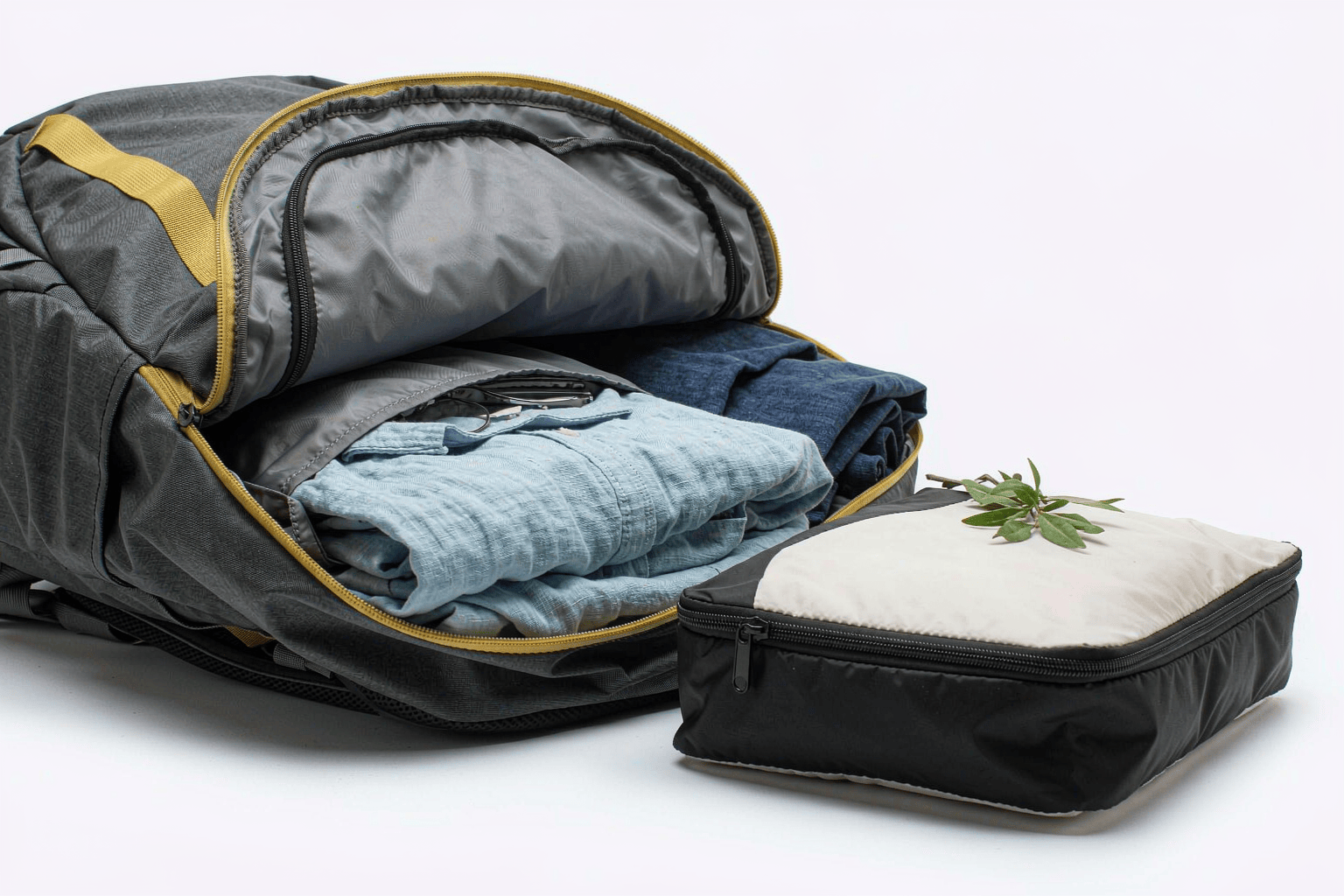
Why Internal Layout Decides Carry Comfort
A backpack only feels light if the weight sits where the body can carry it. A layout that buries the laptop at the bottom and floats light items at the back makes the load lever backward into the shoulders. For a B2B program, treat the internal layout as a spec, not an afterthought: define zones, pocket depths, and anchor points before sampling so the build is repeatable and the carry feel is consistent across every unit.
Map the Zones: Where Each Item Belongs
Sort contents into zones by weight and access frequency. This table is the same logic a factory uses to place sleeves, pockets, and straps during pattern making.
| Zone in the pack | Put here | Why |
|---|---|---|
| Rear, low, centered | Laptop, books, full bottle | Pulls weight to the spine, lowest swing |
| Rear, mid | Jacket, toiletry kit | Fills the gap around the core |
| Front and outer | Light clothing, soft items | Padding, keeps the shape |
| Top lid and hip pockets | Phone, wallet, snacks | Reach without removing the pack |
| Side mesh pockets | Empty bottle, folded map | Quick access, low weight |
Good weight distribution keeps roughly 80% of the load between the hips and shoulders, close to the back panel. If the pack tips the wearer backward when standing, the heavy item sits too high or too far from the spine; drop it lower and inward in the pattern.
Suspended Laptop Sleeve and False Bottom Specs
The non-negotiable job of any laptop-carrying build is keeping the computer from taking a hit. Specify a suspended compartment, a false bottom, and closed-cell foam of 8–10 mm on the walls. The compartment should be 0.2–0.5 inches larger than the target device in each direction; tighter fights insertion, looser lets the machine slide during a stumble, which is when most screen damage occurs.
- Suspended compartment: the device hangs away from the base so a drop does not transfer to the chassis.
- False bottom: a raised floor adds crush space at the most common impact point.
- Closed-cell foam: holds shape after months of compression; open sponge flattens and stops absorbing.
Compression and Stabilization Hardware
Shifting load is the top cause of “my bag wobbles” complaints. Specify internal compression straps or a structured frame sheet to lock the core, and design the main opening to close flat so the load cannot swing. A luggage pass-through sleeve, external water-bottle pocket that compresses when empty, and a hidden back pocket for documents complete the daily-use picture. All straps and anchors get bar-tacks at 8–10 SPI.
For travel-oriented builds, add a stowable day-bag pocket or a fold-flat panel so the same pack serves as both suitcase and day carry. This dual role raises perceived value per unit without much added hardware, but confirm the extra panel does not push the empty weight past the carry-on allowance during sampling. A 1.2 m drop test on the loaded pack also verifies that the layout, not just the shell, protects the contents when the bag is tossed into a trunk or overhead bin.
Fabric and Coating for Daily Abuse
The shell takes the same abuse whether the user packs well or badly, so specify for worst case. Use 600D–1680D polyester or nylon with a PU or TPU coating of 0.15–0.3 mm. A 900D–1200D shell covers most commuter and campus programs; 1680D ballistic nylon suits travel and heavy daily use. For EU sustainability asks, rPET at 600D–900D performs close to virgin polyester with a GRS chain-of-custody file.
- Zips: self-repairing coils, #5–#10 by opening size.
- Base: reinforced or molded panel to take floor contact.
- Webbing: 700D–1000D handles and straps hold shape under daily load.
QC and Compliance for the Line
Write QC into the purchase order. A standard plan uses AQL 2.5 for major defects and AQL 4.0 for minor, with inline checks at 20% and 80% production plus a final audit. Add a zip-cycle test of 5,000+ openings, a foam-thickness check at three points on the sleeve wall, and a compartment-fit check against the spec’d device. For the EU, REACH and OEKO-TEX Standard 100 documentation supports audits; for US retail, Prop 65 limits apply to specific phthalates and lead. An ISO 9001-certified factory and a BSCI or SMETA audit report satisfy most onboarding questionnaires.
MOQ, Lead Time, and Carton Planning
A backpack program runs a MOQ of 300–1,000 units per colorway, with a development sample in 7–12 days and bulk lead time of 35–55 days after approval. Because the product is compact, carton density is high, which keeps freight per unit low—but confirm carton dimensions with your forwarder so palletisation stays efficient. A 35–55 day bulk window plus ocean transit of 25–40 days puts a restock two to three months out, so keep the approved sample, test reports, and spec sheet on file so repeat orders match the first.
Get a Custom Bag Quote
With zones, sleeve specs, and QC defined, the next step is a manufacturability review. Send your tech pack for a costed quote and a realistic lead-time window: Request a quote →
Related: How to Choose a Laptop Bag goes deeper on suspended-compartment and foam specs for electronics-carrying builds.
Sizing and fit are covered in Backpack size liters.
For model-by-model picks, see Best commuter backpack.
Frequently Asked Questions
How should weight be distributed inside a backpack?
Keep heavy items low and against the back panel, centered between the shoulder blades, with light items toward the front and outer walls. Roughly 80% of the load should sit close to the spine between the hips and shoulders so the pack does not lever the wearer backward.
What foam thickness protects a laptop best?
Closed-cell foam of 8–10 mm on the compartment walls, combined with a suspended compartment and a false bottom, gives the best protection. Open sponge flattens under compression and stops absorbing impact, so specify closed-cell for any electronics-carrying build.
Why does a backpack need compression straps?
Compression straps lock the load against the back panel so it cannot swing during walking or cycling. A stable load reduces shoulder strain and keeps the pack’s shape, which is why it should be part of the layout spec rather than an optional extra.
What denier fabric suits a daily-use backpack?
900D–1200D polyester covers most commuter and campus programs; 1680D ballistic nylon suits travel and heavy daily use. Pair either with a 0.15–0.3 mm PU or TPU coating, and consider rPET at 600D–900D for EU sustainability asks.
What MOQ should I expect for a custom backpack?
Most cut-and-sew programs start at 300–1,000 units per colorway. Below that, tooling and setup costs push the unit price up. A 300-unit minimum usually keeps the line cost-efficient while leaving room for colorway testing.
What QC plan prevents backpack defects at scale?
Specify AQL 2.5 for major defects and AQL 4.0 for minor, with inline checks at 20% and 80% production plus a final audit. Add a 5,000+ zip-cycle test, a foam-thickness check at three sleeve points, and a compartment-fit check against the target device.
Buyers comparing suppliers can review our backpacks and laptop bags for OEM/ODM specs, materials, and MOQ.