A backpack’s size in liters is its total internal volume, the most reliable spec for matching a build to its use. Set capacity tiers by activity—15–25 L for commute, 30–45 L for travel, 50 L+ for trekking—then confirm the number with a factory fill test before sampling. A liter rating predicts real-world use better than any exterior photo.
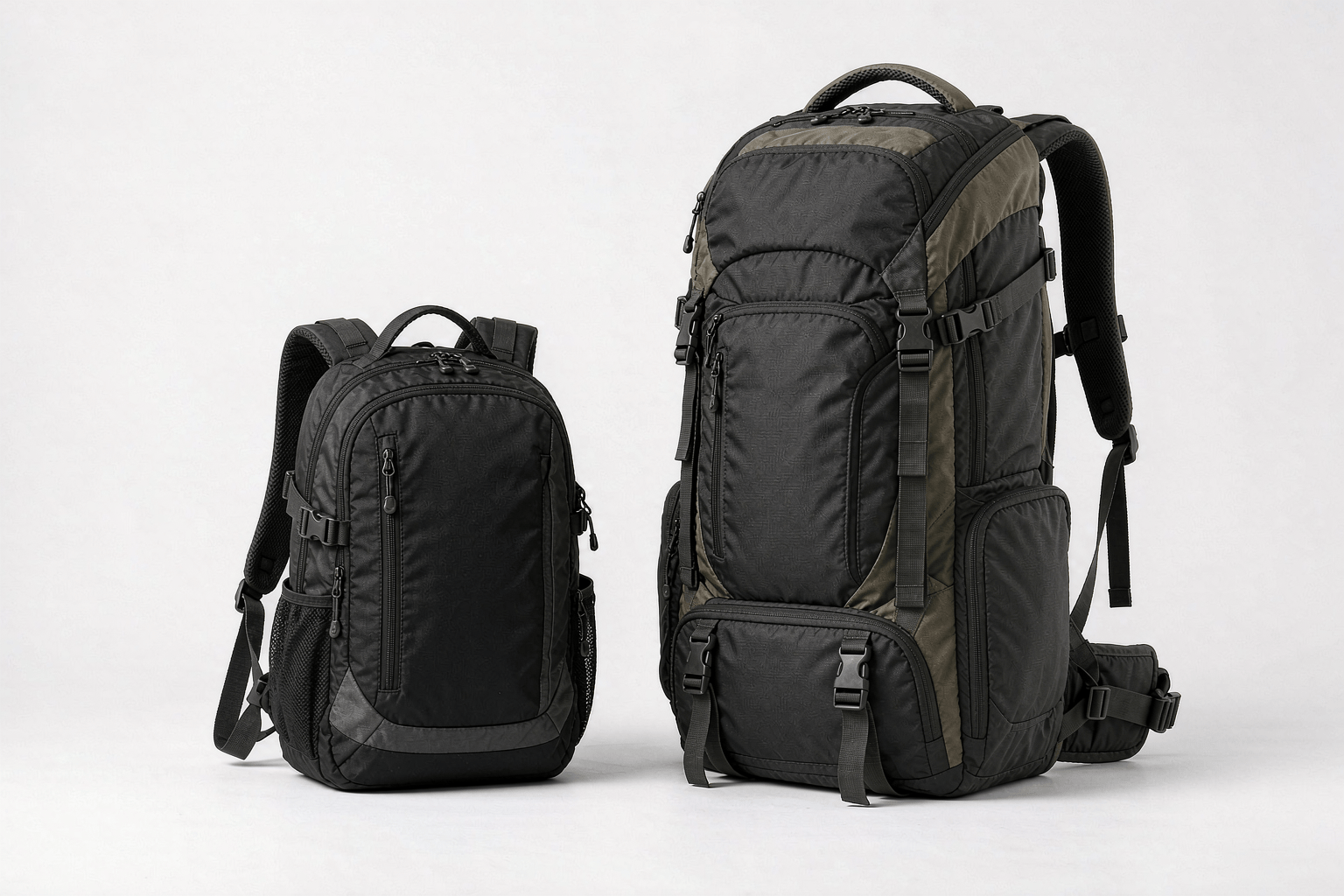
How Capacity Is Measured at the Factory
Capacity is measured in liters because liters describe volume, not length. A factory fills the main and secondary compartments with small beads or water, then reads the displaced amount. That single number rolls every pocket together into one comparable figure, which is why a 30 L daypack and a 30 L hiking pack can look different outside yet hold the same gear. The listed liter count covers usable interior space; straps, frames, and external pockets are not counted, so a pack with many lash points may feel bigger than its number suggests. Trust the liter rating over the dimensions printed on the tag when comparing builds.
Buyers should request the factory’s fill-test video and the bead-displacement number on the tech pack, not just a printed liter claim, because two samples from different molds can read 5–10% apart. A tolerance of ±3% on the stated capacity is a reasonable acceptance band for production QC, and it keeps batch-to-batch feel consistent for the end user. Record the verified number on the approved sample so reorders are measured against the same baseline rather than a marketing figure.
Capacity Tiers and the Programs They Fit
The fastest way to size a line is to match liters to the buyer’s most common trip, then adjust up about 5 L if the user packs heavy. This table is the spec sheet most programs start from.
| Capacity | Typical use | Shell weight target | Common closure |
|---|---|---|---|
| 10–15 L | School run, gym, light city day | 300–450 g | Zip + magnetic flap |
| 16–24 L | Daily commuting, campus, office | 450–700 g | Clamshell or U-zip |
| 25–35 L | Weekend trips, carry-on-only travel | 700–1,000 g | Dual zip + lockable |
| 36–50 L | Extended travel, overnight hikes | 1,000–1,400 g | Wide mouth + straps |
| 50 L and up | Multi-day expedition loads | 1,400 g+ | Top load + frame |
Most programs over-buy on volume. A 35 L pack carried half empty rides badly because the loose load shifts, so size to the normal day, not the longest possible trip.
Capacity by Activity: Shape Matters More Than the Number
Different activities reward different shapes at the same volume. A 25 L commute pack sits tall and narrow to slide under a desk; a 25 L hiking pack sits wide and close to the back for balance. The liter number stays the same, but the internal layout changes the experience.
- Commuting: 15–25 L; padded laptop sleeve and quick-access top pocket matter more than raw space.
- Hiking: 25–50 L; hip belt and compression straps turn volume into a stable load.
- Travel: 30–60 L; a suitcase-style opening beats a top loader for week-long use.
- Cycling: 10–20 L; smaller keeps weight low and the ride stable.
- School: 20–30 L; books and a laptop add up fast, so do not undersize.
Shell Fabric and Coating by Volume
Scale denier with capacity. Small daypacks can use 600D polyester; mid and large travel builds should step up to 900D–1200D, and 1680D ballistic nylon for expedition formats that take harder handling. Pair any shell with a PU or TPU coating of 0.15–0.3 mm for water resistance without stiffness. Recycled rPET at 600D–900D meets many EU retailer sustainability asks and needs a GRS file to support the claim.
Hardware and Stitch by Size
Larger packs stress hardware more, so specify accordingly. Use self-repairing coil zips rated to the opening—#5 for small, #8–#10 for the main clamshell—bar-tack every strap anchor with double stitch rows, and reinforce the base with a moulded or layered panel. Target 8–10 SPI at load-bearing seams and 20 kg+ pull strength at anchors. A wide, non-slip shoulder strap and a luggage pass-through sleeve are baseline for commuter and travel tiers.
Compliance and QC for Export
For the EU, REACH conformance for dyes and coatings is the baseline, with OEKO-TEX Standard 100 supporting retailer audits; for US retail, Prop 65 limits apply to specific phthalates and lead in hardware and coatings. Write QC into the PO: AQL 2.5 for major defects and AQL 4.0 for minor, with inline checks at 20% and 80% production plus a final audit. Add a zip-cycle test of 5,000+ openings and a water-spray test on the coated shell. An ISO 9001-certified factory and a BSCI or SMETA audit report satisfy most buyer onboarding questionnaires.
MOQ, Lead Time, and Carton Planning
A backpack program runs a MOQ of 300–1,000 units per colorway, with a development sample in 7–12 days and bulk lead time of 35–55 days after approval. Carton size and weight drive freight more than the product, so specify flat-pack or structured pack and confirm carton dimensions with your forwarder before tooling. A 35–55 day bulk window plus ocean transit of 25–40 days puts a restock two to three months out, so lock the second run before the first lands for seasonal markets.
Get a Custom Bag Quote
With capacity tiers, fabric, and QC defined, the next step is a manufacturability review. Send your tech pack for a costed quote and a realistic lead-time window: Request a quote →
For model-by-model picks, see Best commuter backpack.
The step-by-step walkthrough lives in How to measure backpack.
Frequently Asked Questions
How many liters is a normal everyday backpack?
A normal everyday backpack runs 15–25 L, covering a laptop, a lunch box, a light jacket, and a few small items. School and commute packs sit in this band, while hiking and travel packs start around 30 L. Size to the normal day rather than the longest trip.
Is a 30L backpack big enough for travel?
For a short trip of two to four days, yes. A 30 L pack holds a compact wardrobe and toiletries if packed tight, and it almost always qualifies as carry-on. For a week or more, step up to 40–50 L to avoid gate-checking.
What size backpack fits as carry-on?
Most airlines accept carry-ons near 40–55 L, but the real limit is the linear inch rule, not liters. A 40 L pack with a slim profile usually clears the bin; a 55 L build may need checking. Confirm the target carrier’s published dimensions before tooling.
Does a higher liter count mean a heavier bag?
Not by itself. A 60 L pack weighs more empty than a 20 L one, but the real weight comes from contents. An overpacked 30 L can feel heavier than a lightly loaded 50 L, so match liters to need and pack discipline.
What denier fabric suits a larger backpack?
Mid and large builds should use 900D–1200D polyester, with 1680D ballistic nylon for expedition formats that take harder handling. Pair either with a 0.15–0.3 mm PU or TPU coating, and consider rPET at 600D–900D for EU sustainability asks.
What QC plan prevents capacity-related defects?
Specify AQL 2.5 for major defects and AQL 4.0 for minor, with inline checks at 20% and 80% production plus a final audit. Add a 5,000+ zip-cycle test and a water-spray test on the coated shell, and confirm fabric denier on arrival at the factory.
Buyers comparing suppliers can review our backpacks and laptop bags for OEM/ODM specs, materials, and MOQ.