An insulated or lunch bag is unusual among soft goods: part of its interior is legally a food-contact surface. The outer fabric and the insulation get the attention in most specs, but the liner — the film or film-laminated layer the user’s food actually touches — is what regulators and customers judge first. Get it wrong and the bag is not just low-quality, it is non-compliant.
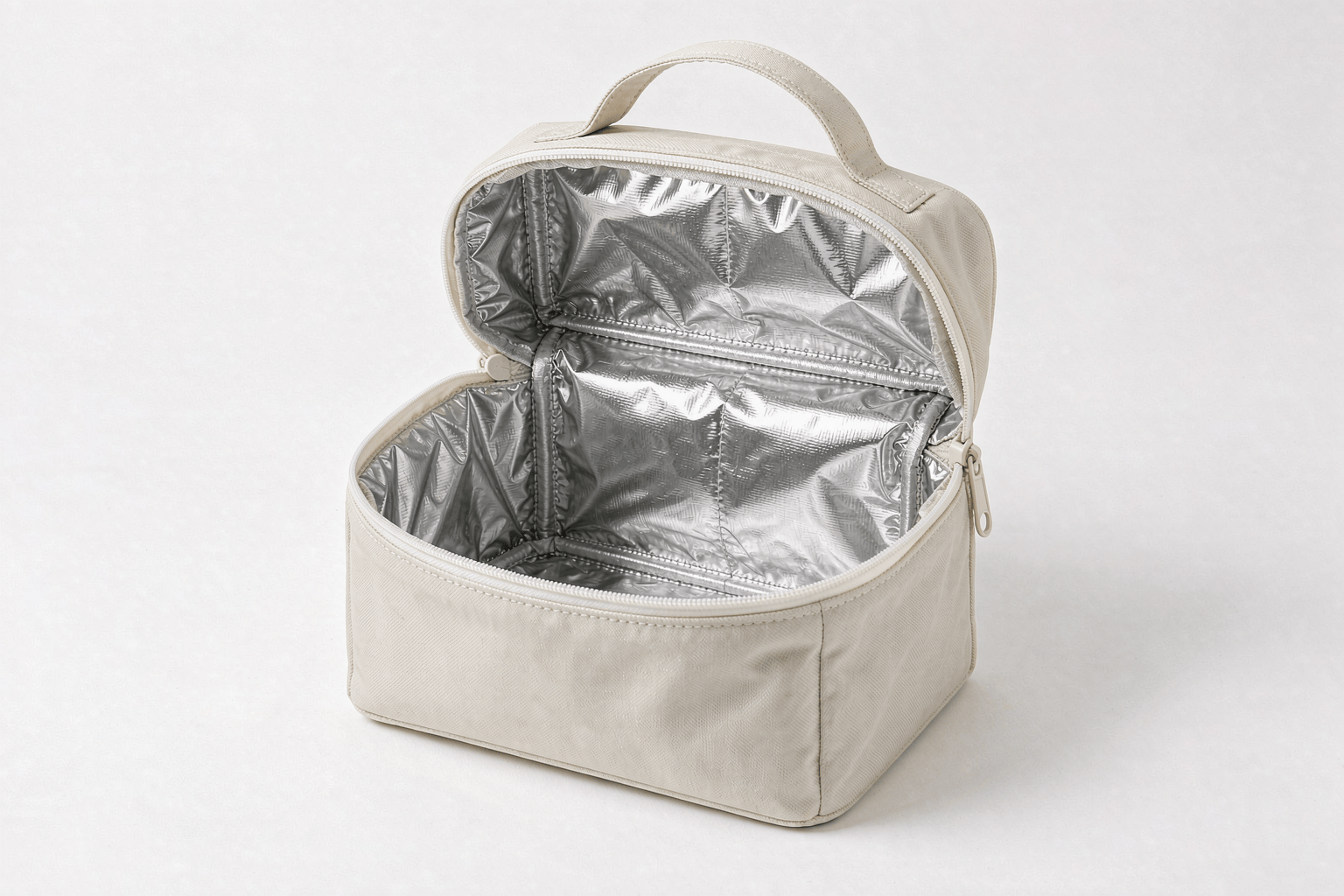
What “food-safe” means for a bag liner
In the United States, plastics intended for repeated food contact are covered under FDA regulations for food-contact substances, including the olefin polymer provisions for polyethylene and polypropylene. In the European Union, plastic materials that touch food fall under Framework Regulation (EC) 1935/2004 and the specific measures in Regulation (EU) 10/2011, which sets composition and migration rules. A liner claim should reference the applicable framework, not just the word “food-grade,” which has no single enforced definition on its own.
These duties sit inside the wider bag compliance picture, but the liner is the one component where the food-contact rules apply directly rather than as general substance restrictions.
Polyethylene vs polypropylene film
Polyethylene (PE) is the common choice for lunch and cooler liners: low cost, flexible, and easy to heat-seal into a continuous, leak-resistant weld. Polypropylene (PP) tolerates higher temperature and resists some oils and fats better, which matters for warm-food or greasy-content use, but it is stiffer and a little harder to weld cleanly.
What both must avoid is plasticiser migration. A liner film should be phthalate-free where it contacts food, and the claim should be backed by the supplier’s material documentation rather than assumed from the resin type. This is the same caution that applies to coated fabrics elsewhere on the bag, applied to the interior surface.
Wipe-clean and weldable, not just safe
A food-contact liner has to be practical, not only compliant. Wipe-clean performance comes from a smooth, non-porous film with sealed seams, so crumbs and spills don’t lodge in stitch holes. For that reason many liners are welded rather than sewn at the corners, which also removes the leak path that stitches create.
Specify the seam method explicitly. A sewn liner with a separate waterproof insert can work, but a welded PE or PP liner is simpler to keep clean and is the standard for cooler and lunch builds. The insulation guide’s notes on sealing explain why the liner-to-insulation closure matters as much as the film itself.
The same smooth-film logic applies when the complaint is smell rather than contamination — gym and wet compartments live by different rules, covered in what antimicrobial linings can and cannot do.
What to write into the tech pack
Lock the liner in the tech pack the same way you would a fabric: name the polymer (PE or PP), state food-contact compliance by framework, require phthalate-free documentation, and specify seam construction (welded vs sewn). If the programme markets sustainability, a recyclable monolayer film is easier to recover than a multi-layer laminate, a point worth raising with your sustainable manufacturing requirements.
Keep a tested liner swatch with the approved sample so incoming inspection has a reference. A short incoming check for odour, film clarity, and weld integrity catches most substandard liner rolls before they reach the line.
Frequently Asked Questions
Is “food-grade” enough to put on a spec?
On its own, no. Pair it with the applicable framework — FDA food-contact provisions in the US or EU 10/2011 in Europe — and require the supplier’s documentation, since “food-grade” alone is not a single enforced standard.
Should the liner be PE or PP?
PE is the default: cheap, flexible, and easy to weld, which suits most lunch and cooler bags. Choose PP when the contents are warm or oily and the higher temperature and fat resistance matter more than easy welding.
Does a welded liner really beat a sewn one?
For leak and wipe-clean performance, yes. Welding removes stitch holes that trap crumbs and leak, which is why welded PE or PP liners are standard on cooler and lunch builds.
Can a sustainable liner still be food-safe?
Yes. A single-polymer PE or PP film is both food-contact compliant and easier to recycle than a mixed laminate, so the two goals usually align rather than conflict.
Buyers comparing suppliers can review our full bag catalog for OEM/ODM specs, materials, and MOQ.