Compression straps are the adjustable webbing bands that run across a bag’s body and cinch the load inward. Their job is twofold: shrink empty volume when the bag is not full, and pull the contents closer to the frame so the load stays stable while the user moves. For brands sourcing travel, outdoor, or hiking bags, they are a spec item worth writing down rather than leaving to the factory’s default. A clear specification prevents flimsy anchors, the wrong buckle, and straps that block access to side pockets. Treat them as a functional system, not an afterthought.
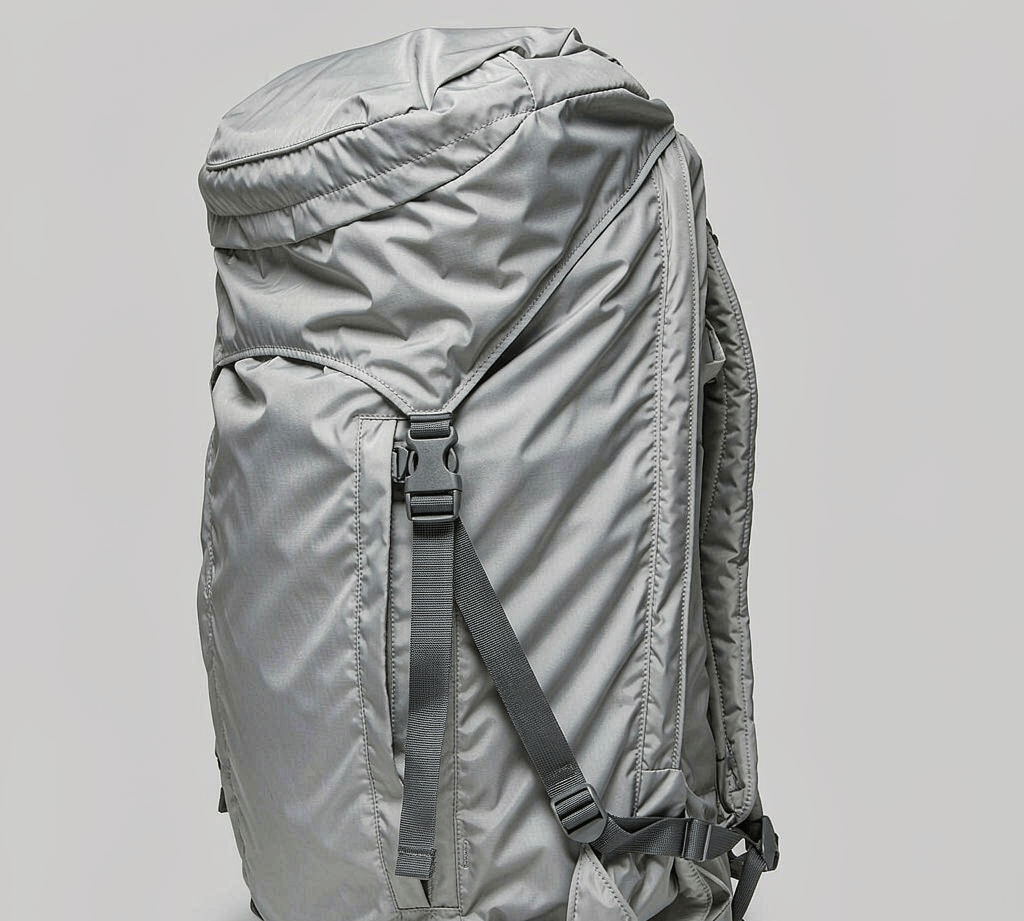
The same side panel often carries gear loops and daisy-chain webbing for clipping accessories; our guide covers spacing and anchors.
What these straps actually do
On a partially filled bag, loose gear shifts and settles to the bottom, which throws off balance and makes the pack feel heavier than it is. They constrict the compartment so the load stays high and close to the wearer’s back. On a full bag, they stabilize bulky items and can double as lashing points for tents, sleeping pads, or trekking poles. The benefit is stability first and volume control second.
The main types you will choose between
Side compression straps run horizontally across the side panels and do most of the work. They are the default on travel backpacks and hiking packs.
Top compression straps sit near the lid or roll top and pull the upper load down, which matters on top-opening bags where the top tends to bulge.
Internal compression straps live inside the main compartment and lock gear in place before the bag is even closed. They are less common but useful for heavy, awkward items that would otherwise press against the back panel.
A rear luggage pass-through is a separate feature — see our bag trolley sleeve guide for that spec.
What to put in a compression-strap specification
Strap webbing width and material. Most compression straps use 20–25 mm (about 1 inch) polypropylene or nylon webbing. Specify the width so it matches the buckle and the panel it crosses. The same webbing strap specs that apply to handles and shoulder straps apply here — call out the break strength if the strap will also lash external cargo.
Buckle type. The standard is a side-release ladder-lock buckle: the strap threads through a ladder, wraps the bag, and locks on the opposite side. Ladder-locks let the user fine-tune tension and are cheaper and more field-repairable than magnetic or cam styles. If you need quick release, specify a side-release clip rather than a fixed loop.
Anchor reinforcement. This is where most cheap bags fail. Each strap end must land on a reinforced panel with an x-box stitch or bar-tack, not a single row of straight stitching. The anchor takes the full pull every time the strap is cinched, so weak stitching rips the webbing straight off the body. For the heaviest anchors, confirm the factory also sets a metal rivet through the panel and webbing; our guide to bag rivets covers when that extra fastener is worth specifying.
Placement and spacing. Decide how many straps per side and where they sit. Three evenly spaced side straps give consistent compression; one low strap that crosses a side water-bottle pocket can either secure the bottle or block it, depending on intent. Spell out the positions so the factory does not guess.
Adjustability and tail length. Leave enough tail that the strap can still close when the bag is stuffed, but not so much that it dangles into spokes or snags. A tidy tail keeper or elastic loop is a small detail buyers notice.
Common specification mistakes
The first is straps that are too short to reach around a full bag, which makes them useless when the bag is stuffed. The second is blocking side-pocket access, where a low strap forces the buyer to unbuckle for a bottle. The third is weak anchors, which turn a helpful feature into a failure point. All three are avoidable in the tech pack rather than after a complaint.
The buckle ties into our bag strap hardware connectors guide. And because cinching changes how full a bag feels versus its rated size, cross-check it against your bag capacity rating when you set the published liter figure.
FAQ
What are compression straps on a bag?
They are adjustable webbing bands that cross the bag’s body and tighten to pull the load inward. They reduce empty volume, keep contents from shifting, and can serve as external lashing points for bulky gear.
Are compression straps necessary on a travel backpack?
Not strictly, but they materially improve stability and let a larger bag shrink down when lightly packed. For travel and hiking use they are close to standard; for a structured commuter tote they are usually omitted.
What type of buckle is used on compression straps?
Most use a side-release ladder-lock buckle. The strap threads through a ladder on one side and clips on the other, allowing fine tension control. Avoid fixed loops if the user needs to open and close the strap frequently.
Where should compression straps be placed?
Typically three evenly spaced side straps per panel, plus an optional top strap near the lid. Avoid running a low strap directly across a side pocket opening unless securing that pocket is the explicit intent.
Related reading
For a broader look at travel-ready designs, our longer write-up on the best travel backpack breaks down which features matter once the bag leaves the shelf and hits the trail.