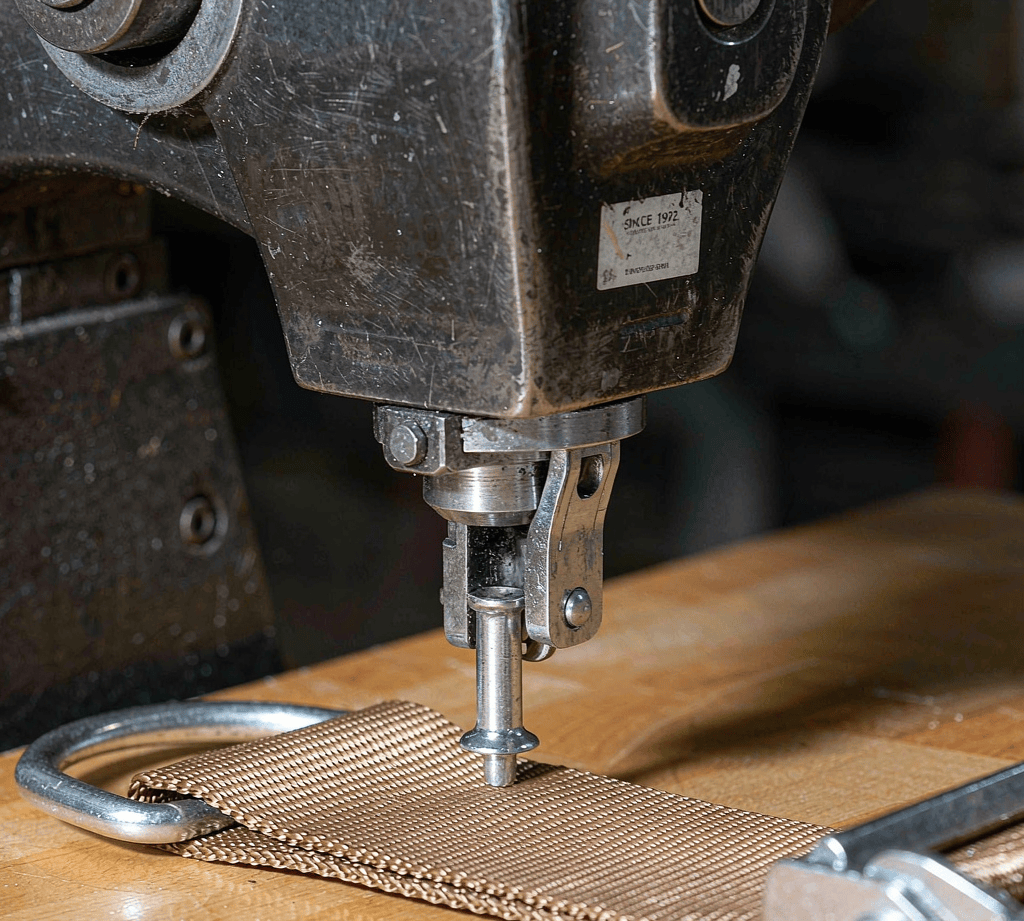
A rivet is a mechanical fastener that compresses two or more layers of leather, fabric, or webbing at a single point. It is the right call at high-stress junctions — handle roots, strap anchors, and D-ring bases — where a stitch line alone slowly works loose under repeated load. The wrong call is along a long seam, where the unsupported material between fasteners flexes and tears. For buyers, deciding which type to specify, and where it belongs, is one of the cheapest ways to cut returns on heavy or structured bags.
Why this hardware matters for a bag order
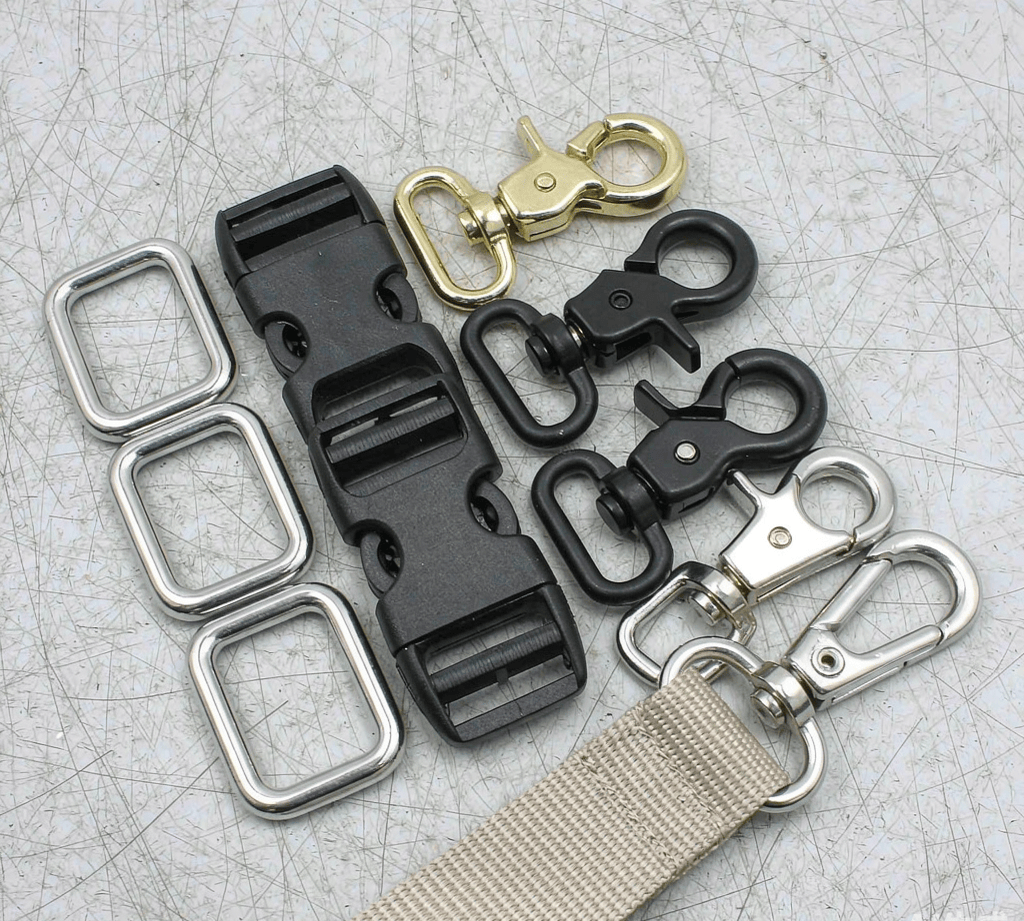
Most bag failures that turn into returns are not about the main fabric — they are about the points where load concentrates. A handle anchor that was only stitched will eventually pull its stitches as the bag is lifted and set down day after day. Adding rivets at those junctions is a permanent mechanical bond that does not rely on thread tension. The cost is cents per unit, but the difference shows up in the warranty rate. If you brief a factory on stress-point reinforcement, they should be part of that conversation rather than an afterthought. So are side-release buckles — another single-point component where a bag lives or dies, and they earn the same spec discipline.
Types used in bag production
| Type | How it is set | Typical use |
|---|---|---|
| Solid | Press-set, permanent | Strongest; heavy leather or tool bags |
| Tubular | Hand press or hammer | Most leather goods, strap anchors |
| Cap / decorative | Set with cap | Denim, western styles, visual detail |
| Magnetic-snap | Combines snap + fastener | Closures that also need reinforcement |
Solid and tubular rivets do the structural work. Cap styles are often decorative but still compress the stack. Magnetic-snap parts pull double duty as a closure and a reinforcement in one component, sitting in the same family of metal fasteners as grommets and eyelets.
Where they belong — and where they don’t
The rule buyers should write into a spec is simple: fasten the stress, stitch the structure. Use them at:
- Handle roots and strap anchors, where the load cycles vertically
- D-ring and O-ring bases, so the ring cannot tear through the webbing
- Belt-loop style adjusters on straps
Do not rivet a long body seam. The leather or fabric between two points is unsupported and will flex, and flex is what tears material over time. A long seam should be stitched or bar-tacked, with the fastener added only as a local reinforcement on top of the stitch.
How to specify them in a tech pack
When you brief a factory, the line in your tech pack should name four things:
- Metal — brass, copper, or stainless. Brass and copper read as quality on leather; stainless resists corrosion on outdoor and sports bags.
- Post length — long enough to set cleanly through the full stack, not so long it mushrooms.
- Cap diameter — matched to the strap or patch width.
- Count per anchor — typically 2–4 at a leather handle base and 1–2 at a D-ring base, usually paired with a bar tack.
Set a test piece on a scrap of the exact stack before production; if the post is too short or the hole too tight, the surrounding material tears. The same logic applies when you specify hardware and zippers for the rest of the bag.
Cost and QC notes
Factory rivet counts vary widely by price tier: a budget bag may skip them entirely, while a premium leather bag pairs two rivets with a hidden backing patch. Adding two metal pieces at a handle base typically adds about $0.08–$0.20 per bag in parts and labor — small relative to the return rate it prevents. When samples arrive, count them and check for that backing patch; a factory rarely upgrades reinforcement after sampling.
FAQ
Are rivets stronger than stitching?
At a single point under shear, yes — the fastener is unbeatable at a concentrated stress point. Along a long seam, no; a stitch line spreads load across many holes, while the gap between two points is unsupported.
What metal should I specify for bags?
Brass or copper for leather goods where the look matters, stainless for outdoor and sports bags where corrosion resistance matters. Avoid thin pot-metal versions on any load-bearing anchor.
How many go at a handle base?
Usually 2–4 on a leather handle, paired with a bar tack, and 1–2 at a D-ring base. More help only if the backing patch and stitching are also correct.
Can they replace bar tacks?
Not completely. A bar tack is made of thread and still fails gracefully; the hardware is permanent but can pull through if the hole or post is wrong. The durable build stitches the structure and fastens the stress, rather than choosing one.
Conclusion
This hardware is a small, cheap line item that protects the most failure-prone part of a bag. Specify the metal, post length, and count per anchor in your tech pack, pair them with bar-tack reinforcement, and verify the rivets on samples. For the surrounding details, the guides on handle construction and strap hardware connectors cover the anchors they are meant to hold.