A load lifter is a short strap running from the top of the shoulder harness up to anchor points near the top of a framed pack. Tightened correctly, it pulls the upper pack toward the wearer’s back, shifting load off the shoulders and onto the hips. For buyers specifying custom backpacks, this strap is a small component with outsized comfort impact — and it is easy to under-spec. The practical answer: define the webbing width, the bar-tack pattern, the adjuster hardware, the anchor reinforcement, and the target attachment angle in the tech pack. The strap only earns its keep on a bag built to last, and that starts with the shell fabric — for a rugged body, see our ballistic nylon spec guide.
What lifters actually do
Gravity pulls a loaded pack straight down; without lifters, a tall pack leans away from the back, forcing a forward posture and shoulder fatigue. The straps pivot the top of the pack inward, improving stability on uneven ground and reducing sway. Fit guides from pack brands commonly target a 30–45 degree angle between the lifter and the harness; some fitted packs sit naturally at 30–60 degrees. The angle is a result of pack geometry, not a dial you set alone.
Webbing and stitching spec
Spec the webbing explicitly rather than leaving it to the factory. A 20 mm flat woven webbing is a common choice for packs in the 35–50 L range. Both ends need reinforced joins: bar-tacks at the harness end and a reinforced anchor patch at the pack end. Keep the strap short — typically 15–25 cm — so it pulls rather than dangles. For the broader webbing decisions on the same pack, see our webbing and strap specs and strap hardware connectors.
Hardware and adjusters
The adjuster is where users interact with the strap daily, so spec it clearly. A ladder-lock or side-release slider in UV-stable acetal is the standard; avoid unspecified generic plastic that cracks under sun and load. The slider must hold position under bounce without slipping. Pair it with the same compression strap hardware language you use elsewhere on the pack so the whole suspension feels consistent.
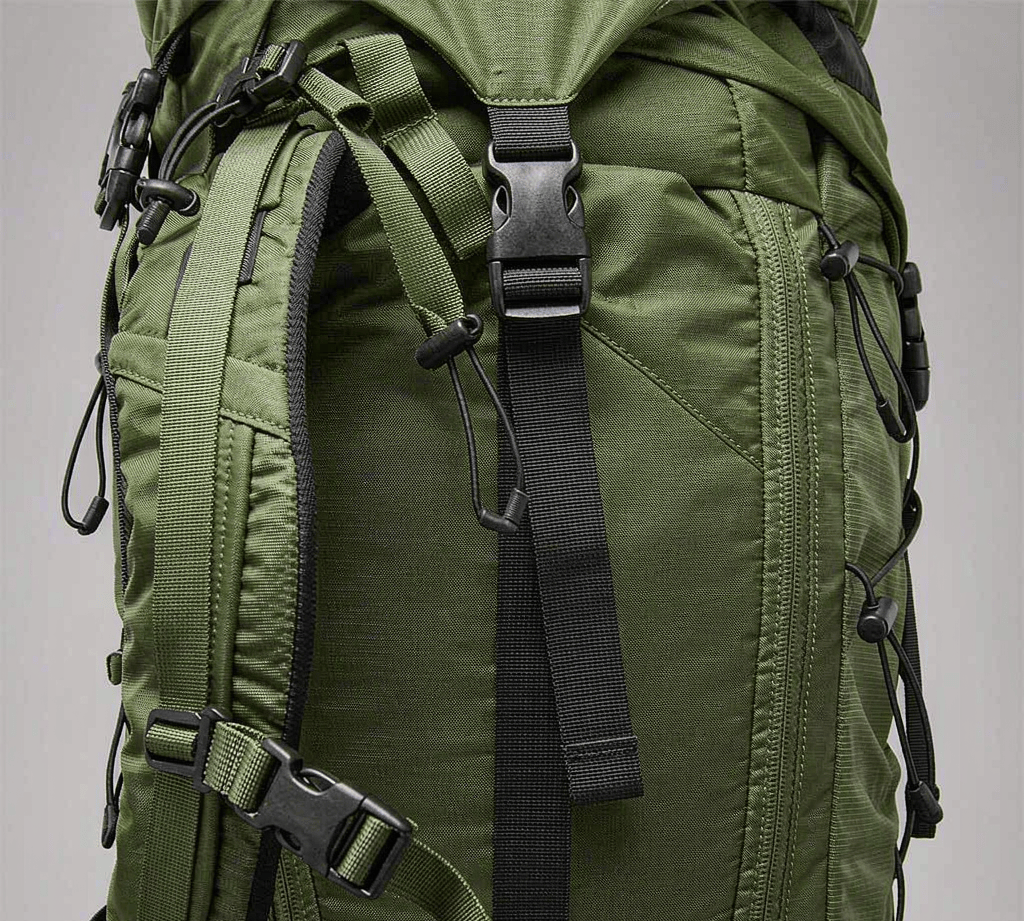
Anchor placement and angle
Anchor points sit at the top corners of the back panel, near where the harness meets the frame. Their exact height is set by torso length and frame design, which is why lifter angle varies between packs. In the tech pack, specify the anchor reinforcement (a doubled fabric patch with bar-tacks) and the target angle window of 30–45 degrees. If the frame sheet and stiffeners define the pack’s shape, the lifter anchors must align with that structure or the strap will pull against nothing.
When lifters matter
They earn their place on framed packs of roughly 35–40 L and above, carrying loads over about 25 lb, on multi-day or technical trips. Small daypacks below that are usually frameless and light enough that lifters add little. Over-tightening is its own failure: cranked too hard, the strap lifts the shoulder strap off the shoulder — a fault called bridging — creating pressure points.
FAQ
What angle should lifters form?
Aim for about 30–45 degrees between the strap and the shoulder harness; some correctly fitted packs sit at 30–60 degrees. The angle follows pack geometry, so specify anchor position rather than chasing an exact number.
What webbing width is typical?
Around 20 mm flat woven webbing suits most 35–50 L framed packs. Define it in the tech pack along with bar-tacked joins at both ends and a reinforced anchor patch.
Which adjuster hardware should I specify?
A ladder-lock or side-release slider in UV-stable acetal is standard. Name the material so the factory does not substitute brittle generic plastic.
Do small daypacks need lifters?
Usually not. They matter on framed packs of roughly 35–40 L and above with loads over about 25 lb; below that, frameless packs are light enough that lifters add little value.
Conclusion
Treat lifters as a specified subsystem: webbing, bar-tacks, acetal adjuster, reinforced anchor, and a 30–45 degree target. Get those in the tech pack and the pack carries closer to the body. For the bigger picture on framed carry, our backpack buying guide for brands covers suspension choices end to end.