Sunlight is the silent killer of bag fabrics. A pack that looks fine in the showroom can lose color, turn chalky, and shed breaking strength after a season of outdoor use. For buyers sourcing bags for hiking, marine, or vehicle-mounted use, UV resistance is not a nice-to-have — it belongs in the tech pack alongside denier and coating. The same tech pack should also lock in a shrinkage tolerance, because fabric shrinkage after the first wash can move the panel independently of any UV loss. The short answer: specify a test standard, a minimum exposure-hour rating, a gray-scale fade score, and a retained breaking-strength percentage, then request the per-lot report.
What sunlight actually does to a bag
Ultraviolet radiation breaks polymer chains in nylon and polyester and degrades the topcoat. Early signs are color washout, a chalky surface, and flaking of the waterproof layer. Left longer, the base fabric loses tensile strength and seam tape lifts. Unlike abrasion, UV damage is global: the whole panel weakens, not just one spot, so the only real fix is replacement. That is why a clear spec up front costs far less than warranty returns later. Polyester ripstop keeps its grid strength while resisting the UV fade that plain nylon shows first.
The numbers to put in a tech pack
Buyers should name the standard so mills and labs test the same way. For North America, AATCC 16.3 (xenon-arc) is the common reference; for the EU and global brands, ISO 105-B02 is the equivalent. Ask for three values on every lot:
- Exposure hours — a 400-hour baseline is typical for sun-exposed bags; step up to 500 hours for tropical or high-altitude lines.
- Gray-scale rating — how much the color shifted, on the standard 1–5 scale.
- Retained breaking strength — the percentage of original tensile strength left after exposure.
Requesting the number alone is not enough; ask for the batch ID, roll numbers, and a retained golden sample so a disputed lot can be re-checked.
Polyester vs nylon under the sun
A useful rule of thumb: solution-dyed polyester holds color and strength better under long sun exposure than nylon, while nylon starts stronger but fades and weakens faster. Many supplier QUV reports show solution-dyed polyester retaining roughly 85–90% of breaking strength after 400 hours, against 75–80% for UV-stabilized nylon. Treat those as typical reference points, not guarantees — always request the actual per-lot report before approval. The trade-off is cost: custom solution-dyed colors often start around 500–1,000 yards and add a 10–15% surcharge, which is usually cheaper than fade-driven returns.
Stabilizers and color choices
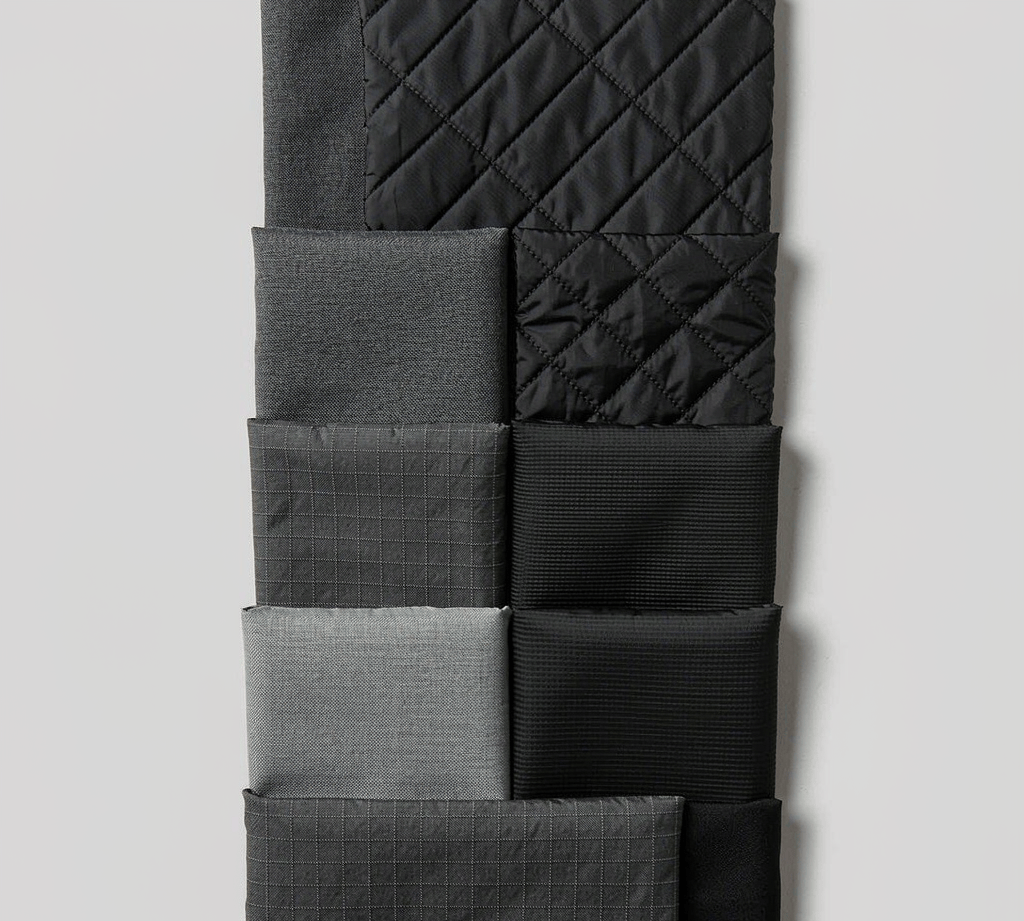
UV masterbatch additives such as carbon black or titanium dioxide extend life noticeably. Solid, opaque colors from reputable mills outlast bright translucent hardware and pale fabrics in harsh sun. For packs that live on a vehicle roof or a boat deck, darker opaque shells are the safer default. When evaluating a coated fabric’s denier and coating, pair that data with the UV report so the whole material system is specified, not just one property.
Where UV protection matters most
Priority goes to bags with constant sun load: outdoor and hiking packs, marine and watersport gear, alpine tours, and anything mounted outside a vehicle. Indoor or urban-commute bags see far less, so a lighter spec is reasonable there. Pair the fabric choice with water-repellent finishes and colorfastness testing so the three degradation modes are covered together. The gusset and base panels sit in the same sun load as the body, so the same build choices in bag gusset construction — heavier corner fabric and clean folds — matter just as much there. For recycled shells, note that rPET can shift under heat and sun, so ask for UV data on the recycled lot specifically.
FAQ
How many xenon hours should I require for an outdoor bag?
A 400-hour baseline under AATCC 16.3 or ISO 105-B02 covers most sun-exposed bags; request 500 hours for tropical, desert, or alpine products where UV load is highest.
Is solution-dyed fabric worth the higher MOQ?
For color-critical outdoor lines, yes. The surcharge is usually 10–15% and the MOQ often starts near 500–1,000 yards, but it prevents fade-related warranty returns that cost more over the product life.
What single number proves a fabric passed UV testing?
Retained breaking strength after the agreed exposure hours, supported by the gray-scale fade rating and the named test standard. Insist on the per-lot report with batch and roll IDs.
Does polyester or nylon resist sun better?
Solution-dyed polyester generally resists UV and color loss better over time; nylon is stronger initially but degrades faster in sustained sun. Match the fiber to the actual use environment.
Conclusion
UV resistance is a spec, not a hope. Name the standard, set the hours, demand the retained-strength number, and file the lot report. For a broader material decision framework, see our guide on how to choose bag material.
If you are specifying the base cloth, also see our guide to fabric bursting strength and how it complements tear testing.