When a bag panel gets snagged, a normal woven fabric can tear straight across. Ripstop fabric is built to prevent that: at regular intervals a heavier reinforcement thread is woven into the base cloth, forming a visible grid that catches a running tear before it spreads. For buyers, the practical payoff is that you can drop the base denier, cut weight and cost, and still keep tear resistance where it matters. This guide covers what ripstop actually is, how to choose nylon versus polyester, which coatings to pair with it, and exactly what to write into a tech pack. When you write that tech pack, also set a shrinkage band, since fabric shrinkage after washing can pull a ripstop panel out of tolerance even when the grid stays intact. Fabric that resists tearing still needs help where the impact lands, which is why many buyers also spec riveted corner protectors on the base corners.
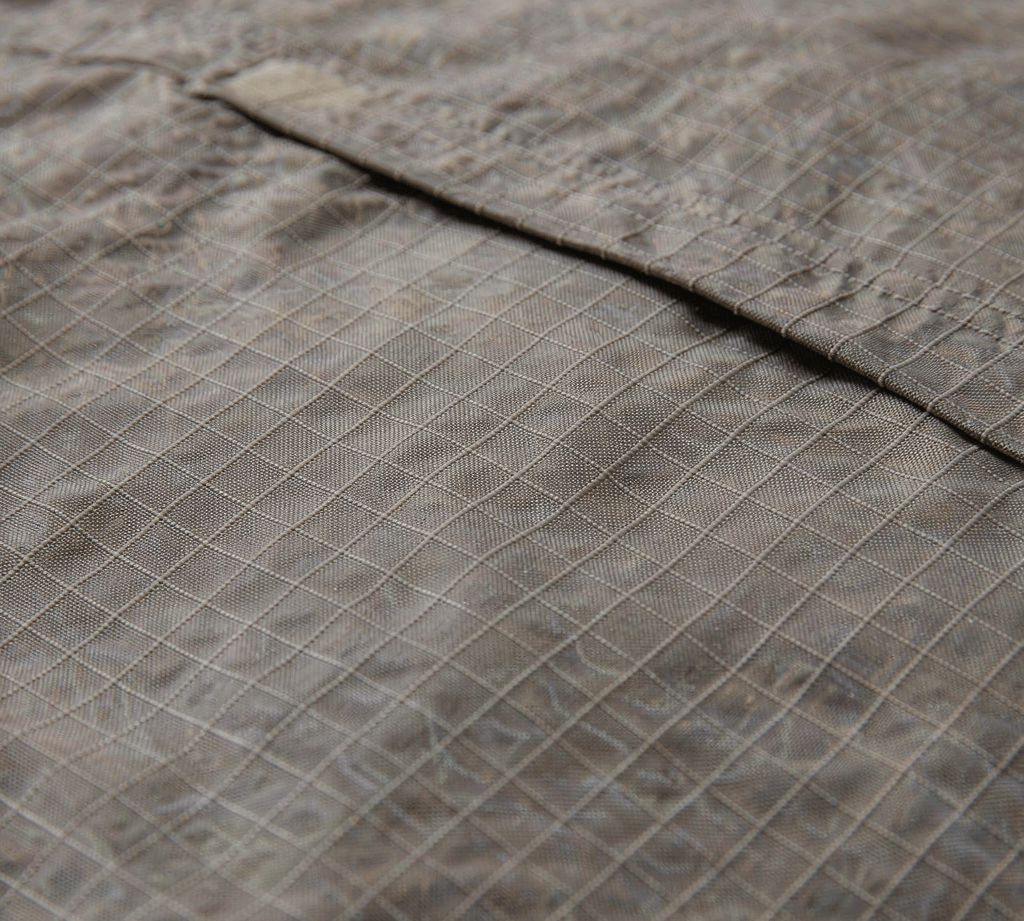
What “ripstop” describes
The term names a weave construction, not a material. A lighter base cloth (often 70D–210D nylon or 210D–600D polyester) is interwoven at fixed intervals—typically every 3–8 mm in both directions—with a thicker reinforcement thread (300D–1000D). The result is the familiar checkerboard grid. That grid does one job: when a tear starts, it hits the heavier thread and stops. It does not make the whole panel stronger, so a ripstop 210D can be lighter than plain 210D yet resist tear travel far better.
Nylon or polyester ripstop
The two fibers behave differently, and the choice changes cost and field life:
- Nylon ripstop has higher tensile and abrasion strength and better flex life, and it absorbs almost no water. The trade-off is faster UV fading and a higher price.
- Polyester ripstop holds color and UV stability better and is cheaper, but it takes on more water and is slightly weaker per denier.
For premium outdoor and bike bags where abrasion dominates, nylon is the usual pick. For budget school or promotional lines exposed to sun, polyester is often the smarter call. Either way, the base denier and coating still set the real performance ceiling.
Denier and grid spacing
Common combinations map to clear use cases:
- 70D nylon ripstop — ultralight pack liners and stuff sacks
- 210D nylon ripstop — daypacks and lightweight panels
- 300D–600D polyester ripstop — luggage shells, school bags, and child-carry items
Tighter grid spacing stops more tears but makes the cloth stiffer and more expensive, so specify the widest grid that still meets your tear test. This is the same judgment behind a ballistic nylon spec, where density is traded against weight.
Coating and finish
Ripstop is almost always back-coated. PU coating is cheap and gives a hydrostatic head around 500–1500 mm; TPU lamination welds cleanly, is PFAS-free, and lasts longer. A DWR face treatment sheds surface rain. None of this makes the weave itself waterproof—water resistance comes from the coating plus DWR, so read the actual water-repelling rating rather than assuming the grid seals anything.
Where ripstop earns its place
Specify ripstop on outdoor, hiking, bike, kids’, and luggage shells where snags are frequent, and on reinforcement panels and pack interiors. It is unnecessary on structured, leather-look totes where the shape comes from foam and board rather than fabric tear strength. The gusset base is one of those high-wear spots where a ripstop weave pays off — see how bag gussets are built for the seam and fold details that hold it together.
Writing ripstop into the tech pack
Give your factory a complete line for each property so inspection is unambiguous:
- Base fiber and denier (e.g., 210D nylon)
- Grid thread denier and spacing in mm (e.g., 500D every 5 mm)
- Coating type and weight in g/m² (e.g., PU 0.15 mm)
- DWR requirement and minimum spray rating
- Color and fastness class
- A tear-strength test (ASTM D2261 / D5587 or ISO 13937-2) with an agreed minimum value
Hand the same detail set to every supplier so quotes are comparable.
FAQ
Is ripstop fabric actually stronger than regular fabric?
Not in overall strength—the base cloth is often lighter. Its value is stopping a small tear from running, so it resists tear propagation far better than an equal-weight plain weave.
Does ripstop make a bag waterproof?
No. Ripstop controls tears; water resistance comes from the back coating and DWR finish. Check the hydrostatic-head rating instead of assuming the weave seals.
Nylon or polyester ripstop—which should I choose?
Pick nylon for abrasion and flex life on premium outdoor bags. Pick polyester when UV stability, color retention, and budget matter more than absolute strength.
How do I specify ripstop in a tech pack?
State the base fiber and denier, the grid thread denier and spacing in mm, the coating type and weight, the DWR requirement, and a minimum tear-strength test with the standard and pass value.
Final note
Ripstop is a weighting decision, not a magic upgrade: lighter base, reinforced grid, then the right coating. Get those three lines right in the tech pack and you cut weight and cost without opening a warranty problem. For a fuller material-selection framework across the whole line, see our bag material guide.
When the body is ripstop, a clear window panel can be sewn or welded into the same shell so the see-through section matches the fabric. Our clear PVC window spec guide covers film thickness and attachment methods.
If you are specifying the base cloth, also see our guide to fabric bursting strength and how it complements tear testing.