A waterproof zipper is the single most common leak path on a bag. If your product faces rain, spray, or submersion, specify a coated (PU or TPU) or gasket-sealed zipper instead of a standard coil zip — that choice matters more than the fabric itself. This guide covers the three waterproof zipper types, the ratings worth requesting, and the trade-offs buyers routinely overlook.
For a full buyer’s checklist covering lockable zipper sliders alongside slash-resistant panels and cut-proof straps, see our anti-theft bag features guide. Where a flap needs a visible close rather than a zipper, a turn-lock closure is the refined choice.
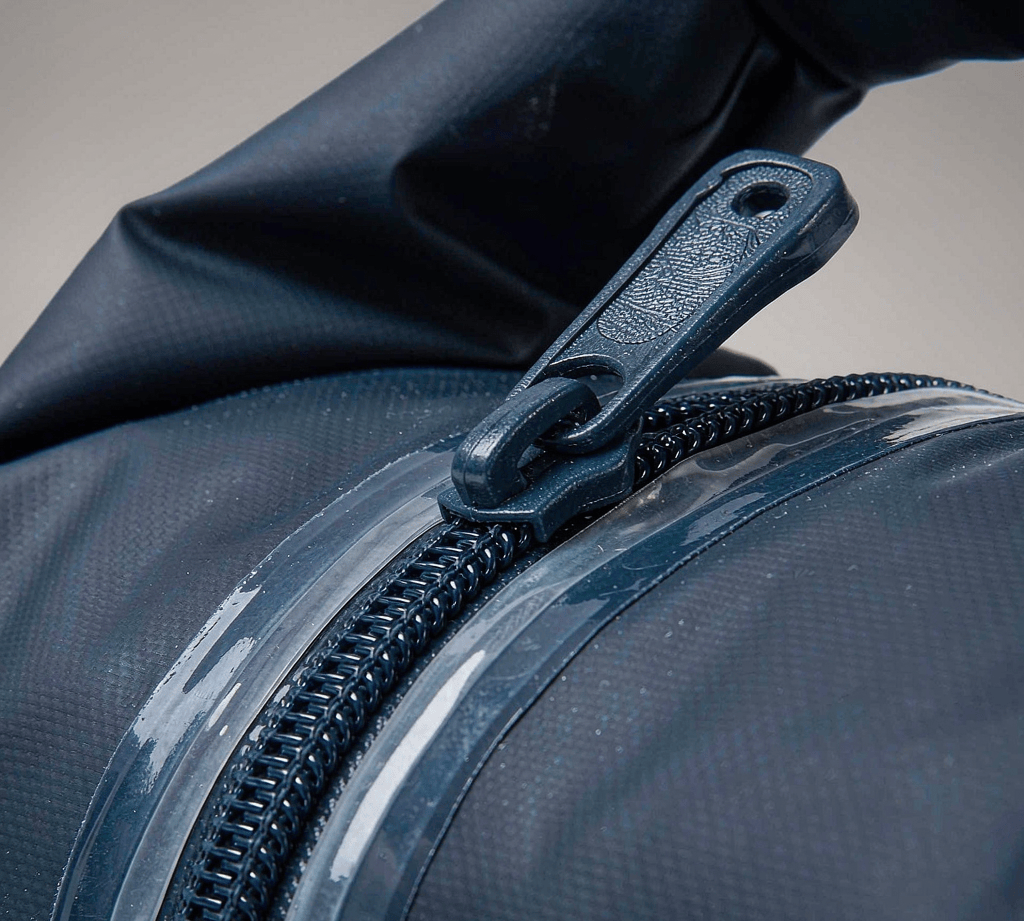
The three waterproof zipper types
Most “waterproof” zippers are a standard nylon coil whose tape has been sealed, not a different tooth design.
- PU-coated coil — a polyurethane layer laminated over the zipper tape. Flexible and inexpensive, rated around IPX3 (rain and splash). Common on commuting backpacks and laptop cases.
- TPU-laminated coil — a thicker thermoplastic polyurethane film that gives a stronger seal, roughly IPX4. This is the workhorse for premium outdoor and travel bags.
- Molded / gasket-sealed — teeth are injection-molded with a compression lip that seals when closed. Rated for submersion and used on dry bags and water-sports gear, but stiffer and more costly.
For a general comparison of zipper grades and finishes, see our guide to bag zipper hardware.
What rating to request
“Waterproof” is not one standard. Ask the factory for two numbers: an IPX rating (ingress protection against water) and a hydrostatic head figure in millimetres. A PU-coated zip around IPX3 handles a rain shower; a TPU-laminated zip near IPX4 copes with heavy rain; a gasket-sealed zip is specified for immersion. Many suppliers quote hydrostatic head of 3,000–5,000 mm for heavy travel rain and 5,000 mm+ for harsh handling — request the test report rather than trusting the label.
A cheap insurance step is a storm flap: a fabric panel over the zip that cuts direct water exposure by 60–80%. Pairing a TPU zip with a downward-facing flap at least 20 mm wide is a common premium-travel solution. Fabric choice still matters — our notes on water-repellent ratings explain why a DWR finish alone is not a seal.
Trade-offs buyers forget
Waterproof zippers are stiffer than standard coil, so they need more pull force. Specify larger, textured pull tabs or cord extensions or end users will fight the closure. Color is another constraint: TPU films offer a narrower range than dyed polyester tape, so a custom Pantone match means tighter tolerances and longer lead times. Plan for UV aging too — TPU can yellow or crack after two to three years of strong sun, so tropical-market products should call for UV-stabilized film. Budget roughly $3–8 more per unit versus a standard zip, offset by fewer water-damage returns.
Even a waterproof zipper leaves the surrounding panel stitched, so the body seams still need a heat-taped seal — our guide to specifying heat-taped seams walks through tape type and peel strength.
When a standard zipper is enough
Not every bag needs a sealed zip. Indoor, closet, or light-rain commuting products are fine with a reverse-coil zip plus a storm flap. Over-specifying adds weight, cost, and stiffness where buyers will not notice the benefit. Decide by use case, not by marketing.
Writing it into the tech pack
A clean spec line removes guesswork at the factory: “YKK AquaGuard PU-coated coil, IPX4, with a 22 mm storm flap and textured pull tab.” Name the brand or equivalent, the rating, the flap width, and the pull style. Seam sealing must back it up — a sealed zip on a stitched seam still leaks, so pair it with welded or taped seams for true waterproofing. For the fabric side of the same build, our TPU film lamination guide covers bonded waterproof shells.
FAQ
What is the difference between a water-resistant and a waterproof zipper?
A water-resistant zipper (often DWR-treated or reverse-coil) sheds light splashes but leaks under pressure. A waterproof zipper has a PU/TPU-coated or gasket-sealed tape rated to an IPX level, and is built to stop penetration during rain or submersion.
Which waterproof zipper type is best for dry bags?
Molded, gasket-sealed zippers are the right call for submersible dry bags because they compress into a true seal when closed. TPU-laminated coil is enough for splash-and-rain travel bags where full immersion is not expected.
How much do waterproof zippers add to unit cost?
Expect roughly $3–8 more per unit than a standard coil zip, driven by the coated tape, the sealing process, and any brand specification such as YKK AquaGuard. Fewer warranty claims usually offset the premium over a product’s life.
Do waterproof zippers need special pull tabs?
Yes. The coated tape makes them stiffer, so specify larger, textured pulls or cord extensions so the bag opens easily. A small standard slider pull is the most common usability complaint on sealed-zip products.
Conclusion
Specifying waterproof zippers is a component-level decision, not a marketing line. Pick the type by exposure (rain versus submersion), request an IPX or hydrostatic-head figure, pair it with a storm flap and sealed seams, and write the rating and pull style into the tech pack. For the full hardware picture, see our guide to specifying bag hardware and zippers. Travel bags that pair sealed zippers with a well-specified trolley sleeve stack cleanly onto a rolling case.