Private label backpacks let a new or growing brand reach market in months instead of years, because the factory’s existing tooling and construction experience do most of the heavy lifting. The brand owner supplies the positioning, the logo, and a few customization choices, while the manufacturer handles cutting, sewing, and shipping. Done right, this model keeps development cost low and lead times short without forcing a compromise on quality.
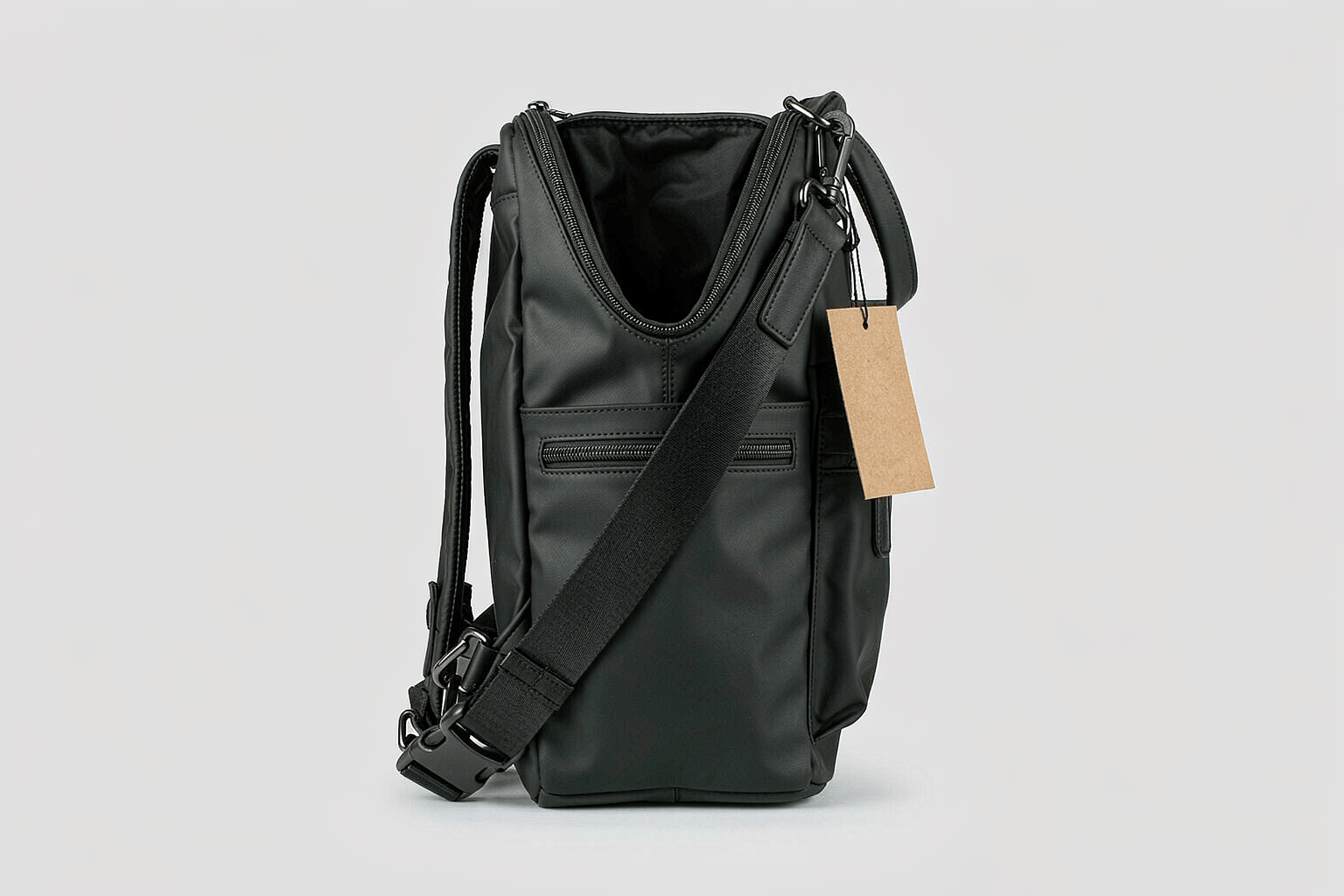
Private Label vs. Full Custom
The first decision is understanding what “private label” actually means. A private label program starts from a factory’s proven base model — a design that already has graded patterns, tested construction, and settled material sources. The brand then applies its own identity on top. Full custom, by contrast, begins with a blank sketch: new pattern engineering, new tooling for hardware, and often new supplier qualifications.
For most first-time brand owners, private label is the lower-risk entry. Full custom makes sense once sales volume justifies the engineering investment, or when the product concept genuinely cannot be expressed with existing molds.
Define Your Positioning First
Before contacting any supplier, write down the target user and the problem the bag solves. A 22-liter commuter pack, a 40-liter travel pack, and a 12-liter kids’ pack draw on completely different base models and price points. Buyers who skip this step tend to get pulled toward whatever a salesperson has in stock. A clear brief — capacity, audience, price ceiling, and must-have features — makes supplier conversations productive. The guide on how to choose a backpack covers the feature trade-offs worth locking down early.
Find and Vet a Supplier
Look for manufacturers with a documented private label catalog rather than a generic trading company. Request:
- Photos and spec sheets of existing base models in your category.
- A list of brands they currently produce for (references, even anonymized).
- Their typical lead time from order to ex-works shipment.
- Proof of social and quality audits (covered in the OEM custom bags resources).
A video factory walkthrough or a third-party inspection report goes further than promises on a website.
Ask for the quote in line items while you are at it — a factory can cut cost in ways that are invisible without a material breakdown, and refusing one is among the pitfalls listed in what to verify on a business luggage manufacturer.
Choose a Base Model or Light Custom
Most private label programs offer two routes. The simplest is to take a stock model as-is and change only the logo and colorway. The more flexible route keeps the base construction but swaps the lining, changes hardware finishes, or adjusts pocket layout within the existing pattern. Each change adds cost, so prioritize the ones a customer actually notices.
The same base-model logic applies well beyond packs — the common tote builds, and what each one is actually good at, are set out in a comparison of tote bag types.
Branding Options That Matter
Common private label branding includes:
- Logo application: woven labels, screen print, embroidery, or debossed PU patches.
- Color: match to a Pantone reference rather than a screenshot.
- Hardware: zipper pulls, buckles, and D-rings can be swapped to a branded color or logo-embossed puller.
- Lining: a custom-printed interior fabric is a high-impact, low-cost touch.
MOQ, Samples, QA, and Shipping
Minimum order quantities for private label typically land far below full custom — often a few hundred units per color rather than several thousand. Before committing, order a prototype and then a sealed pre-production sample. Agree on a QA plan in writing: acceptable stitch density, zipper cycle tests, and weight tolerance. Production then runs against that sealed sample, and a final inspection at the factory or at the port confirms the bulk matches it.
For a wider view of available styles, browse the backpacks category archive.
Shipping terms are the other half of that agreement: how units are polybagged, how many go in a carton, and how the container loads are covered in export cartons and pack-out math.
Quick Checklist
- Define capacity, audience, and price ceiling before sourcing.
- Confirm the supplier runs private label programs with references.
- Pick a base model; limit custom changes to high-visibility items.
- Lock logo, Pantone color, and hardware in the tech pack.
- Order a prototype, then a sealed pre-production sample.
- Write the QA criteria before bulk production begins.
FAQ
How fast can private label backpacks ship? With a stock base model, tooling is already done, so most programs move from deposit to ex-works in 30–60 days plus transit — much faster than full custom.
Is private label cheaper than custom? Yes, because pattern engineering and tooling are amortized across the factory’s existing runs. The savings shrink as you add custom hardware and structural changes.
How much can be changed on a private label base model? Colourway, fabric, lining, hardware finish, zipper pulls, and branding are usually open. Structural changes — panel shapes, dimensions, or internal layout — push the programme into semi-custom work with fresh pattern engineering and a higher minimum.
If you are scoping a custom backpack build, our backpack sourcing buyers guide covers capacity, fabric, and hardware in the same B2B frame.
Buyers comparing suppliers can review our backpacks and laptop bags for OEM/ODM specs, materials, and MOQ.