The number that decides whether a bulk bag shipment passes or gets rejected is rarely discussed until the container is already on the water. That number is the acceptable defect rate — the share of units that can arrive flawed before the whole lot is considered failed. For buyers placing custom tote bags, backpacks, or promotional runs, agreeing on this figure before production saves more money than any single line-item negotiation.
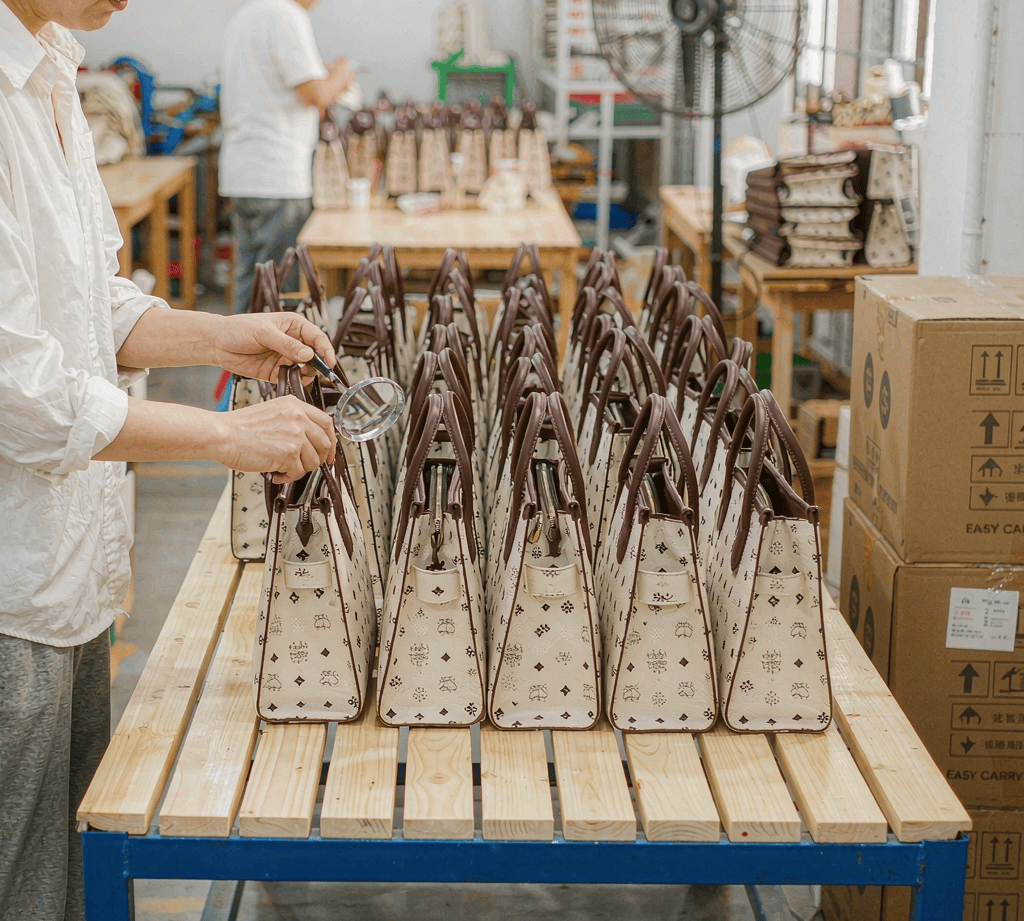
What AQL actually means
Acceptable Quality Limit (AQL) is a sampling standard, not a promise that zero defects exist. It defines how many pieces from a lot are inspected and the maximum number of defects allowed in that sample before the lot is rejected. A common setup for general bag orders is AQL 2.5 for major defects; premium or gift-grade programs often tighten to AQL 1.5 or 1.0. The sample size grows with the lot, but you never open every box.
Two standards dominate: ISO 2859-1 and its U.S. counterpart ANSI/ASQ Z1.4. Specify one in the purchase order so both sides calculate the same sample size from the same table.
Sorting defects into classes
Not all flaws are equal, and the contract should say so:
- Critical — safety or regulatory failure. Toxic hardware, a strap that detaches under rated load, or a child-safety hazard. Even one usually rejects the lot.
- Major — hurts function or obvious appearance. A broken zipper, a misaligned logo, a torn lining. Governed by the AQL major level.
- Minor — cosmetic only. A stray thread, a slight color shift, a minor stitch skip. Governed by a looser AQL minor level.
For custom tote bags, a misregistered print is a major defect; a loose thread at an inside seam is usually minor. Agreeing on these examples up front prevents the “that’s fine, ship it” arguments at the inspection table.
This classification also catches loose or missing hardware: a grommet or eyelet that pulls free under load is a major defect, not a cosmetic one.
Drop-related failures — cracked shells, torn handles, popped rivets — are among the most common defect classes, and a bag drop test at the sample stage catches them before bulk.
What to write into the contract
A defensible purchase order names:
- The AQL level for major and minor defects, and the standard (ISO 2859-1 or ANSI/ASQ Z1.4).
- Who inspects — the factory’s own QA, or a third-party inspection at the factory or port.
- When — during production (DUPRO) catches systemic problems early; pre-shipment catches them before they leave.
- Remake and return terms — who pays for a failed lot, and whether a partial pass is allowed.
Most disputes trace back to a missing clause, not a bad factory. The custom backpack MOQ guide walks through how order size interacts with inspection economics, and the sampling timeline explains why catching issues at the prototype stage is cheaper than at the container stage.
Tie it to the sourcing decision
Defect rate is only half the picture; the other half is who you are buying from. A supplier’s historical reject rate, their willingness to share inspection data, and their response to a failed lot matter as much as the printed AQL. The practical sourcing guide for bags covers how to weigh these signals before you commit.
The trade-offs between the two are compared directly in OEM vs ODM Bag Manufacturing: Which Fits Your Brand. The same purchase order should also name the delivery terms alongside the defect-rate clause, so freight and risk are fixed before production starts.
FAQ
Is AQL 2.5 good enough for promotional tote bags?
For standard promotional runs it is a common, reasonable level. For gift-grade or premium programs, tighten to 1.5 or 1.0 and state it in writing.
Who pays if a lot fails inspection?
That depends on the contract. A clear remake-and-return clause — naming who covers freight and rework — avoids a stalemate when a lot is rejected.
Should I inspect during production or only at the end?
Both have value. A during-production check catches a systemic error (wrong thread, mis-set machine) while it is still cheap to fix; a pre-shipment check confirms the finished lot.
Does a lower AQL mean higher cost?
Usually yes, because tighter sampling and more rework raise the effective unit cost. The buyer’s job is to set the level that matches the product’s risk, not the lowest possible number.
Buyers comparing suppliers can review our full bag catalog for OEM/ODM specs, materials, and MOQ.