Fabric tensile and tear strength decide whether a bag survives a heavy load, a sharp corner, and months of tugging — long before the zippers or straps give out. For a B2B buyer this belongs in the tech pack alongside denier and coating: a minimum grab strength, a minimum tear strength, and a note about which direction matters for the panel. These are buyer-defined numbers verified by standard lab tests; there is no universal pass mark, so you set the floor. Get it wrong and panels split at the stress points even when the bag looks fine on the shelf. UV exposure is a separate failure mode from tearing; for the test standards and retained-strength numbers to put in a tech pack, see UV resistance in bag fabrics.
Tensile and tear are two different failures
Tensile strength (often called “grab strength”) measures how much pulling force the fabric resists before it rips across a clamped strip — think of a strap yanking a panel. Tear strength measures how far a slit propagates once it has started — think of a snag catching and running across the cloth. A fabric can score well on one and poorly on the other, so buyers usually specify both. A heavy canvas may resist pulling yet tear easily once nicked; a tight ripstop may stop a tear but feel stiff under load.
The test methods buyers reference
The commonly cited methods are ASTM D5034 for the grab test and ASTM D5587 (Elmendorf) or ASTM D1424 (tongue tear) for tear resistance; in many markets the ISO equivalents (ISO 13934-1 for tensile, ISO 13937-2 for tear) are requested instead. The key is that the test method is standardized even when the minimum value is not. Ask the supplier for a lab report run on the exact fabric and finish you ordered, because coating, backing, and dye lot all shift the numbers. A number quoted for “similar nylon” is not the same as a number for your cloth.
Warp and weft: direction matters
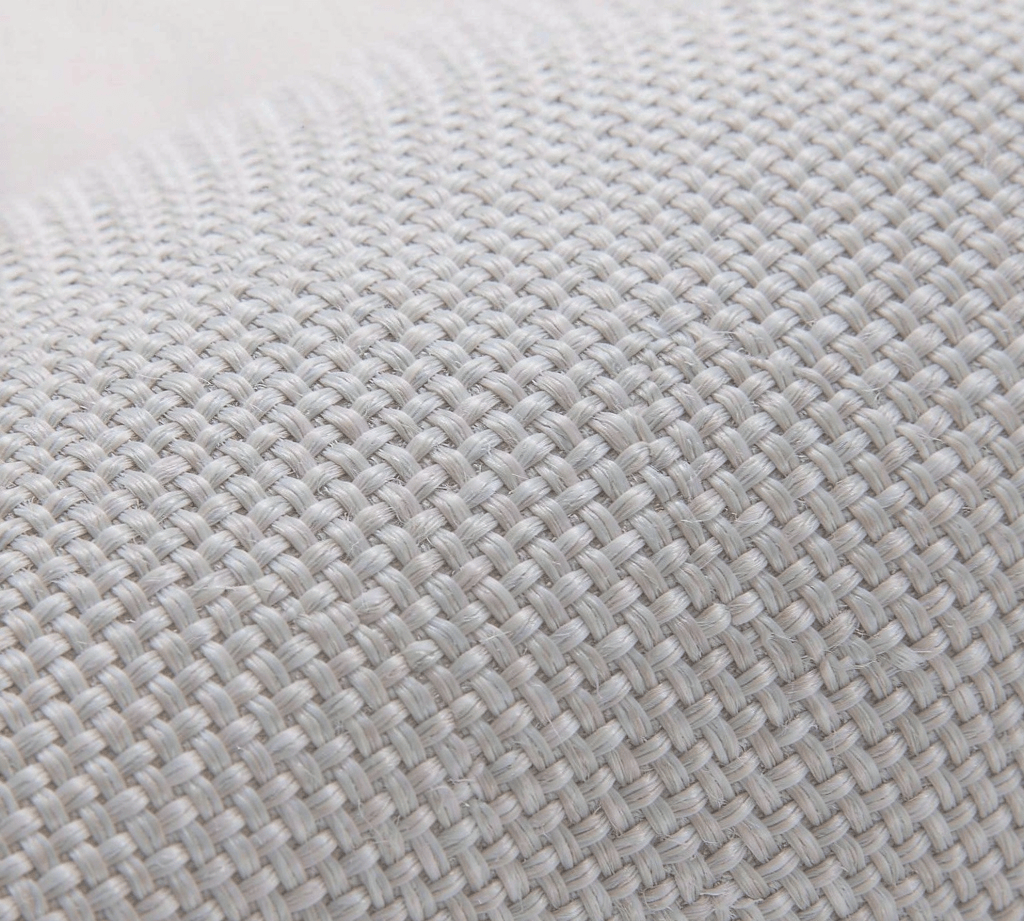
Woven fabric has two thread directions — warp (along the roll) and weft (across it) — and they rarely share the same strength. A bag panel loaded by a shoulder strap may fail along the weft while a side panel fails along the warp. Specify the minimum in both directions, or at least the weaker one, and say which. Bias-cut panels (cut at 45°) behave differently again, which is why the cutting layout matters as much as the cloth itself — a point our fabric denier and coating guide covers from the material side.
Fabric strength is not the same as seam strength
A panel can be bulletproof and still fail at the stitch line. The seam is almost always the weak link, because holes from the needle concentrate stress. That makes stitch type, thread, and bar-tacking as important as the base cloth — the same logic our sewing thread and stitch guide applies to the rest of the bag. When you set a fabric tensile minimum, also set a seam-strength minimum (often a seam grab or seam tear test) so the factory cannot meet the cloth spec and quietly cheat the join.

What to write in the tech pack
Condense the above into a few lines your factory can quote against:
- Grab (tensile) strength — minimum force, in both warp and weft, by ASTM D5034 (or ISO 13934-1).
- Tear strength — minimum by ASTM D5587/D1424 (or ISO 13937-2), direction noted.
- Seam strength — minimum at the loaded seams, with the stitch spec referenced.
- Test report — from an accredited lab, on the finished fabric including coating.
- Sampling — how many rolls per lot are tested, and the accept/reject rule.
The minimums are yours to set from the bag’s load and use case; a daypack panel is specced very differently from a 30 kg duffel.
How factories actually verify
Incoming fabric QA is where this either holds or collapses. A disciplined line tests a cut from each dye lot or roll before cutting, logs the values, and rejects out-of-spec cloth. That discipline is part of broader bag quality control, and it is separate from finished-bag drop testing — our drop-test guide covers the whole-product check, while fabric strength is the raw-material gate that feeds it. If a supplier cannot show lot-level fabric test reports, treat the tensile claim as unproven.
FAQ
What tensile strength should bag fabric have?
There is no single answer — the minimum is set by the bag’s load and use. A light daypack needs far less than a loaded duffel or a tool bag, so specify the floor from your product, then ask for a lab report on the exact fabric confirming it.
What is the difference between tensile and tear strength?
Tensile (grab) strength is the force to rip a clamped strip; tear strength is how far a slit spreads once started. A fabric can be strong in one and weak in the other, which is why buyers usually specify both.
Which test method is standard for bag fabric?
ASTM D5034 for grab tensile and ASTM D5587 or D1424 for tear are common references; many markets instead ask for the ISO versions (ISO 13934-1 and ISO 13937-2). The method is standardized even when the pass value is buyer-defined.
Does a higher denier mean stronger fabric?
Not directly. Denier measures thread mass, not strength; a lower-denier cloth with a better weave or coating can out-pull a heavier one. Strength comes from construction and finish, which is why you spec the test result rather than the denier alone.
Conclusion
Specifying fabric tensile and tear strength is less about memorizing numbers and more about writing a few testable lines into your tech pack: grab minimum, tear minimum, seam minimum, and a real lab report. Do that and the rest of the bag material choice becomes a documented decision instead of a gamble.