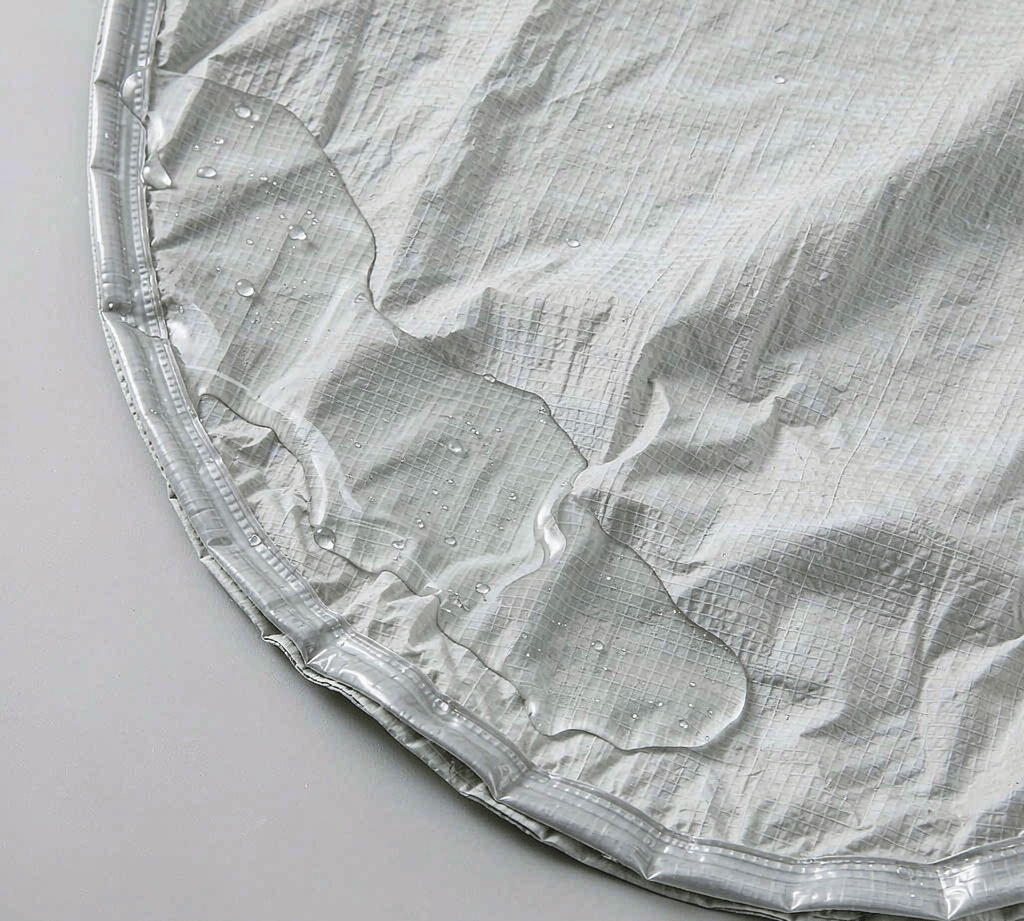
TPU laminated fabric is a thermoplastic polyurethane film bonded to a woven base—usually nylon or polyester—so the panel is fully waterproof rather than merely water-repellent. For a buyer the real question is not “is it waterproof” but which laminate spec to lock: the base weave, the film thickness, the ester-or-ether chemistry, and whether the seams will be welded. Get those four right and a TPU bag will typically outlast a PVC or PU-coated one in the field.
For the closure side of the same waterproof build, our waterproof zipper specification guide covers coated and gasket-sealed zipper types.
What “TPU laminated” actually means
A laminate is a solid film pressed onto the base cloth, not a liquid coating painted on the surface. That difference matters: the film is a continuous barrier, so performance depends on how well it stays bonded to the weave under flex and heat. Delamination—film lifting off the base—is the failure mode buyers should watch, not pinholes. It is also distinct from a DWR spray finish, which only slows surface wetting; for the contrast in ratings see our guide on water-repellency ratings. Many ripstop shells pair that reinforced grid with a TPU lamination so the panel stays both tear-resistant and weldable.
Ester vs ether TPU: the choice that decides field life
The two chemistries behave very differently in use. Ester TPU has higher tensile strength and better oil resistance at a lower price, but it hydrolyzes faster in hot, humid conditions—exactly where many outdoor bags live. Ether TPU resists hydrolysis and stays flexible in the cold, at a premium. For bags sold into wet or tropical markets, ether TPU is the safer default even if the unit cost is higher.
Thickness and base weave by bag type
| Bag type | Typical laminate | Water-column rating |
|---|---|---|
| Dry bags / submersible | 0.3–0.6 mm TPU on 210D–420D nylon | IPX7+ when welded |
| Premium travel / commuter | 420D nylon TPU laminate | 5,000–10,000 mm |
| Budget outdoor | PU-coated oxford | 2,000–5,000 mm |
Fabric mills usually quote a minimum of around 500 meters per color, so TPU programs need a firmer volume commitment than a PU run. Match the rating to the actual use: a commuter pack does not need a submersion-grade film, and over-specifying just adds cost.
Why TPU enables welded seams
TPU is RF (high-frequency), hot-air, and ultrasonically weldable, which lets a factory build a seamless shell with no stitch holes—and therefore no leak points. That is why welded-seam construction and TPU laminate go together. Two buyer notes: welding needs the right film thickness and clean-cut edges, and you should specify weld width plus a pull-test in the purchase order so the seam is verified, not assumed.
Reading the water-column rating
The hydrostatic head—measured in mm of water column—tells you how much pressure the fabric resists before it wets through. TPU laminates commonly sit at 5,000–10,000 mm, against PU’s 2,000–5,000 mm. IPX6 means heavy spray; IPX7 means immersion. Do not confuse a DWR “water-resistant” claim with a laminate’s rated column, and always request verification on production fabric rather than trusting a mill certificate alone. For the underlying weave and denier choices, our fabric denier and coating guide covers the base cloth side.
QC checks worth writing into the PO
- Film adhesion: peel test of the TPU layer from the base, both before and after an aging cycle.
- Hydrostatic head: verify on a production roll, not just the approved sample.
- Hydrolysis/aging: required for ether-or-ester decisions in humid export markets.
- Weld pull-test: confirm seam strength at the specified weld width.
- Compliance: REACH/RoHS for EU programs and a restricted-substances declaration.
These line up with the AQL inspection levels you would already be setting for the finished bag.
FAQ
Is TPU laminated fabric actually waterproof?
Yes—provided the film is intact and the seams are welded. The waterproof figure depends on film thickness and seam method; a stitched TPU panel still leaks at the needle holes.
TPU vs PVC vs PU: which should I specify?
TPU is lighter, weldable, and more eco-friendly, suited to premium waterproof bags. PVC is cheap with a high rating but heavy and less green. PU is a mid-cost spray-resistant coating, not submersible.
What thickness do I need for a dry bag?
A 0.3–0.6 mm TPU film on 210D–420D nylon is the typical range; go thicker for abrasion-heavy use and thinner to save weight.
Does weldability matter to me as a buyer?
It should. Welded seams remove the stitch holes that cause leaks, but only if the factory controls film thickness and weld width—so write the weld spec and pull-test into the PO.
Wrapping up
Specifying TPU laminated fabric is less about picking “waterproof” and more about locking four variables—base weave, thickness, chemistry, and seam method—before sampling. For a broader framework on matching materials to a product line, see our pillar guide on how to choose bag material. If rain protection is the priority for a commuter program, our rain-cover spec guide covers the add-on option. For commuter and travel builds, a trolley sleeve is the other feature that decides how the bag carries on the move.