An internal key leash keeps keys visible and reachable without letting them sink to the bottom of a bag. For OEM buyers, it is a small detail that can be specified cleanly in a tech pack: tether material, length, clip, retractor style, and anchor point.
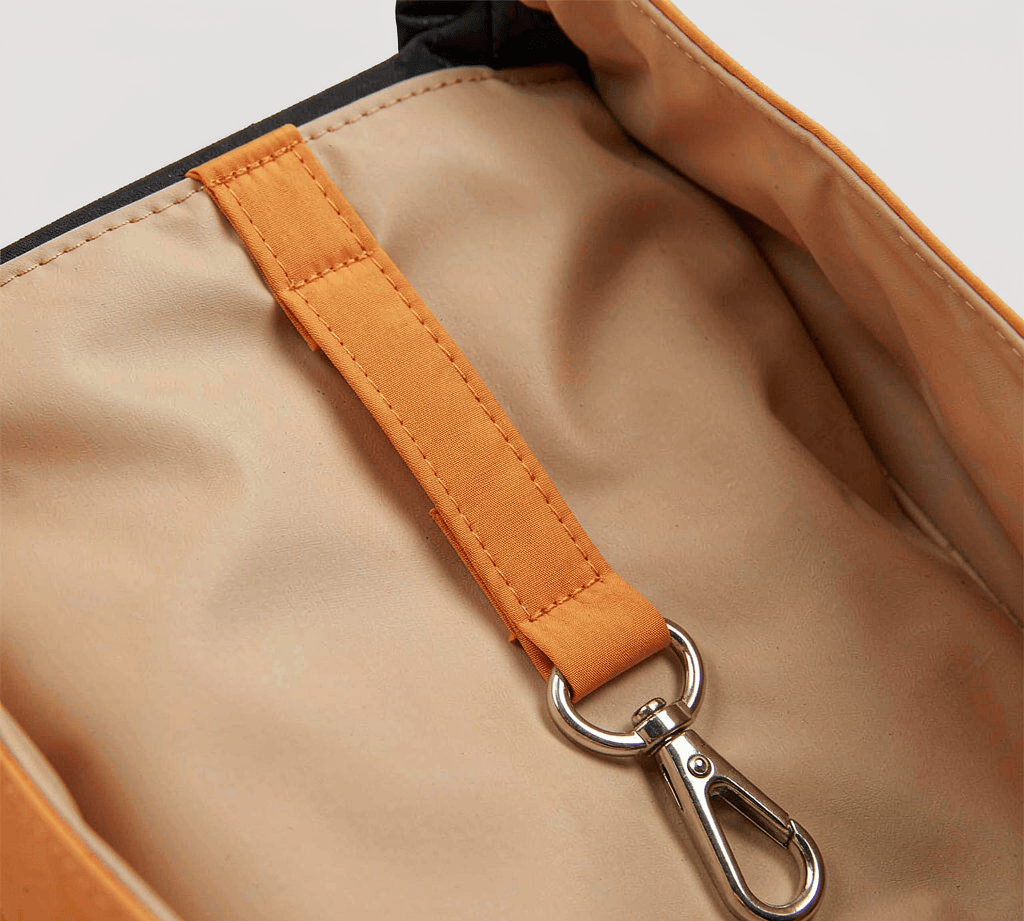
Tether Material and Length
Most key leashes use woven webbing, paracord, or flat leather. Webbing and paracord are common in backpacks and casual totes because they resist abrasion and cost little. Leather gives a softer, premium feel but needs edge finishing to prevent fraying. Match the tether color to the lining or choose a contrast for visibility.
Length should let the user unlock a door without unclipping the keys. A range of 15 cm to 20 cm works for most tote, backpack, and briefcase interiors. Measure from the anchor point to the bag opening; if the tether is too short, the user must detach the keys every time. A width of 10 mm to 15 mm for webbing or leather keeps the leash visible without adding bulk.
For sport bags, a coiled plastic leash can work because it retracts on its own, but it feels utilitarian and may not suit premium lines. For business bags, a flat leather tether with a metal clip reads more refined.
Clip and Retractor Options
The clip defines how easily keys attach and detach. A swivel snap or lobster claw is secure and one-handed. A spring-gate carabiner is faster but may snag on lightweight lining. For the material, gate, and load-rating checklist when you specify a carabiner clip, see our dedicated buyer’s guide. A simple split ring is cheap but harder to operate.
Fixed tethers are the simplest and most durable. Retractable key leashes use a spring reel to extend the keys and retract automatically. They add weight and cost, but they keep the tether tidy when not in use. For high-frequency use, choose a retractor rated for the intended number of cycles.
The clip is a type of bag strap hardware connector, so matching the metal finish to other hardware keeps the interior looking consistent.
Anchor Point and Reinforcement
The tether must be anchored to a layer that can handle repeated pulling. Common anchor points are the side seam, a dedicated bartack box on the lining, or a small fabric loop sewn into the top binding. The anchor should be backed with fusible interfacing or an extra layer of lining to spread the load.
A key leash anchor is a stress point, so follow the same reinforcement logic used elsewhere on the bag. Our guide to bag stress point reinforcement explains how bartacks and rivets handle repeated loads. The lining itself should be chosen from the options in our bag lining fabric guide. For stitch density at the anchor, see our bag sewing thread and stitch specs reference.
Sampling and QC Checks
Approve a sample with the actual clip, tether, and anchor construction. Pull-test the anchor and clip to confirm they do not fail under normal key-ring weight. Check that the retractor, if used, cycles smoothly without jamming. Inspect the tether edges and stitching for fraying, and confirm the clip does not scratch the lining or other contents.
Record the retractor cycle rating if you specify one; low-cost retractors can lose spring tension after a few hundred uses. Test the clip gate under side load to make sure keys do not fall out when the bag is tilted.
For a deeper buyer-side breakdown of backpack features that often include key leashes, see our backpack buying guide for brands.
Frequently Asked Questions
What length should a bag key leash be?
A tether of 15 cm to 20 cm lets most users reach a lock without unclipping the keys. Measure from the anchor point inside the bag to the opening.
What clip is best for a key leash?
A swivel lobster claw is secure and easy to use one-handed. A spring-gate carabiner is faster but can catch on thin lining. Split rings are low-cost but less convenient.
Should a key leash be fixed or retractable?
Fixed tethers are lighter, cheaper, and more durable. Retractable leashes keep the tether compact but add weight and cost; choose them when users access keys frequently.
Where should the anchor point sit?
Anchor the tether to a reinforced lining panel, side seam, or top binding with bartacks and backing fabric. The anchor must handle repeated pulling without tearing the lining.