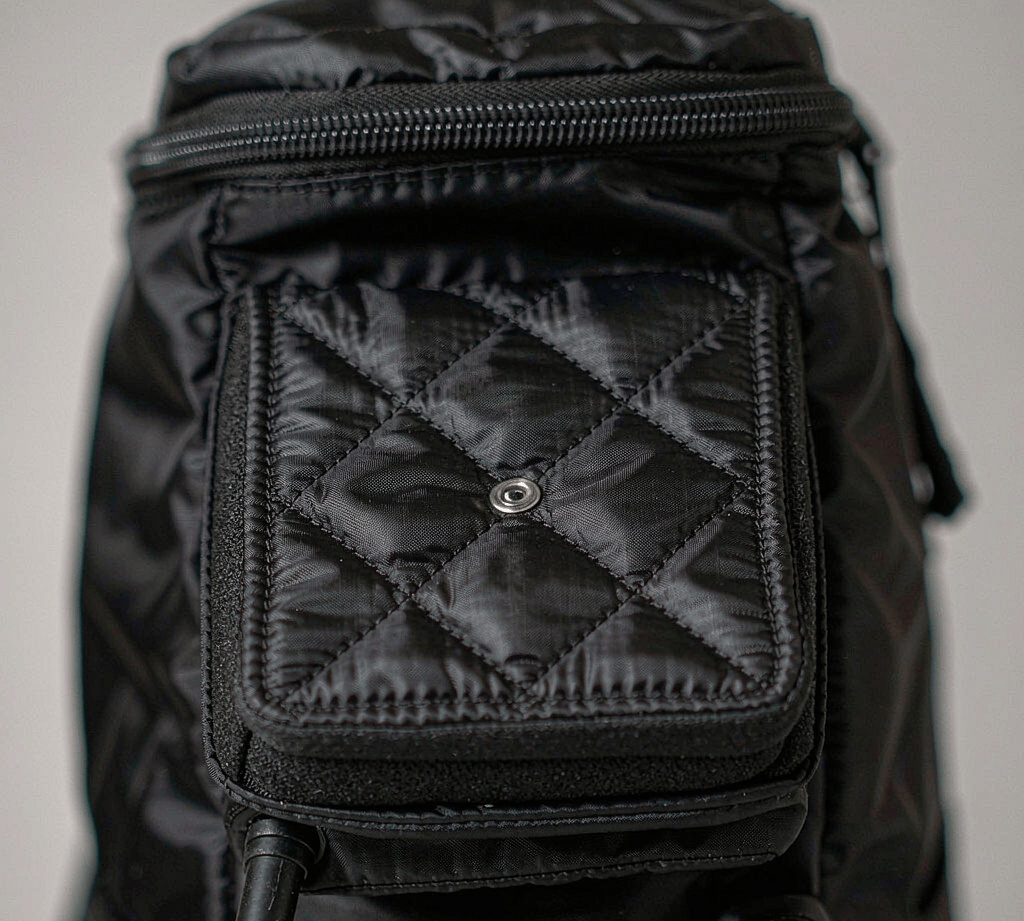
Quilted construction is the technique of sandwiching insulation or foam between two fabric layers and stitching through to hold it in place. The stitch pattern is not just decoration. It sets the loft, stops the fill from migrating, and decides how the panel wears. For padded laptop sleeves, outdoor bags, and insulated cases, the stitch spec is a real performance line, not a style choice a buyer can ignore.
What the stitch pattern does
The panel keeps the padding where it belongs. Without stitches, foam or fiber shifts to the bottom of the panel and leaves thin spots exactly where impact lands. Stitching locks the fill into pockets so the protection stays even across the whole surface. It also controls the look: a tight diamond pattern reads as technical, while wide channels read as soft and casual.
Diamond vs channel quilting
Diamond quilting crosses stitches on a diagonal grid, supporting the fill from every direction and giving a classic padded look. Channel quilting runs parallel rows, which is simpler to sew and easier to keep straight on long panels, but it lets fill drift sideways along the channel. For a laptop sleeve that gets dropped on its corner, diamond quilting protects more consistently. For a wide duffel panel, channels are faster and still fine.
Stitch-through vs baffle
Stitch-through sews the top and bottom fabrics together at every line. It is cheap and flat, but the seam slightly compresses the fill, so loft dips at each stitch. A bound channel or box baffle sews the fill into enclosed tubes so loft stays full between stitches. Baffles cost more labor and hardware, so reserve them for premium cold-weather or heavy protective builds where maximum loft matters.
Stitch density and thread
Row spacing is the first number to set: 25 to 40 mm is typical for bags, tighter for small items, wider for big panels. The thread and stitch count at each row decide whether the seam survives abrasion, so the same rules from our stitch density guide apply directly to the seam. Skipped or loose rows are the most common factory defect and the easiest to spot at incoming inspection.
Denser stitching also means more needle holes, and any quilted build that has to shed rain gets those rows heat-taped — our guide to specifying heat-taped seams covers tape width and peel strength.
Materials under the quilt
The face fabric, the fill, and the back layer each pull weight. The fill is usually a thin foam padding for bags, or fiber for insulated cases. The back layer is normally the same lining fabric used elsewhere, and a light interfacing stabilizer under the face keeps the stitch line from puckering on thin shells. Match these three or the panel wears unevenly. For the wider comfort story, see our ergonomic backpack guide.
How to write the spec line
The spec needs four things: pattern (diamond or channel), row spacing, fill type and thickness, and stitch density. Add the face fabric and any topstitch color, and the line is buildable. When the sewn panel is a back panel, compare it against an air mesh back panel if ventilation matters more than pure padding.
Common defects
Puckering means the face fabric was too thin or the stabilizer was skipped. Dead loft at seams means stitch-through was the wrong choice for the fill. Uneven rows mean the operator sewed without a guide. All three show up on the first sample and are cheap to fix before a full run.
FAQ
Is diamond or channel quilting better?
Diamond supports fill from all directions and protects corners better; channel is cheaper to sew and fine for large flat panels where fill drift is less critical.
Does the stitching reduce padding?
Stitch-through slightly compresses fill at each seam, which is why baffles exist for premium builds. For most bags the loss is small and acceptable.
What row spacing should I specify?
25 to 40 mm is the normal range; tighten toward 25 mm for small or fragile items and widen for big panels to save sewing time.
Why does my padded panel pucker?
Usually the face fabric is too thin or no stabilizer was used. Adding a light interfacing under the face removes the pucker.