Raw cut edges on leather and PU panels look unfinished and start to peel within months if they are left bare. Edge painting seals and colors those edges, and it is one of the first details an experienced buyer checks when judging factory quality. The fix is not “paint the edges nicely” — it is a written spec. Set the coat count, paint base, cure time, thickness, and inspection method before bulk production, and you avoid the cracking and peeling that show up after a few months of use.
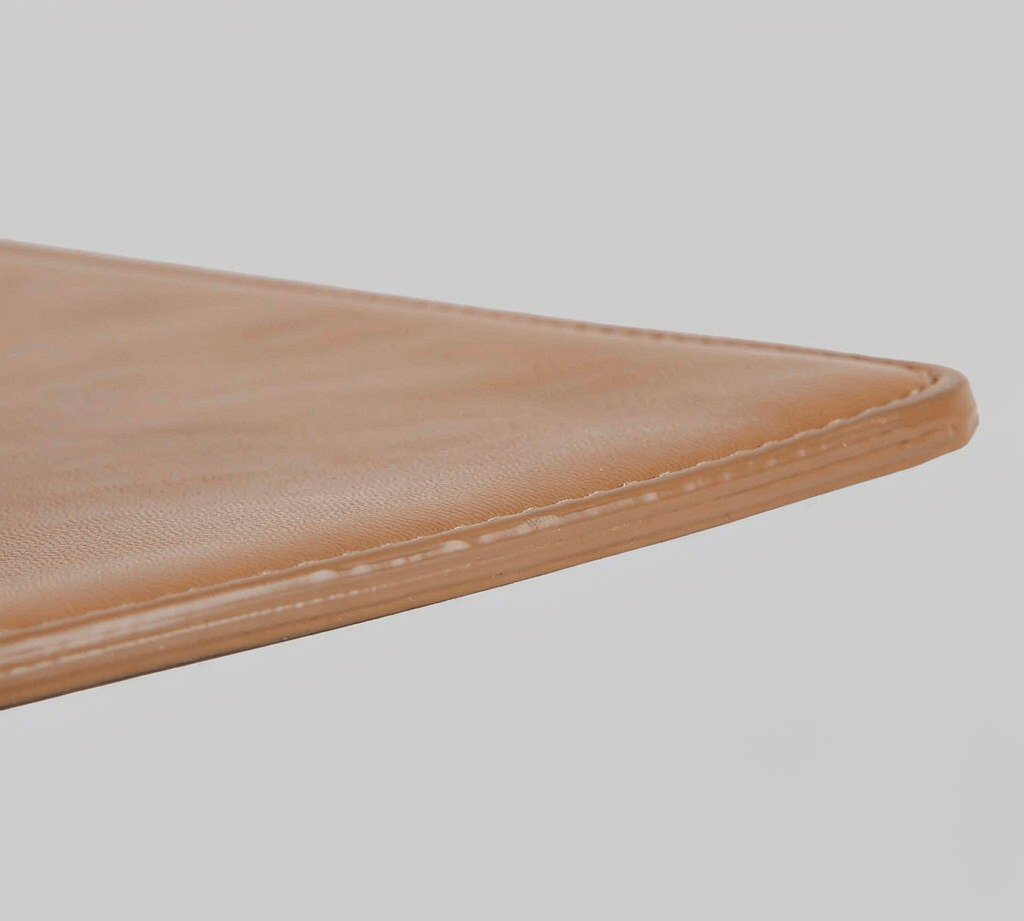
Edge Painting vs Folding or Binding
Edge painting is not the only way to finish a raw edge. Folded (turned) edges wrap the material back on itself and work well on firm vegetable-tanned leather. Edge binding covers the edge with a bias tape or piping, and we cover that route in our edge binding and piping guide. Painting is the right call when the panel is soft, chrome-tanned, or PU-coated, because those materials do not fold or burnish cleanly. It also scales across high-volume runs more easily than hand-folded edges, even though each coat needs drying time.
The Spec Line Items
Write these into the purchase order so the factory cannot quietly cut corners:
- Coat count — a minimum of three coats for PU and four to five for genuine leather. Two coats is the economy shortcut that cracks first.
- Paint base — specify PU-based heat-set paint rather than air-dry acrylic, which hardens and cracks on flexible straps.
- Cure time — request at least 24 hours between coats; rushed curing is the main cause of early failure.
- Edge thickness — keep added thickness to about 0.3 to 0.8 mm per side so the edge does not feel plasticky.
- Gloss level — matte, satin, or high-gloss, matched to the bag’s positioning.
- Color reference — a Pantone code or a physical swatch, not “same as body.”
Because the paint sits on the panel surface, the coating under it matters; our fabric denier and coating guide explains why adhesion varies by substrate.
Chemistry and Primer
PU systems flex with the leather instead of snapping, which is why they outperform acrylic on straps and gusset folds. But adhesion fails on oily pull-up leathers unless the factory applies a primer or oil blocker first — a step many shops skip to save time. Name the primer in the tech pack. Heat-set curing under controlled humidity also prevents the bubbling that only appears after the bag has shipped.
Environmental and Compliance Risks
Two field failures show up repeatedly. First, cheap topcoats can hydrolyze and turn tacky when a container sits in port heat above roughly 50°C, so specify a heat-stable topcoat for tropical or warehouse-hot destinations. Second, the primers and paints are chemical products, so REACH compliance (and equivalent regional rules) belongs on the record for EU-bound orders. Both points sit in the same spec sheet as the coat count.
QC Checks at Inspection
Edge painting defects are tactile, not just visual, so photos alone are not enough. At the first article inspection and during inline checks, run a thumbnail across the edge to feel for soft spots, flex a finished edge 90° for dozens of cycles to check for cracking, and verify color consistency under neutral D65 lighting. AQL sampling at 2.5 for general lines (1.5 for premium) catches batch drift. Our bag quality control overview covers how to set those levels.
Frequently Asked Questions
How many coats of edge paint should I specify?
A minimum of three coats for PU panels and four to five for genuine leather. Two coats is the economy route and is the most common cause of edge cracking within the first year.
Does edge paint crack in humid or hot climates?
It can. Acrylic air-dry paint cracks faster, and low-grade topcoats can hydrolyze and go tacky above about 50°C. Specify PU heat-set paint, a heat-stable topcoat, and a controlled cure to reduce the risk.
Is bag edge painting REACH compliant?
The paints and primers are chemical products, so EU-bound orders should require REACH compliance documentation from the factory. Ask for it alongside the rest of the material spec.
Can I skip edge painting and use binding instead?
Yes, if the panel folds or binds cleanly — firm veg-tan leather or fabric edges suit binding, which we cover in the edge binding guide. PU and soft leather usually need painting instead.
Conclusion
Edge painting is cheap insurance against the peeling and cracking that destroys perceived quality. Put the coat count, paint base, cure time, thickness, gloss, and inspection method in writing, approve a sealed reference sample, and verify at first article. For the full production flow these finishing steps sit inside, see our bag manufacturing process guide.