A telescoping handle is the retractable two-piece trolley handle on rolling luggage and some travel backpacks — the part travelers pull, and the part that fails first when it is specified badly. The short answer for buyers: choose the tube material by load and climate, decide single versus double tube by stability needs, and pick a stage count (2-stage or 3-stage) that matches the bag height. Skip those choices and you get wobble, stuck locks, or handles that crack in cold storage. Below is what to put in a tech pack so the factory quotes the right unit.
Tube material: aluminum, steel, or composite
Most trolley handles use drawn aluminum tubes — light, corrosion-resistant, and cheap enough for volume orders. Steel is heavier but survives rough handling and higher side loads, which is why it appears on checked luggage and gear cases. Some budget units use a composite or alloy blend to cut weight, though these can flex under load. For bags that ship to humid or coastal markets, aluminum with an anodized or powder-coated finish resists the corrosion that plain steel would show — the same finish question you face on other bag hardware and corrosion.
Single tube vs double tube
A single-tube handle is one shaft per side; it is lighter and cheaper but can twist under side load. A double-tube (nested tube) design adds a second concentric shaft, stiffening the handle so it tracks straight when the bag is pulled at an angle. For upright trolley cases and larger checked bags, double tube is the default because the extra stability pays for itself in fewer returns. Small under-seat rollers can get away with single tube.
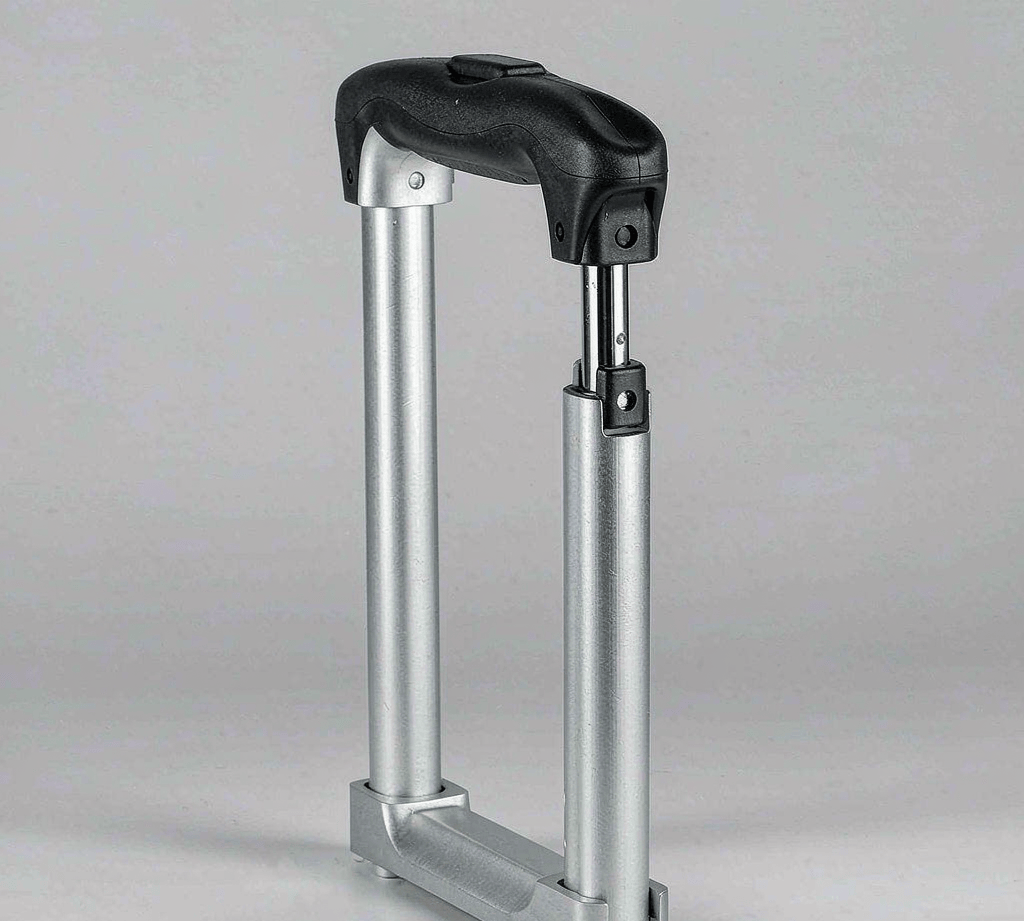
Stage count: 2-stage versus 3-stage
Stage count is how many tube sections collapse. A 2-stage handle has one locking mid-point; a 3-stage handle collapses shorter, suiting taller bags or users who want a lower stowed height. More stages mean more locking collars and slightly more failure points, so match the stage count to the bag’s packed height rather than maxing it out. If you are unsure, tie the decision to the same dimensions you set when you spec a travel rain cover or packing profile.
Locking mechanism and the grip
The lock is what holds the handle at height and releases it. Push-button locks are the consumer standard; clamp or twist locks appear on heavy-duty cases. The grip itself is usually a molded or wrapped handle with a comfort contour, and it is the piece most exposed to hand oils and abrasion. A weak grip or a sticky button is the most common field complaint, so request a sample actuation test count (often 5,000–10,000 cycles) in the quote.
How the handle meets the shell
The tubes terminate in a base housing riveted or molded into the bag’s back panel. That attachment is where loads concentrate, so the housing and its riveted joints need to be speced for the bag’s full loaded weight, not its empty one. A thin back-panel insert or shallow rivet pattern is the usual cause of a handle that tears free after a few trips.
Durability tests buyers should request
Ask the factory for three numbers: a side-load rating (how much lateral force the extended handle tolerates), a cycle count for the lock, and a corrosion rating if the market demands it. Pair those with the same discipline you apply to side-release buckles elsewhere on the bag — a bare “it’s strong” claim with no test method is a red flag.
Tooling, MOQ and lead time
A telescoping handle is almost always a sourced component, not something the bag factory molds in-house, so your MOQ and lead time follow the handle supplier’s runs, not just the bag’s. Typical production lead times run 20–35 days after the handle is confirmed, and custom lengths or button shapes add tooling. Build that into the calendar alongside the bag’s own tooling and mold costs so the handle is never the late item.
FAQ
What is the difference between a telescoping handle and a fixed handle?
A telescoping handle retracts into the bag via nested tubes, letting the bag roll when extended and stow flat when collapsed. A fixed handle is sewn or riveted in place and does not adjust or retract.
Is aluminum or steel better for a luggage handle?
Aluminum is lighter and resists corrosion, which suits most travel bags. Steel is heavier but tougher under rough handling and high side loads, making it the pick for checked cases and gear boxes.
How many stages does a trolley handle need?
A 2-stage handle suits most cabin and mid-size bags; choose 3-stage when the bag is tall or you need a lower collapsed height. More stages add locking points and slight failure risk, so match stages to bag height.
Do telescoping handles need certification?
Generally no for consumer bags, but distributors may ask for material declarations and cycle-test reports. Safety-related or child-adjacent products are the exception where documented testing matters.
Wrapping up
Treat the telescoping handle as a spec, not an afterthought: tube material by climate, tube count by stability, stage count by height, and lock cycles by expected use. For the wider picture on choosing every component on a rolling bag, our guide to the best travel backpacks covers how handles, wheels and shells work together in real travel.