A bag can use the best fabric in the category and still fail in the field because a single buckle rusts through. For products that spend their life near salt water, on sweaty gym floors, or out in the rain, the metal fittings are usually the first thing to give out. Specifying the right finish at the sourcing stage is cheaper than a recall later.
Why the finish matters more than the shape
Most buckles, D-rings, zipper sliders, and rivets start as a base metal — zinc alloy, steel, or aluminum — that is not corrosion-proof on its own. The protective layer on top is what keeps moisture and salt away from that base. Two fittings that look identical on a sample card can behave very differently after a season of use, which is why the finish needs to be written into the order, not left to the factory’s default. The same finish logic applies to an aluminum telescoping handle, where anodizing beats plain steel in coastal markets. The rings and triglides used on a modular webbing attachment grid should get the same corrosion-resistant finish if the bag sees outdoor use.
Common plating and coating options
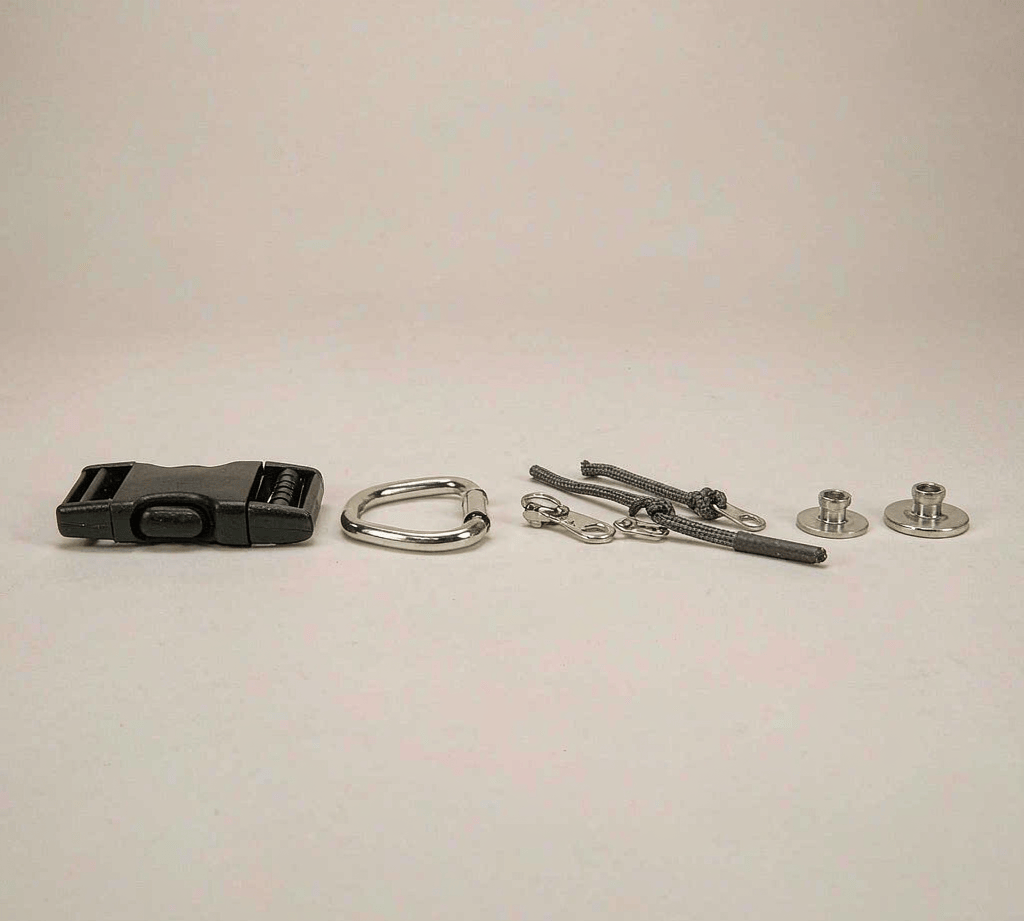
Nickel and chrome plating are still common on premium fittings because they take a clean, bright look and resist tarnish well in dry conditions. Zinc alloy bodies are usually plated rather than solid, so the thickness of that layer decides how long they last. Anodized aluminum resists rust naturally and is lighter, which matters on bike and travel pieces. Stainless steel grades handle coastal exposure best but cost more and are harder to color-match.
For buyers comparing options, a useful reference is the bag zipper hardware guide, since zipper sliders are themselves plated metal and follow the same rules as buckles and rings.
Reading a salt-spray grade
The standard way suppliers document resistance is the salt-spray test (ASTM B117), reported as hours before red rust appears. A fitting rated for 24 hours is fine for indoor or urban use; 48 hours covers most daily outdoor products; 96 hours or more is the usual target for marine, dive, or coastal bags. The number is a comparative grade, not a promise of calendar years, so treat it as a sorting tool between suppliers rather than a lifespan guarantee.
Where the metal is load-bearing, the plating also has to survive abrasion, not just moisture. Our notes on bag stress point reinforcement cover why rivets and bars at high-load spots deserve a tougher specification than decorative trim.
Matching the finish to the use case
A commuter daypack sees little salt, so a standard plated buckle is enough. A surf or sailing piece lives in spray and sun, so stainless or a thick PVD coating earns its cost. Sports and gym bags sit in sweat, which is mildly acidic, so the fitting on straps and adjusters should be spec’d a grade above what the fabric alone would suggest. The bag webbing strap specs explain how the strap and the buckle it feeds through need to be chosen as a pair.
The same corrosion logic applies to bag bottom feet, where a stainless or anodized foot outlasts a bare one in wet or coastal use.
What to put in a hardware spec sheet
Buyers who want consistent results should list, per fitting: base metal, plating or coating type, minimum plating thickness, salt-spray hours, and the approved finish color. Color is confirmed with the same lab-dip process used for fabric, so a matte black buckle does not drift toward gunmetal between production runs. Incoming inspection should check a few pieces per lot against that sheet, which is one part of a broader bag quality control routine.
Beyond the finish, the spec sheet should name the connector types themselves — D-rings, triglides, swivel hooks — because the shape decides how the strap attaches and where the load lands. For the full list of what to request, see the guide to specifying bag strap hardware.
The same detail applies to the socket of a magnetic closure, where the visible finish should match the rest of the bag trims.
FAQ
Does stainless steel ever corrode?
It resists rust far better than plated alloys but is not immune, especially in chloride-heavy environments. For true marine use, specify a recognized grade and confirm it with a salt-spray report rather than assuming the word “stainless” is enough.
Is a thicker plating always better?
Up to a point. A thicker layer extends life, but if the base casting is porous, moisture can still reach it from the edges. Pair plating thickness with a clean salt-spray grade and a sound base metal.
Should I pay for PVD coating on a budget line?
Only where the fitting is exposed and load-bearing. PVD holds up well and keeps its color, but on hidden or decorative parts a standard plating usually meets the need at lower cost.
How do I stop color mismatch between runs?
Lock the finish color with a signed lab dip and reference it on every purchase order, the same way fabric shades are controlled.
Related reading
For a broader look at feature selection on sports pieces, see the sports bag features guide.
Buyers comparing suppliers can review our travel and duffle bags for OEM/ODM specs, materials, and MOQ.