Straps are where a bag meets gravity. A panel can be flawless and the hardware premium, but if the webbing stretches, frays, or snaps under load, the whole product fails in the user’s hands. For buyers writing a tech pack, the strap section deserves the same attention as the main fabric — yet it is often left as a vague note like “strong straps.” When a bag needs to compress or bounce back instead of staying rigid, elastic shock cord is often run alongside webbing on the same strap — our shock cord specification guide covers diameter and core choices.
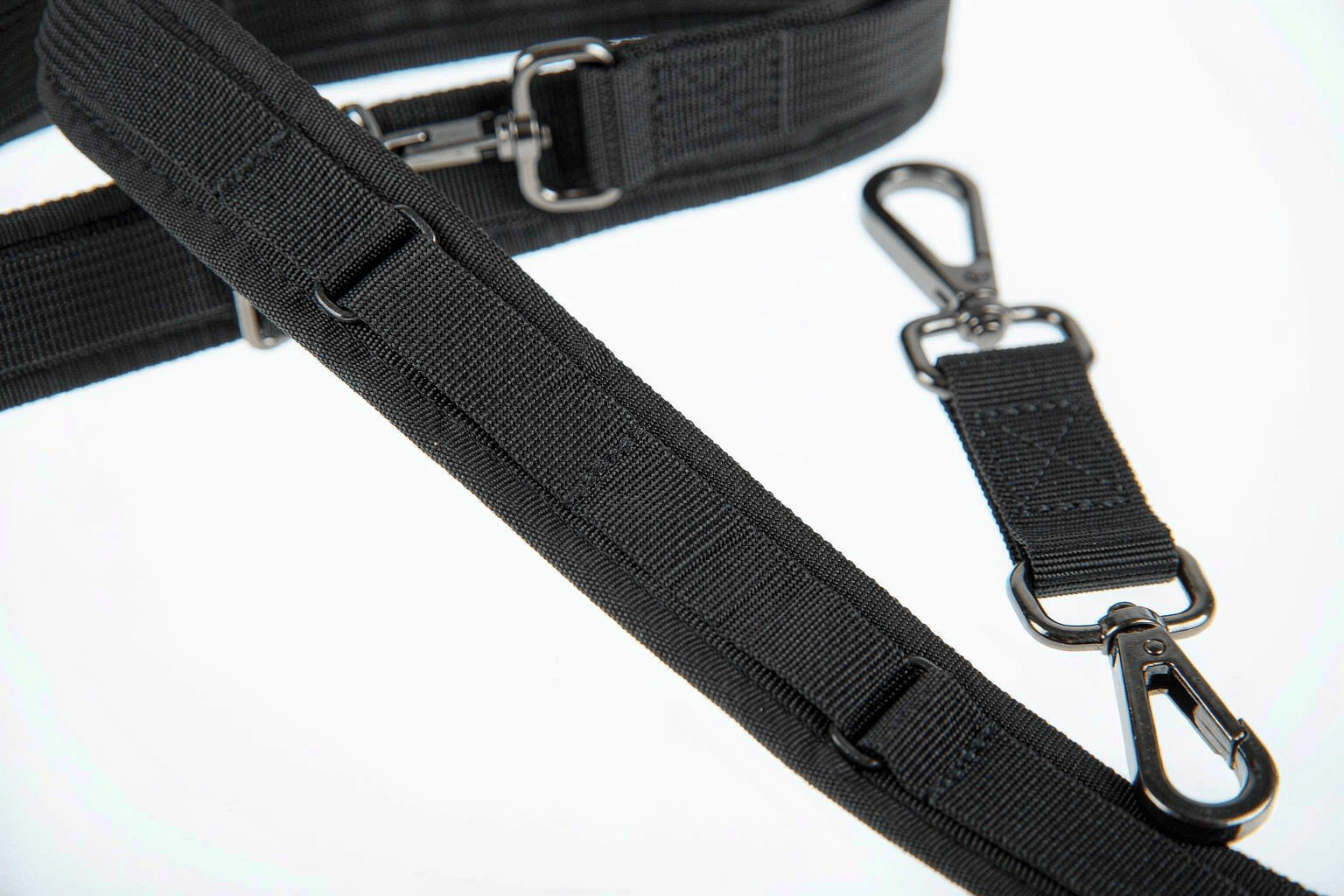
Material: nylon, polyester, or polypropylene
Polyester webbing is the workhorse. It resists UV and holds color through washing and sun exposure better than nylon, which makes it the default for bags that live outdoors or near windows. Nylon webbing absorbs less water and has higher elongation recovery, so it suits gear that gets wet and needs to spring back. Polypropylene is the budget option: light and cheap, but it degrades faster under UV and feels less substantial. The same logic applies to the body fabric, where denier, weave and coating specs are what separate a testable fabric from a vague material line.
A simple rule: polyester for anything customer-facing and outdoor, nylon where low water uptake matters, polypropylene only when cost dominates and the bag is light-duty.
Color retention can be measured rather than claimed. The light and wash fastness tests specified for bag fabrics are what separate a tape that still looks right after a season from one that fades by mid-summer.
Reflective yarn versions of the same tape exist for night visibility, with their own width and abrasion limits, covered in how retroreflective trim is specified.
Width and how it relates to load
Webbing width is the easiest lever on comfort and strength. A 25 mm strap is fine for a sling or a small pouch; a 38–50 mm strap spreads the load for a backpack or a loaded tote. Width also changes the feel — narrow straps cut into the shoulder when the bag is heavy, which is a comfort complaint that has nothing to do with the fabric. The strap root is only as strong as its reinforcement, so it is worth reviewing how rivets and bar-tacks handle bag stress points before the spec is locked.
The webbing width also dictates the hardware it pairs with. A 25 mm strap needs a 25 mm D-ring or triglide, so it is worth locking both down together — see the guide to specifying bag strap hardware for the connector side of the same decision.
Pair the width with edge finishing. Heat-cut edges resist fraying; folded and stitched edges look cleaner and last longer on premium lines.
Width is only one of the numbers a carry strap is specified by — drop length, adjustability and buckle type matter just as much, which is why crossbody strap design is treated as the core of the product rather than a trim detail.
The strap width also sets the buckle size it feeds through, and the buckle finish is part of the story — our guide to corrosion-resistant bag hardware covers plating grades and salt-spray ratings.
Break strength and why it matters
Break strength (the load at which the webbing fails) is the spec most often missing from a tech pack. A typical quality polypropylene or polyester webbing runs 400–1,200 kgf depending on width and weave. You do not need the maximum, but you do need a number, because “strong enough” is not testable and “1,000 kgf minimum” is.
When you design a backpack, the strap spec should be tied to the intended fill weight. A 20 kg laptop bag and a 5 kg lunch tote have very different strap requirements, and writing one generic spec for both invites either waste or failure.
Stitching is part of the spec
A strap is only as strong as its attachment. The bar-tack — the dense, repeated stitch that anchors a strap to the panel — should be called out: number of stitches, thread type, and reinforcement. A weak bar-tack is the single most common strap failure point, and it is invisible until the bag is loaded.
The thread itself deserves the same treatment: material, ticket size, and stitches per inch all change how that anchor ages, so it is worth writing up a thread and stitch density spec alongside the webbing callout.
Cost implications
Webbing is inexpensive relative to the whole bag, but the spec drives rework cost. Specifying manufacturing cost drivers early prevents a late switch to a heavier weave that changes the pattern and the price. Bag quality control should include a pull test on the finished strap, not just on the loose webbing.
Crossbody and sling straps live or die on the buckle and stress points — our crossbody bag buyers shortlist covers strap grade and adjuster specs for daily-use orders.
Frequently Asked Questions
What webbing material is strongest?
Polyester and nylon both reach high break strengths; polyester wins on UV and color retention, nylon on water recovery. The weave and width matter as much as the fiber.
How do I specify break strength?
Put a minimum kilogram-force number in the tech pack and request a test report. “Strong” is not measurable; a figure like “minimum 800 kgf” is.
Nylon or polyester webbing for outdoor bags?
Polyester, almost always. It resists sun and retains color better, which keeps the bag looking right after a season of use.
Does strap width affect comfort?
Yes. Wider straps (38–50 mm) spread load and reduce shoulder pressure on heavier bags. Narrow straps cut in once the bag gets heavy.
Buyers comparing suppliers can review our full bag catalog for OEM/ODM specs, materials, and MOQ.