When you brief a factory on a custom bag, most of the conversation goes to the shell — the outer fabric, the hardware, the print. The lining rarely gets the same attention, even though it is the surface users touch every time they open the bag. For B2B buyers, the interior fabric is a real purchasing decision: it changes the unit cost, the perceived quality, and how long the bag holds up in daily use. If the sustainability claim is in scope, the lining can be specified as recycled rPET too — see our guide to specifying recycled bag fabric and GRS verification for how to write that into the tech pack.
What the lining actually does
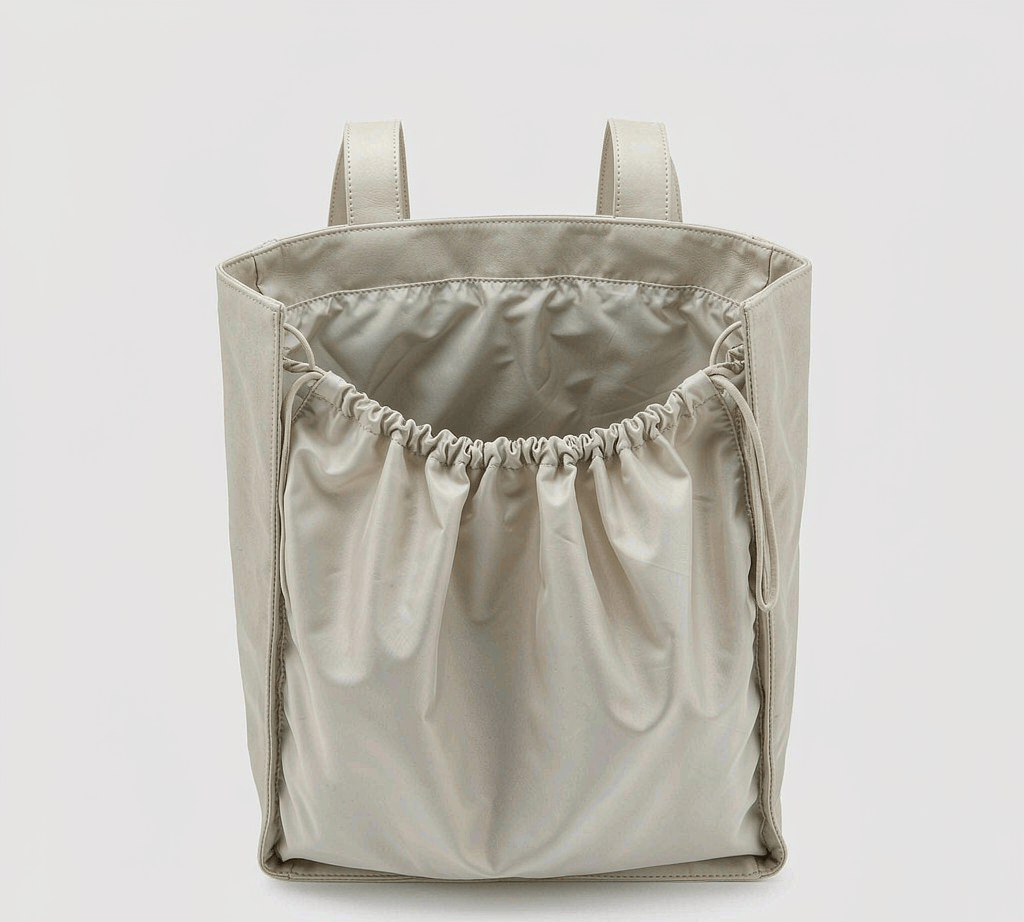
The lining is the inner layer sewn against the shell. On a simple tote it may be a single panel; on a structured backpack it wraps the pockets, the laptop sleeve and the dividers. It is not just decorative. A good lining hides raw seams, gives the bag structure, and protects contents from the shell’s coating or backing. Where a lining edge stays exposed, the fix is trim rather than fabric: how a bound edge is specified covers the tape widths and folds that keep it from fraying. The outer layer is covered in our guide to bag fabric denier and coating, which explains why the shell and the lining are separate spec items.
On back panels and shoulder straps an open knitted structure sometimes takes over the lining job entirely, and it is specified by its own numbers — covered in our notes on air mesh and spacer fabric.
Common lining materials
- Nylon taffeta (190T–210T): light, smooth and inexpensive. It resists abrasion better than it looks and is the default for promotional and entry-level bags.
- Polyester pongee or taffeta: similar in feel to nylon but slightly cheaper and easier to dye. Watch the denier — below 170T it can feel papery.
- Cotton and canvas lining: used where a natural hand-feel is part of the brand, common in premium totes. It breathes but stains easily and adds weight.
- rPET lining: recycled polyester made from post-consumer bottles. It satisfies sustainability briefs, but needs a certified supply chain from a sustainable manufacturing program you can actually document.
- PU-coated or waterproof lining: a thin polyurethane layer bonded to the fabric. It is essential for cooler, wet-pack and toiletry bags — and food-contact liner selection for insulated bags follows stricter rules than a standard interior.
Because lining cloth is dyed in a separate bath from the shell, matching the shade is only half the job. Give it its own rub and perspiration grades as well — the fastness tests used on bag fabrics are graded component by component.
Matching the lining to the use case
A gym bag that carries damp gear wants a wipe-clean, coated lining. A laptop tote wants a smooth nylon that slides instead of snagging. A premium leather good wants a cotton or brushed lining that signals quality when opened. Specifying the wrong one is a common, avoidable defect: a non-coated lining in a cooler bag soaks through within weeks.
Material alone will not settle it where damp kit is involved: airflow, drainage and finish durability decide the outcome, which is why we broke out bag odor control separately.
Lining cloth is usually lighter than the shell, so it deserves its own rub-count target instead of inheriting the shell figure — the reasoning is set out in what abrasion testing actually tells you about a fabric.
Cost and sampling
Lining is usually a small share of material cost, but it scales with bag size and the number of internal pockets. When you review a cost breakdown, ask the factory to line-item the lining grade rather than folding it into “fabric.” During sampling, request a swatch of the exact lining — a photo is not enough, because the hand-feel and sheen change a lot between 190T and 210T.
Quality checks buyers should ask for
Tear strength and colorfastness matter most. A lining that bleeds onto light shells during the first rain is a returned-product risk. Build the lining into your bag quality control checklist alongside the shell and hardware, and confirm the same grade ships in production as in the approved sample.
Crocking is the test that catches most of this — the fastness methods used on bag fabrics are listed with the ISO grades buyers typically specify.
For a buyer-side look at totes specifically, see how to choose a tote bag.
FAQ
Q: Is nylon or polyester lining better?
A: Neither is universally better. Nylon taffeta is slightly stronger and smoother; polyester is cheaper and dyes more evenly. For most custom bags the choice comes down to budget and the exact hand-feel you want.
Q: Do I need a waterproof lining for a cooler or wet bag?
A: Yes, if the interior will hold ice, moisture or spills. A PU-coated or TPU lining is what keeps the contents from soaking the shell and the user’s belongings.
Q: Can the lining be recycled content?
A: It can. rPET lining is widely available, but ask for the certification and chain-of-custody documents — “recycled” without paperwork is a claim you cannot defend.
Q: How much does lining add to unit cost?
A: Usually a small fraction of material cost, but it grows with bag size and internal pockets. Ask for it as a separate line item so you can compare quotes like-for-like.
Buyers comparing suppliers can review our full bag catalog for OEM/ODM specs, materials, and MOQ.