The bottom of a bag takes more punishment than any other panel. It sits on wet floors, gets dragged across asphalt, and absorbs the full weight of the contents every time the bag is set down. For buyers specifying custom duffels, backpacks, or travel bags, the base is where a cheap build quietly fails first. Getting the reinforcement right is less about one magic part and more about layering three or four defenses that work together.
Where the abuse actually lands
A bag base fails in predictable ways: the outer fabric scuffs through, the corners split at the seam, and the whole shape collapses so the bag can no longer stand. Each failure maps to a different spec decision, which is why a base should be designed as a small system rather than a single material choice.
Before reaching for a board, the softer interfacing layer in the surrounding panels is what keeps the upper body from sagging between reinforcements.
Rubber feet: small parts, big impact
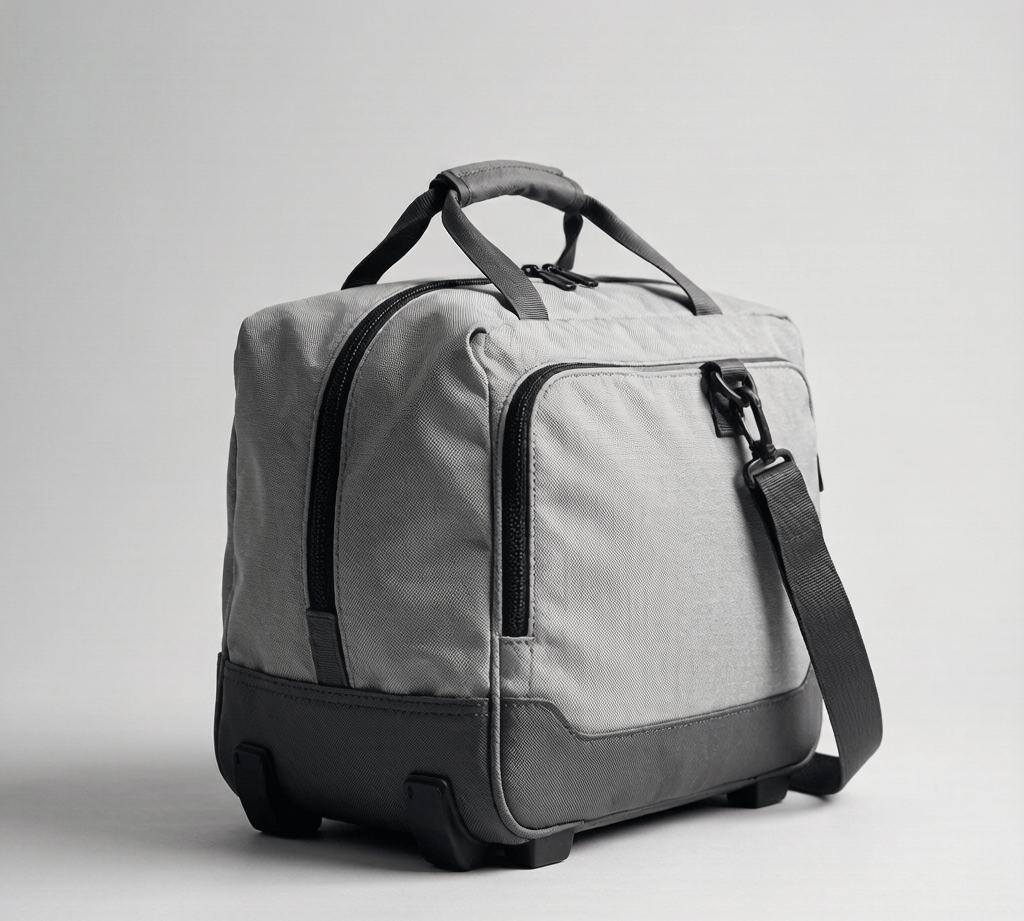
Molded rubber or TPE feet are the simplest way to lift the fabric off the ground. Placement matters more than count — a row of feet running along the front and back of the base, plus a pair at each end, keeps the panel clear when the bag is upright or laid on its side. For heavy duffels, feet should be at least 6–8 mm tall and attached with a metal washer or bar-tack rather than a single stitch, since the foot takes shear force every time the bag is dragged.
A reinforced base pairs naturally with protective bottom feet that lift the bag off wet and abrasive ground instead of letting the panel take the scrape.
Base boards and bottom inserts
Inside the base, a formed insert holds the shape. Thin PP (polypropylene) or PE board is common for lightweight bags; thicker EVA or cross-linked foam adds cushioning for camera or tool bags. The insert should match the base outline with a small inward tolerance so it does not poke through the seam. A well-fitted board is what lets a duffel stand on its own instead of flopping over — a detail buyers notice immediately on a showroom floor.
Where that insert needs to be a shaped shell rather than a flat board, the decision moves to molded EVA construction and its tooling.
Double-layer and reinforced bottom panels
Beyond the insert, many durable bags use a doubled outer base: a second layer of the shell fabric, or a heavier 600–900D panel, wraps the bottom so a puncture does not go straight through. Some builds add a rubberized or TPU-coated base panel for water resistance where the bag is set down on wet ground. The extra layer adds weight and cost, so it is usually specified only on the base rather than the whole bag.
Stitching that holds the corner
Reinforcement is only as strong as the thread holding it. The high-stress joins at the four corners of the base should use X-box or bar-tack stitches, the same approach used at bag stress points across the whole product. A flat straight stitch at a loaded corner will eventually pop; a reinforced tack will not.
Specifying abrasion resistance
Because the base drags, the fabric there should meet a higher abrasion standard than the side panels. Buyers can reference the same abrasion test methods used for the rest of the bag, but set the cycle threshold higher for the base. A coated or woven base fabric rated for heavy use pays for itself in return rates.
Writing it into the tech pack
A usable base spec lists: foot material and placement drawing, insert material and thickness, whether the base is doubled, the stitch type at corners, and the minimum abrasion cycles for the base fabric. Internal stiffeners and frame sheets in the rest of the bag should be noted separately so the factory does not confuse base structure with side structure. At incoming inspection, QC should check that feet are attached with the specified reinforcement, the insert is present and correctly shaped, and no corner shows a skipped tack.
For buyers building a bulk duffel program, the base spec is one of the highest-leverage parts of the whole duffel buying guide for bulk orders, since base failures drive a disproportionate share of warranty claims.
For wheeled and checked pieces, also write a bag drop test into the spec so the reinforced base and feet are proven against corner impacts rather than just claimed.
FAQ
Why does the base of a bag wear out first?
It is the only panel in constant contact with the ground and the one that absorbs impact every time the bag is set down or dragged. Concentrating reinforcement there protects the rest of the build.
Are rubber feet necessary on a soft duffel?
Not strictly, but they extend life dramatically. Even a few well-placed feet keep the fabric off abrasive surfaces and make the bag stand upright, which buyers expect from a quality duffel.
What material should a base insert be made from?
Thin PP or PE board suits light bags; EVA or cross-linked foam adds padding for protective cases. The choice depends on whether the priority is shape retention or cushioning.
How do I confirm the base was built to spec?
The tech pack should call out foot attachment, insert material, double-layer construction, and corner stitch type. Incoming QC checks each of those points rather than relying on a visual pass.
Related reading
For edge wear where panels meet, see edge binding and piping.