A bag rain cover is the simplest insurance a travel or hiking pack can carry: a lightweight, packable shell that slips over the bag to block rain, road spray, and trail mud. For buyers specifying an OEM or private-label run, the cover is rarely an afterthought—it is a separate accessory with its own material, sizing, and QC rules. Covers are most often paired with travel and hiking packs; for the packs themselves, our best travel backpack guide breaks down what buyers should look for.
Where a pull-on rain cover is not enough, a sealed waterproof zipper is the stronger spec for a bag that must stay dry in heavy weather.
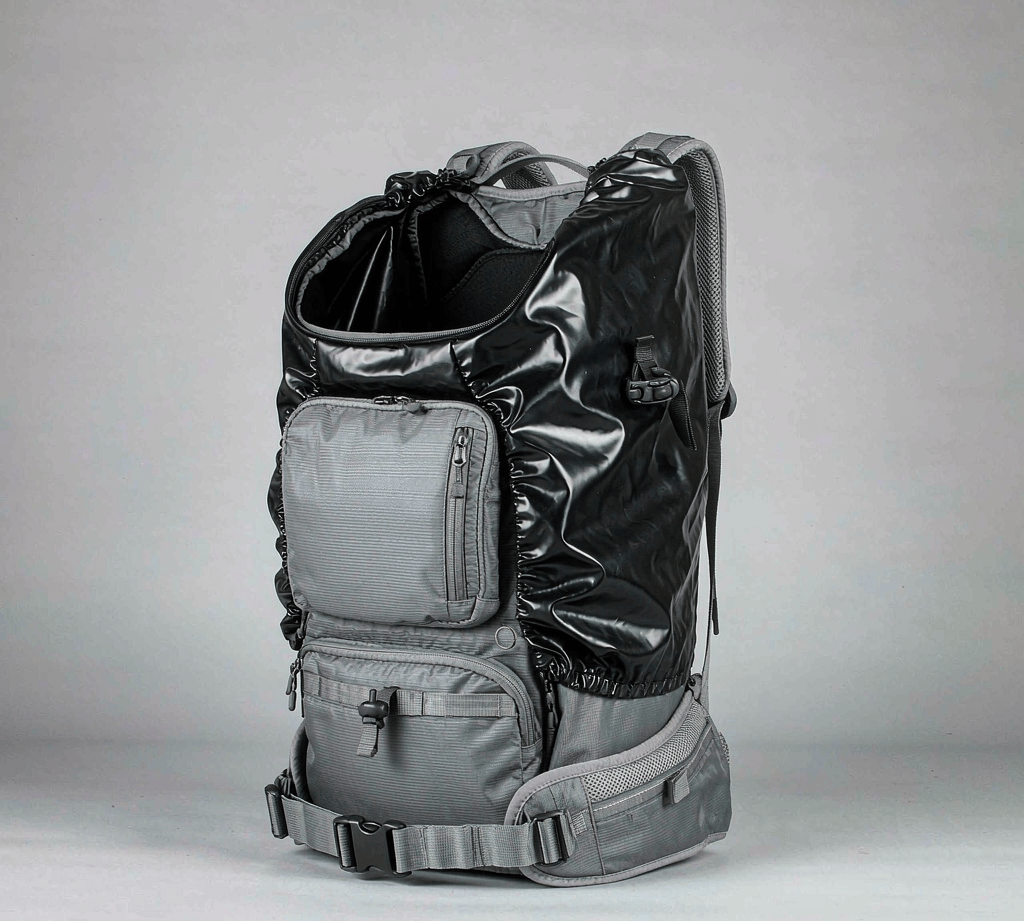
A roll-top closure seals the opposite way — by folding the top instead of pulling a cover over it. Our guide to roll-top closures explains the roll count and what holds the roll.
Why a cover, not just a coated fabric
Many packs already use a DWR-finished or PU-coated body fabric, but a finish is not a seal. Water still reaches contents through zippers, seams, and the open top. A removable cover closes that gap for the whole pack. If you want to compare the underlying fabric treatments, our bag water-repellency ratings guide covers how DWR and coating levels are measured. The cover is the second layer, not a replacement.
Material and coating
Most covers are woven nylon or polyester with a waterproof coating. Common choices are 190T–210T taffeta for light daypack covers and 210D–420D nylon for hiking and travel packs that see more abrasion. The coating is what stops water: PU (polyurethane) is the budget-standard balance of weight and protection; silicone (sil/sil) resists aging and packs smaller; PVC is fully waterproof but stiff and heavy, best for simple handbag shields rather than technical packs. For how denier and coating choices interact, see our bag fabric denier and coating guide.
Water-column rating (the number that matters)
Specify waterproofing as a water-column (hydrostatic head) rating in millimeters, the height of a water column the fabric holds before leaking. A 1,500–3,000 mm cover handles light drizzle; 5,000–10,000 mm suits regular commuting and day hiking; 10,000 mm+ is the bar for prolonged downpours. The rating is normally verified by the ISO 811 hydrostatic head test. Set the minimum in the spec and reject below it at incoming inspection.
Size by pack volume, not by eye
Covers are sized by pack volume in liters, not by brand. Typical bands: S for 15–25 L daypacks, M for 30–40 L, L for 40–55 L, XL for 55 L+. Give your supplier the target pack’s length, width, and height so the cover’s dimensions enclose it with a snug fit—loose corners flap and let water in at the edges. Confirm the folded cover and its storage pouch fit the pack’s side pocket without bulging.
Attachment that stays put
A cover is only useful if it does not blow off. Specify an elasticized hem plus at least one buckle or drawcord strap that cinches under the pack. Cross-buckles that route around the harness add stability in wind; an anti-slip inside the hem helps on cycling commutes. The webbing and buckles should be the same durable hardware you would spec on the bag itself—see our bag webbing and strap specs for the grade points.
Seams and details
Seams are the weak point. Ask for taped or welded seams rather than raw stitched ones; our welded-seam waterproof bag guide explains why sealed seams matter. Add a drain hole at the bottom so collected water can escape, and specify reflective strips if the cover will be used in low light—our bag reflective trim spec covers placement and width. Bright base colors improve visibility too.
QC and order basics
Covers are cheap to sample and easy to QC. Typical MOQ runs 500 pieces for stock styles; custom sizes start higher. The HS code is normally 4202.12 for backpack covers. At incoming inspection, check coating uniformity, seam taping, buckle function, and that the cover actually fits the reference pack. Apply your standard AQL level and keep a sealed reference sample.
A rain cover is a small line item that protects the whole product. Spec it with the same care as the bag, and the result is an accessory buyers actually keep on the pack.
FAQ
What size rain cover do I need for a 30 L backpack?
Most 30 L packs take a medium cover sized for 30–40 L. Always confirm against the pack’s actual length, width, and height, not just the liter rating, since two 30 L packs can be shaped very differently.
How high should the water-column rating be?
Specify at least 5,000 mm for daily commuting and 10,000 mm+ for hiking or travel in rainy climates. Verify the number with the ISO 811 hydrostatic head test rather than trusting a marketing claim.
Is a rain cover needed if the bag is already water-resistant?
Yes. A water-resistant body fabric sheds surface rain but does not seal zippers, seams, or the open top. The cover is the layer that keeps those points dry in sustained rain.
What material lasts longest?
210D–420D nylon with a PU or silicone coating and taped seams outlasts thin 190T taffeta. Silicone coatings resist sun aging better and pack smaller, at a higher cost. A bag with a telescoping handle needs a cover that clears the extended tubes, so spec the two together.