Corner protectors are the small shields molded or riveted onto the most exposed points of a bag. On duffels, luggage, and soft-sided cases they decide whether the product survives a conveyor belt, a tailgate drop, or a stacked pallet. The quick answer for buyers: specify the material, the mounting method, and the exact corners to cover, then confirm it on the received sample before bulk production. A vague note like “add corner guards” lets the supplier pick the cheapest part that may crack on the first trip. A nearby finished edge benefits from the same craftsmanship seen in edge painting on a bag.
Why corners fail first
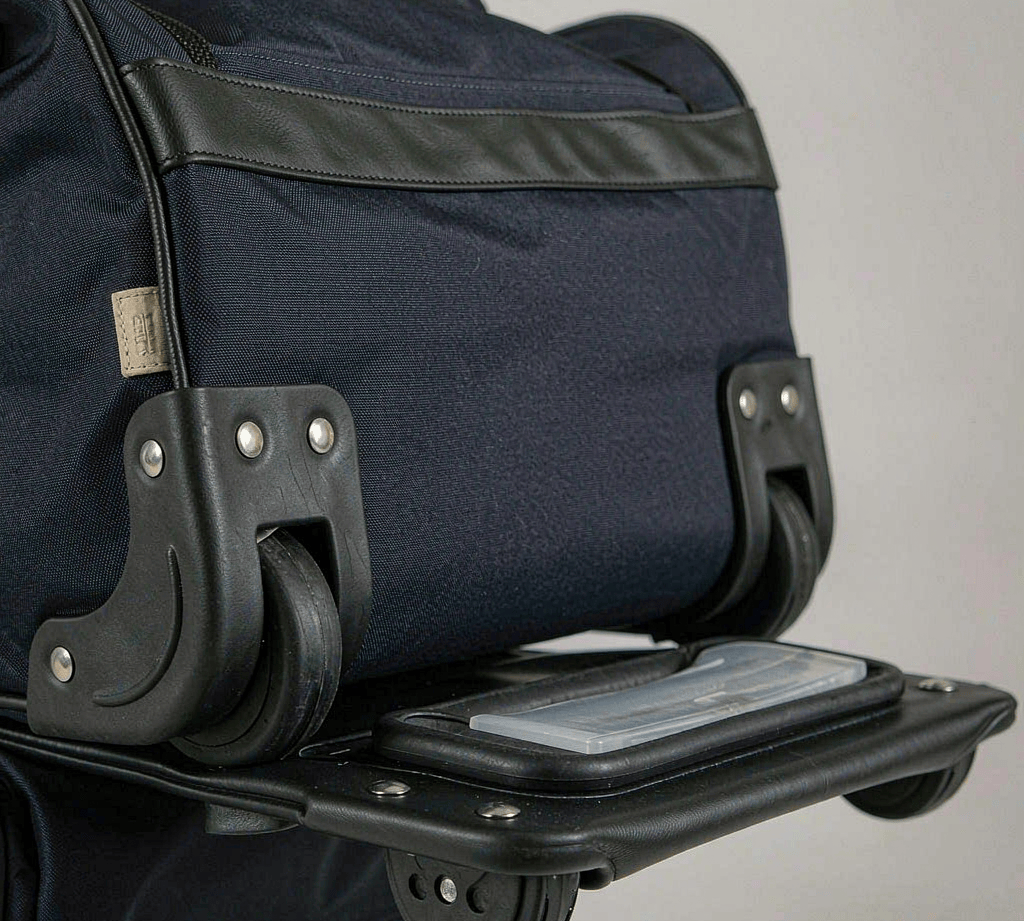
A bag’s corners hit the ground first and absorb the highest impact load. Fabric and stitching fend off scuffs, but a sharp knock at the base corner concentrates force onto a few millimeters of material. Once the shell tears there, water gets in and the structure loosens. Bottom reinforcement addresses the flat base, but the angled corners need their own guard. That is the job of a corner protector.
Materials: TPU, rubber, and metal
The three common choices are thermoplastic polyurethane (TPU), molded rubber, and metal.
- TPU is light, flexible, and resists abrasion and most chemicals. It bonds well to coated nylon and looks clean on premium duffels.
- Molded rubber is cheaper and very shock-absorbing, but it can yellow and picks up odor over time.
- Metal (usually anodized aluminum) is the most durable and the most expensive, used on hard cases and high-end camera bags.
When a buyer asks for “rubber corners,” the factory may supply a low-grade PVC blend instead. Write the actual material and hardness on the tech pack so the spec is enforceable.
Mounting methods
How the guard stays on matters as much as what it is made of.
- Riveted through the shell with a backing washer spreads the load and rarely comes off.
- Screw-fixed metal corners hold best but slow assembly and add weight.
- Welded or molded-in TPU is seamless and light, but needs a dedicated tool and is hard to repair.
- Adhesive-backed guards are the weakest; they peel under heat and flex and should be avoided for checked luggage.
For most bulk duffel orders, riveted TPU or rubber gives the best balance of cost and retention. Base feet on the flat bottom pair with corner guards to create a full protective cradle.
Coverage and placement
Decide which corners get guards. A budget build covers only the two bottom corners; a travel-ready bag covers all four base corners, and some cases wrap the guard up the vertical edges. Spell out the coverage angle in degrees or millimeters from each corner. If you skip this, the factory will cover the minimum. The placement also affects gusset and panel construction, because the guard must sit over a seam junction, not float on a flat panel.
What to write in the spec
A usable spec line reads like this: “TPU corner guards, Shore A 85, 3 mm thick, riveted on all four base corners, covering 40 mm along each edge, color matched to shell.” Include shore hardness, thickness, coverage, mounting, and color. Adding a tolerance note for position keeps the guards aligned across thousands of units.
Receiving inspection
At incoming inspection, check that guards are seated flat, rivets are not proud, and the material matches the approved sample. A simple pull test — tugging the guard with a fixed force — catches weak adhesion before the bag ships. Buyers who also review water-resistance ratings get a fuller picture of how the bag behaves in the field.
FAQ
Do corner protectors add much weight? Riveted TPU or rubber guards add only a few grams per corner, so a full set on a duffel is usually under 50 grams. Metal corners weigh more and are reserved for cases that need maximum protection.
Can I add corner guards to an existing design? Yes, if the shell has a flat corner seam to anchor the rivets. Retrofitting a guard onto a rounded, seam-free corner is harder and may need a small redesign alongside the trolley sleeve pass-through.
Are adhesive corner guards acceptable? For display or light use they are fine, but for checked luggage and shipping they peel. Specify riveted or molded-in guards for anything that travels.
How do I match the color? Provide a Pantone or physical swatch. TPU and rubber take color differently from the shell fabric, so a separate lab dip for the guard avoids a noticeable mismatch at the corner.
For a wider view of bulk duffel sourcing, see our duffel bag buying guide for bulk orders.