A zipper pull tab is the part a customer touches every time a bag opens. For OEM and private-label buyers, it is also the smallest branded surface on the product, so getting the spec right matters. Start by matching the pull tab material, attachment opening, logo method, and finish to the bag’s price tier and end use. Small parts like the pull tab get the attention, but the fabric surface does too — fabric pilling resistance is worth a line in the same spec.
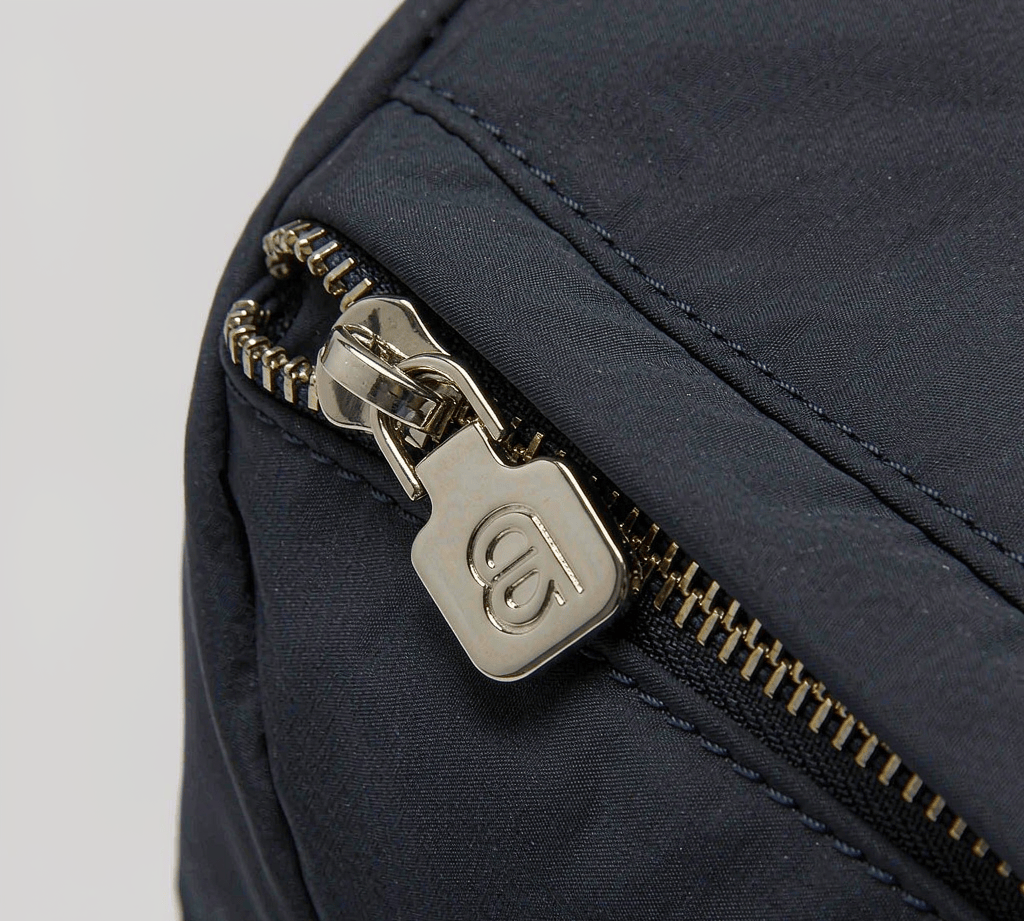
Material and Construction Routes
The most common material is zinc-alloy die-cast. It accepts sculpted shapes and raised or recessed logos, and it finishes well through plating or painting. Stamped brass or stainless steel gives a flatter, crisper look and is often lighter. Molded rubber, silicone, TPU, or woven cord pull tabs suit outdoor, sport, or casual bags where weight and noise matter. Drawcord openings on those same sport and casual bags often skip a zipper entirely and use a toggle closure to hold the mouth shut. PU-leather or leather-wrapped tabs work on heritage or business bag lines.
Each route has a different tooling path. Die-cast and rubber shapes need molds; stamped or laser-engraved routes avoid tooling for small-volume orders. If you are testing a new line, start with an existing puller shape plus a logo method rather than opening a custom mold.
Logo, Finish, and Slider Fit
Logo methods break down by material. Metal pull tabs carry logos through mold engraving or embossing, laser marking, enamel fill, or printing. Rubber and silicone tabs usually have molded logos. Leather and fabric tabs can be debossed, foil-stamped, or carry a woven label.
Finish must coordinate with the slider, zipper teeth, and other hardware. Common finishes include polished nickel, brushed gunmetal, antique brass, matte black, and PVD. The pull tab should also match the slider’s attachment opening: a No. 3 slider, No. 5 slider, and No. 8 slider have different lug dimensions, so specify the zipper gauge when ordering a custom puller.
For more detail on zipper gauge and slider selection, see our guide to bag zipper hardware. If your line uses coated waterproof zippers, read the waterproof zipper spec to confirm pull-tab stiffness will not stress the seal.
Size, Grip, and Cycle Testing
A main-compartment pull tab needs room for a full finger grip, typically 30 to 45 mm long. Pocket pulls can be shorter. Check that edges are deburred and that the tab does not swing into the user’s face or scratch adjacent fabric. Record the pull tab weight if the bag has a hardware budget.
Durability testing should include open-close cycles on the mounted zipper and a pull-strength test at the attachment point. Buyers should also check plating adhesion and sweat or salt-spray resistance if the bag is sold in humid or coastal markets. For logo durability, run an abrasion check on the marked surface.
Custom logo methods across hardware are covered in our custom bag logo methods guide. The anchor point where the pull tab meets the slider relates to the same load concentration principles discussed in our stress point reinforcement article.
Cost and Sampling Notes
Standard pull tabs with simple logos add little unit cost. Fully custom metal or rubber pullers add mold charges and two to four weeks of sampling. If your forecast is small, use standard shapes and laser-engraved or printed logos to keep MOQ low. Always approve a physical sample mounted on the actual zipper before mass production.
For a deeper buyer-side breakdown of zippers and hardware, see how to specify hardware and zippers for custom bags.
Frequently Asked Questions
What material is best for custom zipper pull tabs?
Zinc-alloy die-cast is the default for branded metal pull tabs because it takes detailed shapes and plating well. Rubber, silicone, cord, or leather work better when the bag needs a light, quiet, or heritage look.
Can I put my logo on a zipper pull tab?
Yes. Metal pull tabs can carry engraved, embossed, laser-marked, enamel-filled, or printed logos. Rubber and silicone tabs usually use molded logos, while leather tabs can be debossed or foil-stamped.
Do custom pull tabs change the zipper cost?
Standard pull tabs add little cost. Custom die-cast or rubber pullers add mold charges and longer sampling, and the unit price depends on material, finish, logo method, and order quantity.
How do I check pull tab quality before production?
Approve a physical sample on the actual zipper and check logo clarity, edge smoothness, attachment strength, finish match, and cycle life. Plating adhesion and salt-spray resistance matter for coastal or humid markets.